• PARTNER: PROTECT YOUR WATERS
  • Go To: THE FLIES OF YELLOWSTONE
  • Go To: YELLOWSTONE FISHING WEATHER
  • Go To: YELLOWSTONE FLY FISHING MAPS
  • Visit: Moldy Chum
  • Visit: The Horse's Mouth
  • Visit: Chi Wulff
  • Visit: Parks' Fly Shop
  • Showing posts sorted by relevance for query grayling. Sort by date Show all posts
    Showing posts sorted by relevance for query grayling. Sort by date Show all posts

    Tuesday, December 11, 2007

    About Damn Time

    TED WILLIAMS SPEAKS OUT
    "POLITICAL FISH-KILL"

    .. For two years we've noted the continuing demise of the fluvial grayling in the Rocky Mountains, particularly in Montana and Yellowstone, (Reports in this blog.) The court decision that seemingly doomed the fish is reported HERE.
    .. With current research showing that the population in Yellowstone is a remnant of planted fish, and the confirmation that they are adfluvial grayling rather that native river dwellers, the issue becomes even more critical.
    .. Despite calls from many grayling advocates both the Montana FWP and the U.S. FWS have continually denied the fish the protection that they need and deserve. The grayling, along with the indigenous cutthroat, are in trouble.
    .. Now, Ted Williams has taken up the cause. An article in High Country News, (via MidCurrent,) again points out the insidiousness of the current administration in dealing with our natural resources. Williams points out the flip-flop of USFWS and notes the genetic and geographic singularity of the Rocky Mountain population. We need now a concerted and focused effort to list these fish and to do it now.
    .. For resources and a fine video we reprint our post on the subject below.
    -----------------

    YELLOWSTONE GRAYLING NOT FLUVIAL
    WE HAVEN'T CAUGHT OURS THIS YEAR
    First Time In Over 13 Years
    .. About ten years ago we noticed that it was becoming harder and harder to catch a Grayling on the upper Gibbon. For years we'd enjoy a walk to Grebe Lake, take a few, smile, and walk out again. As the legs became more like rubber we could still take our gray ghost in Wolf Lake. Then as rubber turned to spaghetti, we'd take this jewel of the river just a few steps from the pull-outs along the Virginia Cascade Drive, or in the runs around Norris Campground. We're usually on the upper Gibbon 2 -3 times a week. The Grayling is not in our posts this year, and we started early.
    .. The catching of this fish didn't become a pilgrimage for us until about 4 - 5 years ago, when we noticed that they were particularly difficult to catch in Yellowstone National Park. Granted, it's possible to catch the Fluvial Grayling other places - but not many: maybe none if the USFWS has it's way.
    -----------------
    .. Last April sixth, New West ran a column about the Fluvial Grayling by George Wurthner, wherein he noted that:
    "Ever since the fish was first documented to be in danger by the FWS in 1982, the agency has done just about everything it could to avoid listing."

    .. On April 24, 2007 the EPA denied that the Fluvial Arctic Grayling of the upper Missouri River basin, [[ i.e. Big Hole River ]] was a Distinct Population Segment, and therefore not entitled to listing as threatened or endangered under the Endangered Species Act of 1973. This action closely followed the denial of the Westslope Cutthroat as a separate species by a federal judge, in March.
    .. The EPA denial brought quick responses from bloggers. Ralph Maughan, on April 25 noted that:
    "We are witnessing the political dismemberment of what is supposed to be an agency guided by science - instead plundered by political obstructionists and public land profiteers."

    .. On the same day Ecorover Pat Munday delivered two posts about the Grayling: "Who Killed Big Hole Grayling? A not-so-mysterious murder." AND "US Fish & Wildlife Service: Big Hole River grayling are not significant."
    .. A day later we posted a note, and The Trout Underground noted that:
    "Astoundingly, the US Fish & Wildlife Service has once again denied species protection (under the ESA) to the fluvial grayling.It’s clearly a political move; the fluvial grayling qualifies for protection under almost any ESA standard."

    .. Now, it's possible that the USFWS is going to reconsider its decision. Mike Bias, Executive Director of The Big Hole River Foundation has sent a letter in support of a reversal to Mark Wilson and Doug Petersen - USFWS, Helena - in support of the Grayling. The letter is annotated with an additional letter of support from the leading Grayling experts from around the world. The documentation in both letters about the genetic and behavioral differences between the Fluvial and Lacustrine forms is significant, and should be familiar to all fans of the Fluvial Grayling.
    ------------
    .. Ted Williams writes, in Fly Rod & Reel Online, about this situation as well. The post; "Who Needs Grayling?" was penned in June, and just published. He cites the results of Amber Steed, a graduate student at Montana State University, who will shortly publish data revealing that the Grayling occasionally seen in the Gibbon River are adfluvial fish that drop down from Grebe and Wolf lakes, stocked in 1920.
    .. We now know about the Yellowstone fish, and this makes the Big Hole fish all that more important. The whole sordid tale of the politics of this fish is retold in a succinct form by Williams and is worthy of review.
    .. There are several organizations that are working to save the Fluvial Grayling of the Big Hole River. Each has web pages and sections on efforts and issues associated with this fight.
    --- The Big Hole River Foundation,
    --- Arctic Grayling Recovery Program,
    --- The Nature Conservancy
    --- Montana River Action
    -----------
    Just how rare is the Fluvial Grayling of the Big Hole River?
    Try Google for an indication:
    .. Google Search for FLUVIAL GRAYLING:
    --> Web = about 23,000 entries, (vs. about 22,800,000 for trout,)
    --> Images = about 286 entries, (vs. about 1,900,000 for trout,)
    --> News = one, (vs. about 4,710 for trout,)
    --> Maps = 7, (vs. about 10,200 for trout,)
    --> Video = one very well done entry presented below for your edification. (vs. about 6,569 for trout.)


    .. Other Resources:
    "Jeremy Bentham, the Pieta, and a Precious Few Grayling" by David Quammen
    "Entrepreneurs Save Native Fish" by Jerry Johnson
    "Arctic Grayling Will They Be Delisted?"
    "Reintroducing Fluvial Arctic Grayling (Thymallus arcticus) To The Upper Ruby River, MT. A Progress Report"(PDF)
    Montana's Fish Species Of Special Concern - Fluvial Arctic Grayling

    Saturday, October 20, 2007

    Fluvial Grayling Making Headway

    YELLOWSTONE GRAYLING NOT FLUVIAL
    WE HAVEN'T CAUGHT OURS THIS YEAR
    First Time In Over 13 Years
    .. About ten years ago we noticed that it was becoming harder and harder to catch a Grayling on the upper Gibbon. For years we'd enjoy a walk to Grebe Lake, take a few, smile, and walk out again. As the legs became more like rubber we could still take our gray ghost in Wolf Lake. Then as rubber turned to spaghetti, we'd take this jewel of the river just a few steps from the pull-outs along the Virginia Cascade Drive, or in the runs around Norris Campground. We're usually on the upper Gibbon 2 -3 times a week. The Grayling is not in our posts this year, and we started early.
    .. The catching of this fish didn't become a pilgrimage for us until about 4 - 5 years ago, when we noticed that they were particularly difficult to catch in Yellowstone National Park. Granted, it's possible to catch the Fluvial Grayling other places - but not many: maybe none if the USFWS has it's way.
    -----------------
    .. Last April sixth, New West ran a column about the Fluvial Grayling by George Wurthner, wherein he noted that:
    "Ever since the fish was first documented to be in danger by the FWS in 1982, the agency has done just about everything it could to avoid listing."

    .. On April 24, 2007 the EPA denied that the Fluvial Arctic Grayling of the upper Missouri River basin, [[ i.e. Big Hole River ]] was a Distinct Population Segment, and therefore not entitled to listing as threatened or endangered under the Endangered Species Act of 1973. This action closely followed the denial of the Westslope Cutthroat as a separate species by a federal judge, in March.
    .. The EPA denial brought quick responses from bloggers. Ralph Maughan, on April 25 noted that:
    "We are witnessing the political dismemberment of what is supposed to be an agency guided by science - instead plundered by political obstructionists and public land profiteers."

    .. On the same day Ecorover Pat Munday delivered two posts about the Grayling: "Who Killed Big Hole Grayling? A not-so-mysterious murder." AND "US Fish & Wildlife Service: Big Hole River grayling are not significant."
    .. A day later we posted a note, and The Trout Underground noted that:
    "Astoundingly, the US Fish & Wildlife Service has once again denied species protection (under the ESA) to the fluvial grayling.It’s clearly a political move; the fluvial grayling qualifies for protection under almost any ESA standard."

    .. Now, it's possible that the USFWS is going to reconsider its decision. Mike Bias, Executive Director of The Big Hole River Foundation has sent a letter in support of a reversal to Mark Wilson and Doug Petersen - USFWS, Helena - in support of the Grayling. The letter is annotated with an additional letter of support from the leading Grayling experts from around the world. The documentation in both letters about the genetic and behavioral differences between the Fluvial and Lacustrine forms is significant, and should be familiar to all fans of the Fluvial Grayling.
    ------------
    .. Ted Williams writes, in Fly Rod & Reel Online, about this situation as well. The post; "Who Needs Grayling?" was penned in June, and just published. He cites the results of Amber Steed, a graduate student at Montana State University, who will shortly publish data revealing that the Grayling occasionally seen in the Gibbon River are adfluvial fish that drop down from Grebe and Wolf lakes, stocked in 1920.
    .. We now know about the Yellowstone fish, and this makes the Big Hole fish all that more important. The whole sordid tale of the politics of this fish is retold in a succinct form by Williams and is worthy of review.
    .. There are several organizations that are working to save the Fluvial Grayling of the Big Hole River. Each has web pages and sections on efforts and issues associated with this fight.
    --- The Big Hole River Foundation,
    --- Arctic Grayling Recovery Program,
    --- The Nature Conservancy
    --- Montana River Action
    -----------
    Just how rare is the Fluvial Grayling of the Big Hole River?
    Try Google for an indication:
    .. Google Search for FLUVIAL GRAYLING:
    --> Web = about 23,000 entries, (vs. about 22,800,000 for trout,)
    --> Images = about 286 entries, (vs. about 1,900,000 for trout,)
    --> News = one, (vs. about 4,710 for trout,)
    --> Maps = 7, (vs. about 10,200 for trout,)
    --> Video = one very well done entry presented below for your edification. (vs. about 6,569 for trout.)


    .. Other Resources:
    "Jeremy Bentham, the Pieta, and a Precious Few Grayling" by David Quammen
    "Entrepreneurs Save Native Fish" by Jerry Johnson
    "Arctic Grayling Will They Be Delisted?"
    "Reintroducing Fluvial Arctic Grayling (Thymallus arcticus) To The Upper Ruby River, MT. A Progress Report"(PDF)
    Montana's Fish Species Of Special Concern - Fluvial Arctic Grayling

    Wednesday, April 27, 2016

    The Arrival

    A VISITATION
    Very Dark Room
    slide shows for all
    EAGER ATTENDEES ENTHRALLED IN ANTICIPATION
    -------
    .. National Park Service speakers regaled and lectured a not quite standing room only crowd in West Yellowstone.
    .. Exposition of the Native Fish Conservation Program was the topic for a series of slide presentations featuring efforts on Yellowstone Lake, The Northeast Fishery, and the West Side Fishery.
    AVAILABLE FROM NPS
    .. The presentations were replete with optimism about the progress of the program and the success of the efforts currently underway. Anticipated and planned programs for the future were briefly detailed.
    .. The commercial fishing contracts to curtail the population explosion of Lake Trout in Yellowstone Lake are anticipated to continue to the tune of $1,000,000.00/yr. Funding support is anticipated to continue with the newly amalgamated Yellowstone Park Foundation-Yellowstone Association (LINK A).
    .. Increases in catch and kill numbers through the years have shown success that is correlated with length of nets employed.
    .. More nets=more dead Lake Trout. Exploration of chemical killing of eggs and fry continue to be a research focus for the known spawning areas.
    .. Large numbers of Lake Trout hiding from the gill nets have been found in the South Arm of Yellowstone Lake. Previously found concentrations have continued to be the cynosure of netting including those populations in West Thumb.
    REGULATIONS: ABOUT THE SAME
    .. There have been no appreciable changes in the fishing regulations this  year and the lake will open for catching early again.
    .. Rearrangement of fish populations, poison, barrier construction, regulation modifications, and scientific review continue too be the focus of the program.
    SODA BUTTE CREEK
    .. Anticipated fishing and catching success for managed areas such as Soda Butte Creek and Specimen Creek and Grayling Creek should reach peak productivity by 2019 - 2020.
    .. New concerns about climate change have been introduced to the program and the thrust is relocation of, (or establishment of,) populations of fish in areas most likely to provide survival of cold water species in periods of climatic warming.
    BROOKIE PARADISE
    .. Focus on the upper GIBBON RIVER will include the poisoning of GREBE LAKE to remove all fish. The current non native population of Grayling will be salvaged, relocated, and then reintroduced to GREBE LAKE after it has been cleansed of the Rainbow Trout**.
    .. Information about recovery of invertebrates after poisoning shows that without fish to eat them they show a population explosion.
    .. The subterranean stretches of Cougar Creek are being investigated as barriers to fish migration which places this little stream on the potential hit list for future management.
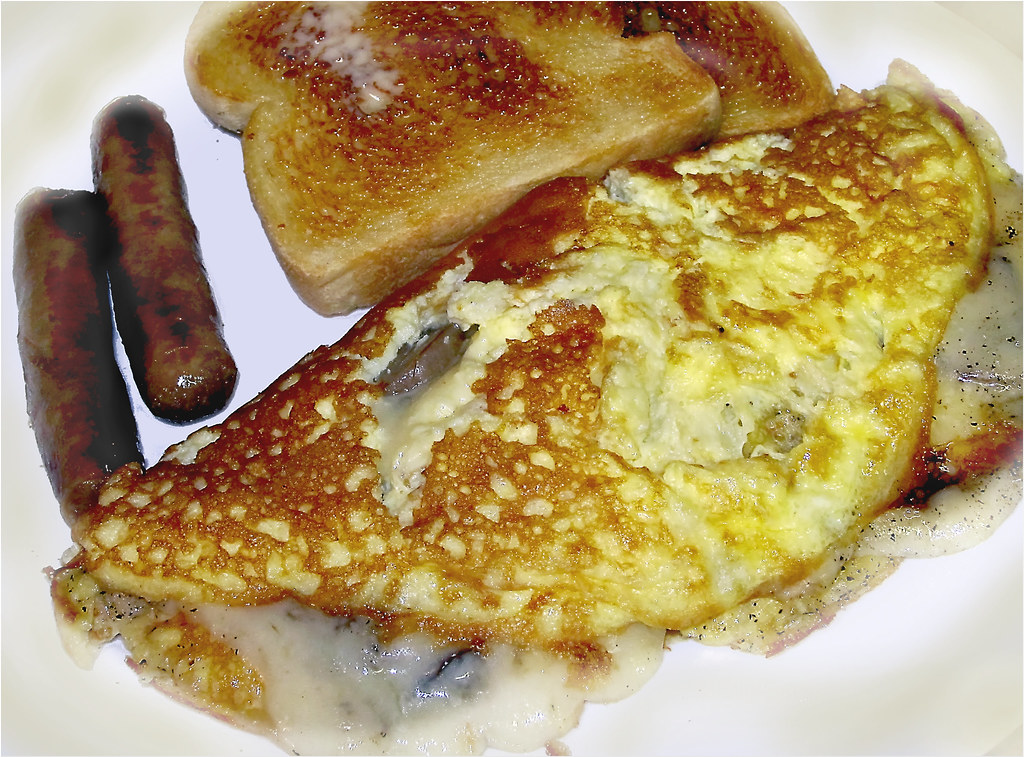
    MUSHROOM AND SWISS
    .. It's way past lunch time and we are having breakfast for lunch.
    .. The pubs enjoyed some fish talk last night. Better than the coffee provided at the informative gathering.
    -------

    BROOKIE HANGOUT
    A GRAYLING TANGLE

    **In 1921, U.S. Fish Commission  personnel stocked the fishless  Grebe Lake with the Montana strain of Thymallus arcticus montanus, a lacustrine form of Arctic Grayling.
    .. The initial introduction came from Georgetown Lake near Anaconda, Montana.
    .. It is believed that the fluvial form of Arctic Grayling was native to the MADISON RIVER and the GIBBON RIVER below Gibbon Falls.
    .. In an effort to re-establish Grayling in western states, over 72 million Grayling eggs were harvested from GREBE LAKE between 1931 and 1956 and distributed to hatcheries.
    .. Many lake dwelling Grayling populations in the west can be genetically traced to these stocks.
    .. GREBE LAKE was closed to fishing until 1944 because of the fish culture operations at the lake.
    .. Nearby WOLF LAKE and CASCADE LAKE  also contain some Grayling as well.
    .. This is an interesting exercise in the preservation of an introduced species, (the Lacustrine GRAYLING,) even as the indigenous species,  (the Fluvial GRAYLING,) is being reintroduced and established elsewhere, (in GRAYLING CREEK.)
    .. Native Fish Preservation?
    THEY SEEM TO KNOW THE DIFFERENCE
    ..
    -------
    .
    WALLPAPER:  NATIONAL PARK MOUNTAIN
    .

    Tuesday, April 25, 2017

    Parksters Arrive

    FISH TALK
    Projects Updated
    slickest roadshow yet
    THE TALE OF THE PLATE
    -------
    TOPICS COVERED


    .. In beautiful West Yellowstone the NPS roadshow detailed current and future projects in the Native Fish Preservation Program.
    .. Updates and progress reports for both streams and Yellowstone Lake were presented.
    CUTTHROAT & GRAYLING
    .. The team also detailed the efforts to bring regulations in line with preservation goals.
    .. This included the continually expanding program to prevent aquatic invasive species. One possibility is the banning of felt soles on waders and wading boots.
    ..  Details about ongoing actions on the west side of Yellowstone National Park for the preservation of Westslope Cutthroat and the reintroduction of a favored non native  species the Artic Grayling.
    UPPER GIBBON PROGRESS
    .. It seems that there is an effort to remove the Adfluvial Grayling and introduce Lacustrean Grayling in the upper Gibbon River drainage. This includes the relocating of fish from Grebe Lake  and then replanting the lake with a different non native Grayling species..
    ROTENONE APPLICATION
    .. Rotenone, (a crystalline isoflavone used as a broad-spectrum insecticide, piscicide, and pesticide,) will continue to be used for removal of the unwanted species from both rivers and lakes.
    .. Details about the Grayling projects on Grayling Creek and Specimen Creek were presented and showed a series of age classes in Specimen Creek that suggest an in situ breeding population.
    GRAYLING EGGS
    .. It's too early to make the same claim for Grayling Creek. However the population in Grayling Creek appears healthy and is getting larger as anticipated.
    .. Success is anticipated for these projects for propagating non native species in protected streams in remote and less popular fishing locations in Yellowstone National Park.
    COMPLETED vs.  FUTURE RESTORATIONS
    .. The progress for both lakes and streams for current and future project elements were summarized in tabular form. Currently there are 45.8 stream miles that have been completed. There are 49 lake acres in the same catagory.
    .. These totals will be expanded with future project elements to an anticipated 92.3 stream miles and 281 lake acres.
    -----
    SOFTY
    .. The 10" of snow that we received over the last 24 hours is about all melted from the warm forty degree temperatures that came with it. Runoff should increase somewhat with the rapid melt. Water color should be interesting as well.
    STIFFY
    .. The fishing on both lakes and between them is attracting both neighbors and folks from foreign lands. Spawing trout are abundant between the lakes and care should be taken to avoid the very visible redds in this section.
    .. Better yet = leave them alone. It is a sort of private matter after all.
    -------
    VERY ATTENTIVE FISHER FOLKS

    Wednesday, June 28, 2006

    Another Fish Tale From Yellowstone

    ANOTHER NICE DAY IN THE PARK
    Leaping Rainbows
    sulking six incher's
    no grayling
  • _________________________


  • <- Upper Gibbon


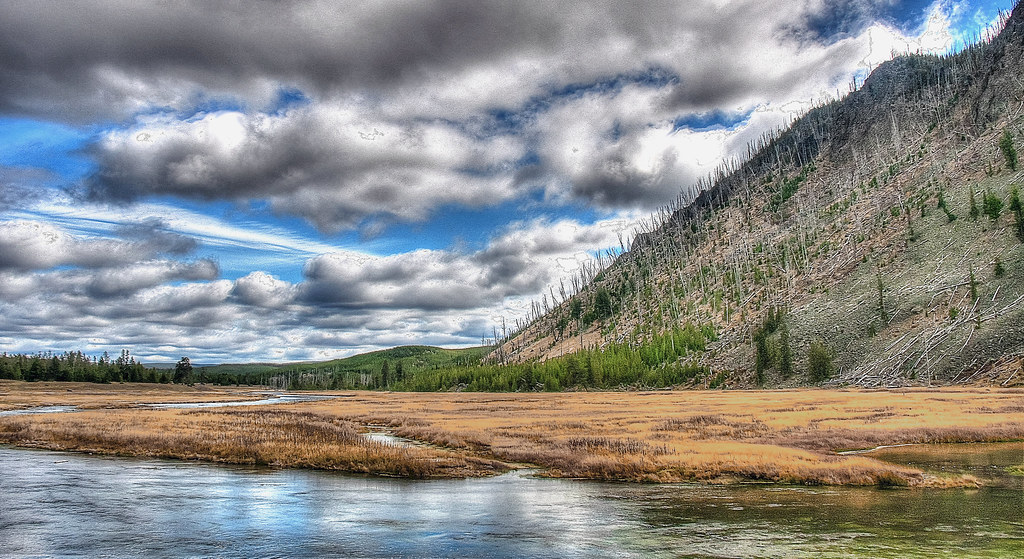
    .... The upper Gibbon River, (the meadows, & above,) is perfect right now. The cold clear water of the river sections above the roads to Mammoth and Canyon are fishing very well indeed. They are also producing Boon & Crockett sized mosquitoes.
    .... We took a very fat and sassy 14" Rainbow in the thin-water riffle right next to the road by Norris Campground. The dance was brief, as the fish leaped out of the 18" deep pool onto the grassy bank. Again there were quite a few nursery fish, both Brookies and Rainbows in the 6" - 10" range. They were taking small Caddisflies, (12 -14,) on the surface and small drowned and floated nymphs, (Prince 12 - 14, & Pheasant Tails 14 -16.)
    .... The Grayling research team was on the river and told us that they think recruitment is up in this section of the Gibbon, and that the population of Grayling in Greebe Lake is also higher than anytime in the past few years -- couldn't prove it by us.
    .... To see how they do it across the pond go to the world acclaimed site OgmoreRiver.com. The Grayling Page and the Grayling Fies are useful on this side of the pond as well. You'll recognize the "Red Tag" as a rendition of our favorite Wooly Bugger.
  • _________________________


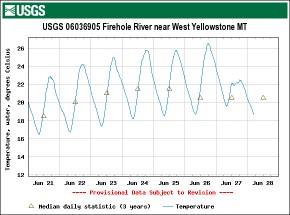
  • .... After lunch we went to the Firehole River and fished between the bridges in Biscuit Basin. This section is easy to access, elbow to elbow with fisherfolk, pounded to within an inch of it's life, and still producing good numbers of catchable fish. We took a few eager rainbows of 10" and a nice, pudgy Brown Trout right at the confluence of the Firehole & Little Firehole. The water temperature at 2:00 PM was only 72 F. As you can see on the temperature chart, yesterday was a cooler day than the previous week's average. The heavy clouds helped. The fish were taking the same flies on the Firehole that they took on the Gibbon.
    .... The good folks at Moldy Chum, pointed us to an excellent bit of research about 'catch and release' fishing from the "Alaska Science Center" of the USGS. There is also a similar note from across the pond at WadersOn.com.

  • _________________________


  • .... Second Hand News: Madison River at the Barn's Holes and to 7-mile bridge still fishing well to Stonefly nymphs, (golden & yellow is the speculation.) Greebe Lake is worth the battle with mosquitoes, (and the 3-mile walk,) for the eager Grayling. The Gallatin River in the meadow, at the confluence with Fan Creek has produced fish to 12" in the late afternoon on drowned cul-de-cunard caddis. Soda Butte Creek is high, cold, clear and fishing good in the meadow at the confluence with the Lamar River.
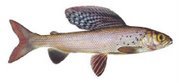
    .... Finally, since we have no pictures of Grayling to show you, we suggest the Montana 'Fish Wildlife & Parks' site for a nice photo of a male Grayling. An exceptionally nice female Grayling is shown in a reference photo at the Taxidermy.net site.
    .... There is a pleasant aroma eminating from the kitchen.

    Sunday, March 16, 2008

    Mixed Blessing

    PLANTING FISH
    The Good News - Grayling
    The Bad News - Lake Trout
    An Exercise In Hindsight
    “It would be an admirable thing if trout and grayling could be planted in these barren waters, but Commissioner McDonald looks at this subject from a broader standpoint, and sees the grand opportunity which the Park offers for experiments on the acclimatization of certain species of fish foreign to these waters. He has expressed himself as desirous of introducing into one of these river systems the brown trout of Europe; the Eastern brook trout might be introduced in another, and the grayling in the third.”
    — Forest and Stream: A Weekly Journal of Rod and Reel, 1889.

    .. In 1921 there were 4,051,000 fish planted in Yellowstone National Park. It was such a big deal that it made the New York Times, (REFERENCE, PDF.) For good or bad, we're living with their descendants today.
    .. There is an excellent resource for background information on this subject found at the Greater Yellowstone Science Learning Center website.
    --------
    .. The Grayling are facing a tough battle in the lower 48, while the Lake Trout are making it tough on the Cutthroats in Yellowstone Lake.
    .. The native cutts are in deep do-do. They face drastic reduction in numbers from the Lake Trout. On the other hand, the Grayling, (a non-native,) have found a small protected niche in the upper Gibbon River Drainage.
    .. The Grayling are where they are because of distinctly purposeful action by fisheries managers of the time. The Lake Trout were planted in areas close to Yellowstone Lake, (Shoshone & Lewis Lakes in the 1800's,) but the mechanism of their transport to it remains shrouded in mystery.
    .. Based on otolith research it appears that transplantation took place at two times in the recent past: about 1989 & 1996, (LINK PDF.)
    -------
    .. The simplest lesson, to be learned, is that we cannot predict the outcomes of our actions with any certainty.
    .. Current values suggest that the planting of Lake Trout was a disastrous action. On the other hand, the Grayling imports are seen as a positive action, in light of their precarious situation in the lower 48.
    .. It's been many years since we've fished the upper Yellowstone River, Trail Creek, and Chipmunk Creek. The memories are rich, and the fish we caught have probably grown in size and number over the years - yet we can't help feel a bit saddened to think that the eager Cutthroat Trout in the Thorofare have been reduced to curiosities by the introduction of the Lake Trout.
    .. We have a distinct fondness for the native species in Yellowstone, (and the Grayling as well,) but this feeling is not widespread. Fishers that come to Yellowstone seem just as pleased - (or more so,) - to take Brown Trout, Rainbow Trout, Cuttbow Hybrids, and Brook Trout. There is a growing cadre of fishers with enormous weights and flashy boats that extol the virtues of "Laker Fishing" on Yellowstone Lake.
    .. The history of fish and fishery manipulation in Yellowstone is well documented by Franke, (A, B,) and Schullery, (LINK, LINK,) and Byorth, (LINK.)
    .. The Yellowstone fishing experience of today is conditioned by the history of fish manipulation and experimentation of the past. Hybridization has reduced many pure Cutthroat populations to nothing, and it's happening on Slough Creek too.
    .. The changes in the fly fishing experience for the future will be conditioned by these manipulative factors and the introduction and spread of invasive and exotic species.
    .. For the unthinking fisher, none of it matters. For others it is as much of a concern as getting on the water - for some it's even more important for the lessons to be learned.
    .. May these lessons inform our actions!
    ynp photo

    Saturday, June 10, 2006

    GIBBON RIVER BLUES

    OFF TO CATCH A GRAYLING:
    How 'Bout A Brookie,
    wouldja settle for a whitefish?
    MADISON STILL HOT
    Firehole Discharge Down
    try the Lewis River


    <-- "HELLIFIKNOW"


    -- It shouldn't take seven hours to drive 31 miles; even if the speed limit is 45 mph, and the road is wet, and there is bison poop smeared on the asphalt, and the motor homes are stopping in the middle of the road - but it did.
    -- The day dawned soft and gray with the hint of fog. We had breakfast at 8:oo AM; then off to the park for a leisurely drive to the Upper Gibbon. We started our annual pilgrimage to the upper Gibbon River on Friday. Our stated goal, this time each year, is to take a Grayling. Sometimes We Do! It started to drizzle: an absolutely perfect June morning.
    -- A brief detour to see the Madison at the Barns Holes and a visit with some folks from Nebraska. The river is still swift but clear and fishable. We flung some Montana Dusters into the seams and took a couple of whitefish at Barnes #1. Then back to Da Ford.
    -- We paused a couple of places along Riverside Drive to watch some Golden Eye Ducks rafting downstream. There was a Merganser with something in its bill, and a Great Blue Heron with the tail of a fish hanging out of its beak. There were some cars at the Muskrat Hole across from Grasshopper Bank (6 miles from the West Entrance,) we paused again to inspect the river. One angler had a nice fish and landed it as we watched.
    -- There was no one at 9-mile hole so we re-rigged and fished the end of the PMD hatch with some Yellowstone Morning Glory flies, (size 16 - 18,) and then smoked a cigar. The upper end of the swift water had several fish rising & we went back for more. We took a dozen fish each, (+/-,) then gave up the hole to some local fishing guides who had never fished in Yellowstone. We suggested that they try the deep run in the middle of the river, over by the large erratic boulder on the shore, (titter, titter, titter.)
    -- We paused a couple of places along the Gibbon River near National Park Meadows but decided that since the rain had quit we should continue on up toward Gibbon Falls. However, we hadn't fished the meadow near Tuff Cliffs in over two years. So we parked Da Ford, walked across the meadow, (it's firm and poses no problem now,) and tried a couple of rising fish. No luck with the little dry flies. Floated some big olive Wooly Worms and took a 14" Brown Trout. There are still Salmonflies, (Willow Flies if you're from Colorado,) working in this section. This lower section of the Gibbon River is very lightly fished, and will occasionally produce a Grayling so we justified the detour as the official beginning of the Grayling quest. Back to Da Ford.
    -- As we climbed past Gibbon Falls and into Tanker Bend, (a fuel tank truck wrecked here long ago,) the riffle and run sections were clear and frothy. Some color reamins in the fast sections of the Gibbon in the canyon, but we saw several fisherfolk addressing the turbulent stream - we waved and wished them luck.
    -- There was a cloud of bugs at the Artish Paint Pot turn-out. Da Ford killed about 200 for us and we stopped to identify them. Probably Baetis of some sort? We turned into the picnic area between the meadows to look at the stream.
    -- Rumbling stomachs and grumbling thunder, (or the other way 'round,) announced lunch time - 2:30 PM and we weren't there yet. The Gibbon has cleared very nicely - thank you, and we visited with a pair of writer-fishers who had walked the Elk Meadows stretch. They had good stories 'bout some large fish and the clarity of the big sweeping bends that held them.
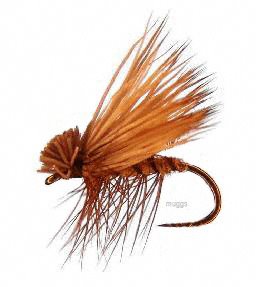
    -- Lunch was disposed of quickly, and then we drove to the pull-out just past Norris Junction and parked. It was 3:20 PM. The rain was fairly serious and the sky was dark; no thunder or lightning for the last hour or so. We rigged up with our Grayling armaments: small Elk Hair Caddis', and the local secret fly - "HELLIFIKNOW." (The simple recipe for this fly is given below.)
    -- Rumor has it that a local famous fisher-writer was using the fly one day and was asked the name of it: "Hell If I Know," was his answer, and it stuck. It is too simple to have caught on with many "serious" fly fishers. We love it, (are we not serious?)
    -- We fished from the Campground Pool, upstream to the road to Canyon Village: across the road to the single-cast-water. The vest-pocket meadows here are still a little damp and "squishy," (technical term.) This water is running at grade, & is soooo clear that you only get one cast per holding area. It's grossly under fished, challenging, and rewarding. There is a good population of Grayling in these little meadows. There is also a giant population of Brook Trout.
    -- At about 6:30 the sky threatened again and our stomachs, (or thunder,) let us know that it was time to head back to Da Ford. We arrived at the parking lot at the same time as the hail and a couple of folks from Bozeman, Montana. We finished some chips and shared stories -- window to window, then headed back down the road. We took easily two dozen fish each, (probably more - every one of them a twinkling little Brook Trout of 6" - 10".) Grayling will be caught tomorrow - no pausing along the Madison!
    -- At Madison Junction, (mandatory drainage break,) we met some folks from Jackson that had been fishing the Lewis River near the south entrance to Yellowstone National Park. They were dry fly purists and reported that just about any fly in a size 18 - 20 was working late in the afternoon. They reported that the Lewis River had cleared early and that they just came up for the Stoneflies on the Madison.
    -- How does one measure success? Is it even a concept that should be applied to a day of fishing? We ended the day feeling a bit disappointed. We had not caught our Grayling. We don't keep track of numbers, and on occasion have been known to deflate or inflate numbers in a situational context -- yet we caught a lot of fish and were still just a little morose -- go figure! Just a case of the Gibbon River Blues: tomorrow we will catch a grayling. - Or, the next day.
    .
    Recipe for "HELLIFIKNOW"
    Tail: dyed red squirrel, or red synthetic fibers, Body: silver tinsel, (mylar works, we use French metal,) Beard: reddish brown rump feather fibers from golden pheasant, Head: red thread. Hook: heavy nymph, size 4-12. Fish on short light leader in shallow clear water or long heavy leader in colored water. Brookies, Grayling, and other precocious young trout take this just the way a Bluegill takes an empty gold-plated hook.

    Thursday, April 26, 2007

    Grayling Loses "Endangered" Battle

    SO LONG, WE HARDLY KNEW YOU
    .. The courts have spoken and the Fluvial Grayling in Montana will not be listed. According to an article in the Montana Standard:

    "The federal government announced Tuesday that it will not protect fluvial arctic grayling by putting the dwindling species of fish on the Endangered Species List.

    The U.S. Fish and Wildlife Service said the fish, one of Montana’s rarest that are found in the upper Big Hole River, is not genetically different enough from the more abundant lake dwelling grayling.

    The decision not only prevents them from endangered listing now, but takes them off the candidate list, meaning they’ll likely never be considered for protection."


    This is a blow to those of us who appreciate this fish and it's indicator status.

    It's well worth the time to read the two recent articles published by the Standard:
    1] - Arctic grayling kept off endangered list,
    2]
    - Feds decide against protections for arctic grayling.

    .. This decision, along with the recent one about the Cutthroats is indicative of a growing trend to pretend that all fish are alike. A sad commentary on both our Courts and the USFWS.
    .. The commentary, may be even worse about those fisher folks that refused to submit comments. We suspect that this trend will continue and that everyone reading this will be affected within 5 years.
    .. The Big Hole Watershed Committee is affected in this situation because of the withdrawal of federal funds for stream projects. Visit their page about Grayling Recovery for additional information.
    The key to this sad situation is the phrase
    ". . . not genetically different enough . . ."
    Such tripe!!

    Wednesday, June 14, 2006

    YELLOWSTONE RIVERS IN GREAT SHAPE

    BLUEBIRD DAYS & THUNDER NIGHTS
    Bring The Whole Box
    everything's working
    still no grayling


    <<-- Firehole River: running clear.


    -- The good news is that the rivers are in great shape and look to stay that way until a mega deluge. The bad news, (of sorts,) is that we have not caught our annual Grayling and it's week three of the season.
    -- Reports and news are in abundance; they are all good for a change as the weather has settled down, and it's beginning to look a lot like summer.
    -- First off: Yellowstone Lake opens for fishing tomorrow -- get in the boat, drag out the tube, or walk along the shore and stick some Lake Trout. There has been some progress made in the Lake Trout eradication program and the Cutthroat recruitment seems to be on the rise. Good News! The lake is high due to the rapid warm-up of a few weeks ago, and looks to stay that way for some time as we are experiencing some warmer than normal days, (87 F is just a tad too much in June.) The Yellowstone River at the outlet is running at just over 5,000 cfs. This is at least 1,500 cfs above the 76 year median daily average.
    -- The Firehole River is flowing at seasonal levels (about 400 cfs,) and is clear and highly productive. There is both an evening and morning Caddis hatch, PMD's are really popping, and "afternoon" is starting about 10:30 for the Mayflies. Baetis are available until dark, and there are lots of bugs on the water. During the overlap between the morning Caddis and the Baetis the fish are leaping into your waders - bring a small net to get them out. The river sections along the old freight road and those just below the iron bridge are fishing very well in the evening to the prolific Caddis hatch.
    -- The Madison River is just a bit below seasonal levels, (at about 700 - 750 cfs,) but is still bank to bank and surprisingly clear for this time of the year. The overnight thundershowers are keeping the flows in line with the running average and there are plenty of groceries. The Salmonflies are still emerging in places, and there are two kinds of smaller stoneflies as well. The mornings are still showing PMD's in good numbers, and the evening Caddis are showing up at about 5:00 PM. Depending on where you fish the afternoon may show some Baetis or the beginning of the Gray Drake hatch. The heavy Salmonfly concentration should be at the Barns Holes by today or tomorrow. The evening Caddis are especially thick in the mile below 7-mile bridge. Between National Park Meadows and the Talus pull-out the PMD's and Baetis are providing all day fishing if you can stand it.
    -- Nez Perce Creek, above the bridge at the Chief Joseph story board has provided excellent mid-day fishing with nymphs. Sizes 6 - 12; pick your flavor. We stick with Montana Dusters. You can do as well with Hare's Ear, Pheasant Tail, or Prince sorts as well. There have been some bear sightings above the wolf release pen area so be on the look out in the first open meadow. Sing a loud and stupid song - it'll keep both the bears and other fisherfolk away. The river section by the picnic area and down to the confluence with the Firehole has slowed down some. There are still piles of small Brook Trout, (down to 4",) and we saw one 13" Brown Trout taken in this section - both on the same fly - a size 12 Royal Humpy . . . . . go figure.
    -- The Gibbon River is beginning to show it's summer character. The canyon sections are still a little high for consistent good fishing, but large nymphs above tanker curve in the riffle and run sections are beginning to show where the fish are. Pick the biggest rocks in the stream that are visible. Fish the pillow and the seams. The meadow sections have cleared nicely and are beginning to fish in their typical tough fashion. As the water clears in the meadows the big fish will be harder and harder to fool. Some nice Rainbow Trout, (to 16" or a bit more,) sulk in this section and it's very satisfying to stick one - they leap like a salmon and fight hard. The campground meadows and the one-cast water above the Canyon Village Road have the usual assortment of eager Brook trout. There are Grayling here too. Several Grayling were taken on small dry flies during the last three days - just not by us. The action is continuous, and some of the Brookies are 10" long. We're going to pound it for another week in search of our annual Grayling. It'll happen.
    -- The Gallatin River is clearing at it's typical capricious pace. The meadows at the confluence of Fan Creek and The Gallatin River have some nice Brown Trout and they are still taking streamers. Fish the deep undercut banks and keep the flies down in the water column. Be careful of your back cast, there is a lot to get hung-up on in this section. The Mountain Whitefish seem to be thick this year, but that may be a function of temperature as well.
    -- How Do You Know The Fishing Is Good? - - - - - All of the feather merchants and their famous guests are fishing daily in the park. This spring has been fishing just the way we dream Yellowstone should fish. Those who hear about it, and have the means have flocked to the west side of the park for the opening weeks - and have not been disappointed. We hope it continues.
    -- Second Hand Reports: upper Firehole River, (above the closure by Old Faithful,) producing Brook Trout to 10" on Elk Hair Caddis and bead head Prince nymphs. Grayling Creek along the road producing many precocious Brown Trout and Brook Trout on Hare's Ear nymphs and small Wooly Worms. Lewis River clear but cold and high.
    -- JUST A REMINDER; 100% barbless. This is for gear, flies, and the kids and their worms in the Gardiner. Click HERE for regulations. And HERE for the fishing map.

    Tuesday, May 15, 2007

    Opener Approaching - Grayling Quest Begins

    WATERS LOOK GOOD
    Grayling In News, Again
    groupie hatch blooming
    zebras attack washington

    .. As the Memorial Day weekend opener approaches we're getting our gear together for the annual Grayling quest. We scouted the water in the park and the rivers in the Madison drainage are a bit tame, even with the warm weather and the slightly high runoff.
    .. Meadows that were flooded last year are just a 'scosh' high and very clear for this time of year. The diminishing snow pack bodes well for early season fishing - summer is looking "iffy" right now.
    .. The waters in the Yellowstone drainage are a bit colored and look more seasonal, (and they open a bit later too.) The weather forecast for opening weekend is looking salubrious - but that is subject to change on an instant's notice.
    .. The drift boats are beginning to appear in town, the guides are arriving and scouting the waters, beer supplies are being stockpiled, and the Spring crush at wader-friendly motels is apparent already. There may be a room or two available , but the desk jockeys inform us that it's going to be a busy weekend. Check the sidebar for wader-friendly lodging. Tell them hello for us.
    .. One sure sign that the fishing guides have arrived is the blossoming of the "groupie hatch." A little publicized event that takes place in the pubs of West Yellowstone every year at this time.
    .. Hoards of attractive, beer-swilling, fish-catching, females crowd the corners of the pubs. They pounce upon any unwary guide that happens to enter for a moment of well deserved relaxation.
    .. Be forewarned that if you enter any of the West Yellowstone imbiberies you may be assaulted if you look like a guide - or even if you might know a guide. It's a tough life being a fly fishing guide in Yellowstone.
    .. Recently we posted a note about the lack of action on Grayling protection. The original note by George Wuethner that we referenced has sparked a spirited debate about the pros and cons of any action on behalf of the fish. As of today there are 23 extensive comments that contain good information, (and an occasional diatribe.) This is an important issue and bears watching.
    .. The Montana Fish Wildlife & Parks site provides basic information about the species in Montana. The Arctic Grayling Recovery Program site details the recovery efforts that are planned and are being carried out currently.
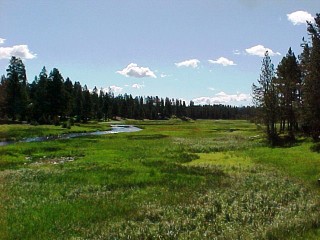
    .. Protect Your Waters reminds us of the continuing battle against invasive species that are cropping up in new places almost daily. The Eastern Sierra Opener has come and gone, but remember that there are New Zealand Mud Snails in the Owens River - take precautions with your gear.
    .. The fight against Whirling Disease in Maryland has taken a new twist, and the state has killed an additional 20,000 trout in its efforts there.
    .. There have been boats with zebra mussels discovered in Washington. Washington state officials are expanding their efforts at inspection stations and weigh-stations in their effort to intercept the invader.