|
| http://parkplanning.nps.gov/projectHome.cfm?projectID=30504 |
Showing posts with label Endangered Species. Show all posts
Showing posts with label Endangered Species. Show all posts
Thursday, June 02, 2011
Saturday, January 29, 2011
Just Like Falling Dominoes
IT'S A SIMPLE EXAMPLE
With A Complex Result
see the ecological transformation of
flathead lake

-------

.. Sadly many of our neighbors, (guides and feather merchants as well,) have poo-pooed the need to do anything about the conservation of native species. They say, sadly: "A trout is a trout, is a trout. I just want to catch them."
 | ||
| Opossum Shrimp |
.. We read with great interest the recent article in NEW WEST. The story is about the complex interaction of species in Flathead Lake.
.. A recent paper published in the Proceedings of the National Academy of Sciences details how the introduction of a small non-native crustacean, (the Opossum Shrimp - Mysis diluviana,) has totally altered the ecology of a large lake.
.. It has changed algae production, nearly eliminated Kokanee Salmon, enabled Lake Trout population explosion, and endangered the native Bull Trout.
.. The paper details a classic example of a trophic cascade that has been well documented since it's inception in 1968.
 |
| LAKE TROUT |
.. Their population explosion provided an abundant food source for the introduced Lake Trout and allowed the Lake Trout population to grow to the point where the Kokanee Salmon and the Bull Trout are now being eaten at a rapid clip by the Lakers.
.. Another by product of the trophic cascade is the increased growth of algae.
.. We note that "simple" is seldom a concept that can be applied to ecological change. Both Yellowstone National Park and Flathead Lake, (as well as many other areas around the country and the world,) have suffered the consequences of actions in the past.MONEY QUOTE:"After the mysis explosion kokanee disappeared, bull trout declined, and lake trout came to be the dominant top predator, according to the study. This led to an increase in algal production because the shrimp ate up larger zooplankton, decreasing their levels and allowing smaller types of zooplankton to proliferate, Stanford explains. He says this changed the way the zooplankton “mow the lawn,” or consume algae: smaller zooplankton are less efficient consumers and allow algae room to grow."
.. "While the future might hold unexpected outcomes, for now fisheries managers have their hands full dealing with the legacy of shrimp and a misinformed decision from the past."
-------
 |
| LINK |


Thursday, December 23, 2010
Short Fuse, Comments Needed
20 YEAR EFFORT
Comment Now
no whiners

-------

.. The Environmental Assessment is now open for public comment.

* Bozeman, Montana: January 5th from 6:00 to 8:00 p.m., at the Comfort Inn, 1 370 North 7th Avenue.. Written comments may be submitted through the project web site, in person, by mail, or at either of the scheduled public meetings. Comments will not be accepted by phone, fax, or e-mail. All public comments must be received or postmarked by midnight, January 31, 2011.
* Cody, Wyoming: January 6th from 6:00 to 8:00 p.m., at the Holiday Inn, 1701 Sheridan Avenue.
.. Here are the important Links:
==> Project Home Page,
==> Project Plan Process,
==> Meeting Notices,
==> Project Links,
==> Document List,
==> Comment Form.
-------

.. Input by these few interested parties helped shape the current document that is now open for review.
.. The EA addresses Lake Trout in Yellowstone Lake, other invasive species throughout the rivers in the park, the effects of climate change on native species, and disease.
.. Conservation efforts addressed include: increased gill netting in Yellowstone Lake, establishing barriers and weirs, removing non native species, restoring native populations, and a host of other actions including poisoning fish populations.
.. The key concept is conservation. The actions taken to implement this can be extensive, varied, and vast.
.. It's important that input at this time be concise, reasoned and rational. It will help steer the project and will certainly affect the fishscape of the future.
.. Please understand that, at base, this addresses the question of "What Is The Purpose Of Yellowstone National Park." Several guides have remarked that it does no good to replace one trout with another. They are just concerned with catching any fish.

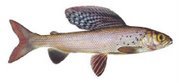
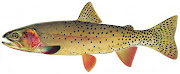
.. There are others that feel it's important to remove all invasive species such as Rainbow Trout, Brown Trout and Brook Trout to foster the recovery of native Cutthroat Trout & Grayling(?).
.. Many feather merchants feel that the role of Yellowstone National Park is to provide fishing opportunities for recreational fishing, (and an economic base for their enterprise.)
.. Some conservationists believe that the only way to enable preservation of native fish is to "restore" the park to "natural" conditions, including removal all planted stocks of fish, (which is a large segment of the current fishable populations.)
.. Definition of terms and concepts will be argued and explored at the public meetings and in the submitted comments. Many oxen could be gored by this project.

.. Some fishers of Yellowstone have opined that since Brown Trout have been in the rivers for over 100 years that they are "native."
.. Does that make Lake Trout native if they survive another 70 years?
.. In another 100 years what will the descendants of those fishers say about Rock Snot, New Zealand Mud Snails, and other yet unforeseen invasive species?

.. What will happen if some fool decides to dump Northern Pike or Muskellunge or Lake Trout in Hebgen Reservoir, right at Yellowstone's door?
.. Your input is necessary for the decision making process. We're talking about the future and how history will view the legacy that we leave.
.. Make no mistake about it, this is a significant project. It will last for 20 years, (1/5 of the next 100 years.) It will significantly affect the definition of Yellowstone National Park and it's role in species conservation and recovery.
.. It will also determine who fishes where and for what in the park. It is an historic effort that demands you input and your concern for how Yellowstone is defined: a fun and profitable fishery for visitors seeking "non-native," invasive trout or a refuge for indigenous species - or both.
-------

Tuesday, December 21, 2010
Very Important Download
NATIVE FISH CONSERVATION
EA Available
3-part PDF

-------
.. We just received notification and downloaded the files. We'll study them and let you know our thoughts.
GET THE EA & APPENDICES HERE.
-------

Tuesday, November 09, 2010
Wanderlust
TO THE LEFT COAST
Fish From The Sea
brief sporadic reports to follow

-------

.. We shall drive past and completely ignore glorious fishing opportunities. Fabled names such as Truckee River, Bear River, Colorado River, Merced River, Sacramento River, Gualala River, Russian River, and San Lorenzo River will only briefly fill our windshield as we head to the promised land.

.. The recent seasonal rains make the fish fidgety and spunky. Fall is fine on these waters.
.. More than a half century ago we roasted crawdads from some of these creeks, (one of which was only six blocks from our back yard.)
.. We may even visit the jungle and fish for sunfish with a safety-pin and popcorn in the wilds of Hollenbeck Park or
.. In San Diego Bay we anticipate Bonito beneath the bait receivers, Slimies near the Coast Guard Shed, Spotted Bay Bass beneath the Columbia 50 fleet, and even Bonefish deep on the mud flats or in the channel in the south bay.
.. Then, to the mountains, where there is the rare, ancient, and small trout of Pauma creek, the walk will probably kill us.

.. The first snowfall of Autumn has put a soft blanket of fluffiness on our town. By the time we return it'll be deep enough to remind us why we enjoy living here.
.. More to follow.
-------

. .
THANKS KID - See ya soon !
THANKS KID - See ya soon !
Saturday, September 18, 2010
20 Years Later
GRAYLING GETTING A CHANCE
We Had A Visitation Last Month
'bout time
ErnestKeeley.jpg) |
| Photo courtesy of Center For Biological Diversity ------- |

.. We've loved this fish for years and had gone two years without a visitation until last month. Over the years we've posted a few notes about the plight of the gray ghost. Perhaps some sensibility has returned to the USFWS.
.. The status review was initiated in October of last year, (LINK,) and is ongoing today. The Center For Biological Diversity has been a key player in this long struggle. Many Montanans have also been active in the struggle because of our precious Big Hole River population. We appreciate their work.
.. Persistence has paid off and we're thankful for it. Read the finding HERE.

Friday, July 16, 2010
A Pair Of Sweethearts
NOT FOR HEADHUNTERS
Avoided By Braggarts
browliners don't even pause
your 2-wt. is too heavy !
your 2-wt. is too heavy !
beautiful rare fish


(click on all images for high resolution views)
-------
.-------
 . It's not that we're secretive. It's not that we're selfish. It's not that we enjoy wildflowers, vast meadows,
  or wildlife to the exclusion of fishing. It's just that some places are so near and dear that they must be discovered to be appreciated.
.. There are a pair of streams, (trickles really,) about an hour or so from home that we visit a couple of times a year.
.. The are in the high country. They are spring fed. They parallel each other and, at one point, are less than 200 yards apart, and oh so different - one from the other.
-------
.. One of them is in the open for most of it's length, (not quite 2 miles.) It runs in the sun with only an occasional tree or bush on it's banks. .. Tall grass is the cover for shade. The banks are hardly undercut at all, and the shade is as important as a bowling ball sized boulder.
.. The other is shrouded in mystery. Thick brush overhangs the banks. Trees and their roots contort the stream into surprising convolutions as it wends it's way through an incised bed.
.. Deep, (up to two feet,) holes are always productive - if you can get to them. Ants and other bugs rain on us as we sneak through the growth. The fish are there, and hungry, and willing.
.. Neither is a fertile stream. Neither is full of bugs. Neither is inviting to the fisher folk of today. They are intimate, quiet, clear, cold, and pristine. The fish are uneducated, diminutive, and spooky as can be.
.. The feather merchants don't know their names. The guides never heard of them. Some neighbors think they are devoid of fish. Fishers drive past them and never even know they are there.
 .. There is wildlife everywhere: not the moose or elk or bear, or deer, (though they are here,) but ducklings, meadowlarks, ground squirrels, shrews, voles, flies, moths, ants, beetles, and such.
.. The birds have the usual high altitude habit of fluttering from bush to bush and hide to hide.
.. It's comical and occasionally surprising, (like a covey of huns bursting through your legs as you scan the horizon.)
-------
 .. We stalk the stream banks with a hand line, (5 feet of 5x tied to a golf tee - the fly is a bit of thread wrapped around a size 20 or 22 hook.) On the open creek, we crawl on our belly in the wet ooze of a perched water table. If nothing else it keeps us cool.
.. We turn over the cobbles at the edge of the water. Granite and quartzite, are predominant here; not the volcanic's of Yellowstone.
.. These mountains were here long before Yellowstone. They were here before the enormous eruptions of the super-volcano. The fish have endured glaciation, vulcanism, earthquakes, fire, drought, and other forces of nature: tough little scamps they are.
.. The food is sparse and very small. We recognize some of the fodder; most we don't. The green ones are easy. The stillborn neotenous forms are difficult!
.. We sometimes are so good at this creeping and crawling that we can tickle a fish in the belly. Most of the time a squadron of small fish zings ahead of the small silt plume that we cause. They are fast little devils: dark, glinting shadows in the water so clear it seems to disappear.
 .. We fish for them downstream with a calculated drift. Little swirls, eddies, cobble pillows and other currents must be taken into account.
.. We place the fly in the water by hand. It takes some stealth and time. A long drift is three feet. We scare a lot of fish. There are a lot to scare. Monsters run to 6 or 7 inches. They leap and splash and we net them and turn them loose.
 .. There have been occasions when we just look & watch. Little fish, with colors and patterns to cause a bit of wonder. They are so bright out of the water. They disappear in the water. It's tough to see these little jewels. It's really a shame to catch them. We limit ourselves to two per creek per visit.
.. These are wild, indigenous trout. Westslope Cutthroat of the purest sort. A handful of biologists know that they exist. Some of the neighbors have visited them. No one goes to these creeks to fish, (save a couple of us crazies.)
.. It's as much about the place as the fish. Untrampled meadows, wildflowers, green's that defy description, and solitude are the attractions. There is a road nearby. It even has a forest service number.
-------

.. We don't know if what we do is fly fishing. There's no vest, no fly rod, no fly reel, 
 no waders, no fly boxes, no forceps, no accouterments from major catalog companies, and certainly no question of keeping the fish.
.. There is no false casting. Neither is there a chance to mend the fly line. Hell, there is no fly line. We use a large net designed for home aquariums - does this qualify?
.. What ever it is we are doing it gets us out of a crowded tourist town. It lets us breath air thin, cold, and pure. It gives us the opportunity to visit with descendants of ten thousand or more generations of successful adaptation to a very harsh, pristine and beautiful part of the world. That's plenty good enough.
-------

Friday, April 02, 2010
Neighbors Marking Calendars
NATIVE FISH
CONSERVATION PLAN
CONSERVATION PLAN
NPS To Tackle Problems
some rivers exempted
 -------
 .. Via National Parks Traveler / NPS: Public meetings for input into scoping for the conservation plan have been announced.
--> Bozeman, Montana: April 12 from 6:00 to 8:00 p.m. at the Comfort Inn, 1370 North 7th Avenue.
--> Cody, Wyoming: April 13, from 6:00 to 8:00 p.m. at the Holiday Inn, 1701 Sheridan Avenue.
--> Jackson, Wyoming: April 14, from 6:00 to 8:00 p.m. at the Snow King Resort, 400 E. Snow King Avenue.
--> West Yellowstone, Montana: April 15, from 6:00 to 8:00 p.m. at the Holiday Inn, 315 Yellowstone Avenue.
.. The Madison River and the Firehole River will be exempt from the plan. This is understandable since these two rivers are beloved by feather merchants and fly fishers alike for their large populations of invasive species.
.. After the public meetings the park staff will work on the Draft EA during the coming summer. You can find details in the brief scoping brochure HERE.
.. The initial scoping document can be found HERE, (PDF.) Public comments will not be accepted by email or FAX.
.. To see how it was, click HERE. To see how the park got so full of invasive species there is an excellent online note by John Byorth (HERE.)
-------
.
Wednesday, March 17, 2010
Gold Fever *
JUST THE THOUGHT HURTS
We've Been Snookered
go anyway ?
 -------
 .. Via Moldy Chum, we learn of a sneak attack on the Chetco River.
.. Last November we ventured that way to dance with some fins in the CALGON corner of the world.
.. Catching was spectacular, access varied from easy to suicidal. The fish were strong, willing and beautiful.
.. Places like the South Fork of the Smith River and the remote sections of the Chetco River, and even the less accessible parts of the Coquille River rival the Yellowstone backcountry for wild fish and wilderness.
---
AND NOW THIS
.. An old mining claim combined with a clever developer in the Kalmiopsis Wilderness of southern Oregon, has resulted in the bringing in of helicopters, gas-powered dredges and paying customers to a remote location on the Chetco River. We fear for the fry... Read the blood - Guts - & - Gore --> HERE.
-------
*an abnormal condition of the body, characterized by undue rise in temperature, quickening of the pulse, and disturbance of various body functions.

*an abnormal condition of the body, characterized by undue rise in temperature, quickening of the pulse, and disturbance of various body functions.
Tuesday, March 16, 2010
Before You Know It
FINAL CALL FOR PAPERS
Wild Trout Symposium
in beautiful west yellowstone, montana
-------
 .. Believe it or don't: just six months until WILD TROUT X arrives in West Yellowstone, Montana. It will be here before you know it. The final call for papers and posters was announced today. There are just 15 days to get your submission in.
.. You can find The details at WILD TROUT X. The symposium is to be held at the Holiday Inn in West Yellowstone, on September 28 - 30, 2010.
---
MONEY QUOTE:
Wild Trout X will offer a unique forum for professionals and trout anglers to interact, to get to know each other in an informal setting, and to be exposed to the latest wild trout science, technology and philosophy. These conferences equip participants to better manage, preserve, and restore these magnificent but declining resources. They focus on the needs of working-level wild trout professionals, conservationists, and trout anglers.
---
.
Saturday, April 25, 2009
On The Desk
SB 425
AWAITING SIGNATURE
AWAITING SIGNATURE
Mostly A Good Idea
feds pay costs for awhile

 .. SB 425 was transmitted to Governor Brian Schweitzer for signature yesterday. He is expected to sign the bill.
.. The full time operation of Fort Peck Hatchery will incur additional operating costs of $80,000 per year. This burden will be covered by federal Wallop-Breaux funds through 2012.
.. In 2012 the Montana Warm Water Stamp will be eliminated and state funding will be supplied from the general license fund. The estimated cost, to the state, of hatchery operation in 2013 is $243,616.
.. In 2014 the total cost of operations for Fort Peck Hatchery is estimated to be $436,059. This money will come from the general license funds.
-------
.. The Fort Peck Hatchery was built by the Corps of Engineers and completed in 2006. It is operated by the Montana Department of Fish, Wildlife & Parks and sits on federal land leased by the state.
.. Since completion it has operated at less than capacity. It has been both under-used and under-funded.
.. In anticipation of completion the state instituted the $5 warm water stamp in 1999. This has been the primary source of funding for the facility and it has been insufficient to fully utilize the available 22,000-sq.-foot hatchery.
.. Up until now the hatchery has been essentially idle after the annual walleye production has been completed. SB 425 will change that. The facility is capable of producing tiger muskies, smallmouth bass, largemouth bass, channel catfish, sauger, and the endangered pallid sturgeon, in addition to the walleye.
.. The hatchery could also produce trout if Montana law would allow it. Currently trout that are planted in the eastern part of the state are trucked in from other hatcheries at a cost of thousands of dollars in gasoline and staff time.
-------
.. We look for a $1 - $2 increase in license fees to take place in the next year or two to support the full funding and operation of the hatchery. We suspect that there is already a draft bill for the production of trout at the facility. This will relieve the burden on the state's other 7 hatcheries... We commend the legislature for this straightforward approach to funding. We commend them for rejecting the thinly veiled attempt at funding in the guise of declaring the walleye a native fish. And, we commend them for placing the burden of funding on the population of users.
--> SB 425 Language
--> SB 425 History
--> SB 425 Fiscal Note
--> FWP Funding Page
--> FWP Quick Facts for Fort Peck
--> All 8 Montana Hatcheries

-------
.. Well, time for steak and eggs. With all due respect to the 2008 "Orvis Fly-Tyer of The Year," Greg Senyo; we'll eat ours before yours.

Subscribe to:
Posts (Atom)


.jpg)