• PARTNER: PROTECT YOUR WATERS
  • Go To: THE FLIES OF YELLOWSTONE
  • Go To: YELLOWSTONE FISHING WEATHER
  • Go To: YELLOWSTONE FLY FISHING MAPS
  • Visit: Moldy Chum
  • Visit: The Horse's Mouth
  • Visit: Chi Wulff
  • Visit: Parks' Fly Shop
  • Showing posts with label Greater Yellowstone Ecosystem. Show all posts
    Showing posts with label Greater Yellowstone Ecosystem. Show all posts

    Thursday, August 10, 2017

    Upcoming Slaughter In Yellowstone

    WITH ALL DUE HASTE
    Strut Your Stuff
    use the best science
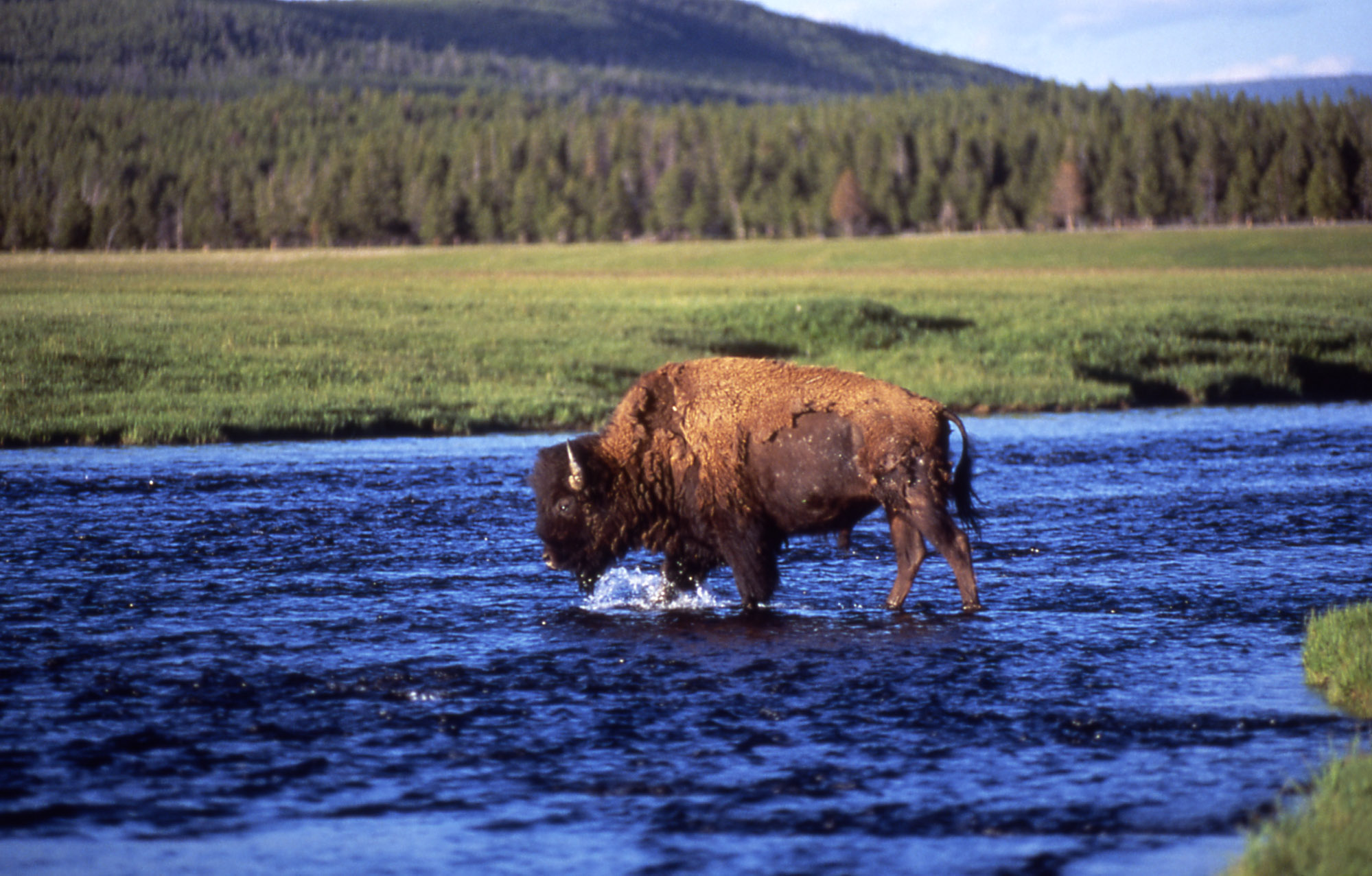
    Parasitic Mobility Of Aquatic Species - NPS
    -------

    PRELUDE

    .. Let's be clear about one thing: the term "INVASIVE SPECIES" is not a scientific term. It is a psychologically derived linguistic derision of something that some human beings dislike.
    .. It is similar to the term used by gardeners and others who love the idea of a manicured lawn or garden: "WEEDS." Weed is not a scientific term either.
    .. The folks in the cultural matrix that use these terms are driven by social and economic forces in time specific contexts. With no scientific basis or definition it is easy to attack the weeds of this world. Just call them undesirable.
    .. When science is employed to rationalize the removal of weeds it is used to define effects that are culturally or economically adverse to vested interests in the status quo.
    .. The most appropriate term, (with scientific credence,) is "PIONEER SPECIES." Pioneer species are those species that, for whatever reason, are able to adapt to a wide range of conditions and spread their populations into new environments.
    .. This world of ours is based on the successes and failures of pioneer species. Human beings are pioneer a species, so are dandelions.
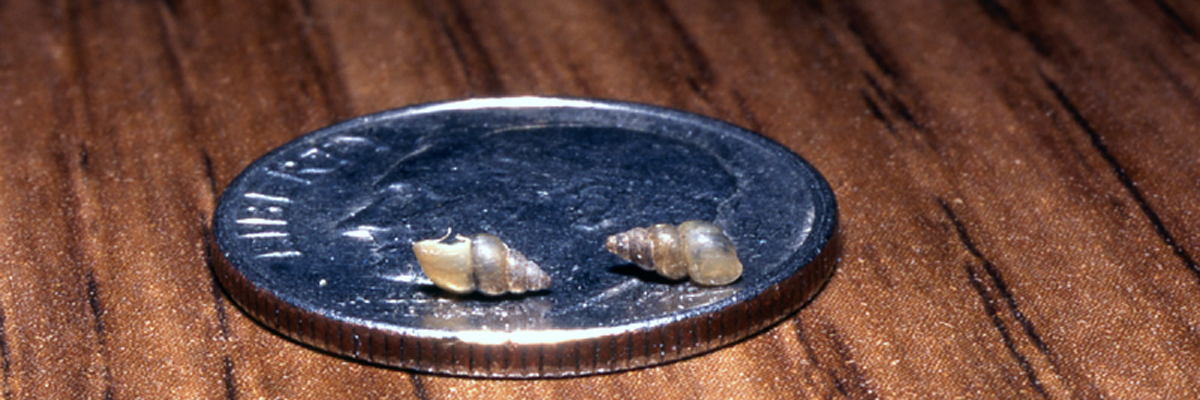
    INTRODUCED MUD SNAILS - NPS
    .. In fact, most species are now or have been in the past, pioneer species. We owe the diversity of our planet and it's wonderfully complex biological milieu to the spread, expansion, success or failure of pioneer species through time and place.
    .. Plants and animals have generally different modes of expansion into new environments. Seed dispersal and pollen rain allow many plants the mobility necessary for expansion. Autopropulsion like walking, running slithering, etc. allow many animals entry into new environments.
    .. Symbiotic, (or parasitic,) mobility allow both plants and animals to enter new environments. Fleas on a dog and seeds in your pants cuff are examples of symbiotic, (or parasitic,) mobility.
    .. In Yellowstone National Park the bureaucrats have chosen to use the term invasive species. It's a bugaboo word laden with severe impact on the mindset of journalists, visitors, fisher folk, and legislators.
    .. The selective use of the term is a conscious effort to garner support for actions that may not have any relevance or scientific validity when addressing most actions that bureaucrats would like to implement.
    .. It is in the worst sense "FAKE NEWS." Honest scientists use scientific terms and honest scientific arguments when contemplating proposed actions.
    -----
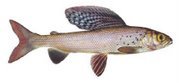
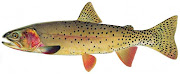
    .. Yellowstone National Park has 11 aquatic fish species that were present when the Euro Americans entered the park: Arctic grayling, cutthroat trout (Yellowstone and westslope,) mountain whitefish,  dace (speckled and longnose,) redside shiner, Utah chub,  sucker (mountain, longnose, and Utah,) mottled sculpin.
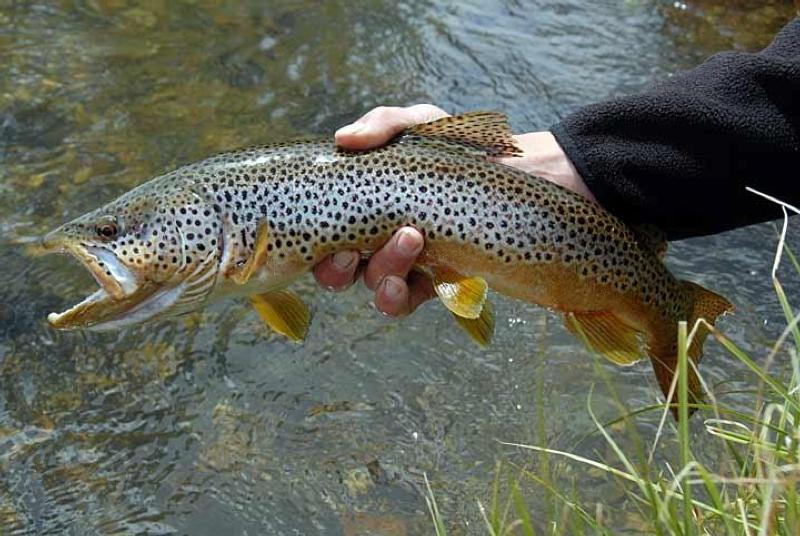
    Introduced Species, Brown Trout - NPS
    .. Parasitic mobility by park managers introduced rainbow trout, lake trout, brown trout, lake chub, brook trout, among others that have failed to survive.
    .. Other non-fish species have entered park waters through parasitic or symbiotic mobility: Myxobolus cerebralis, (the parasite that causes whirling disease,) Melanoides tuberculatus, (that small snail that home aquariums use,) Potamopyrgus antipodarum, (the other small mud snail in the water.)
    .. When park managers introduced the non-indigenous species they did it with the socioeconomic purpose of providing recreational and mercantile opportunities.
    .. That purpose was achieved. There was no science involved. The purpose was pure and simple: catch more fish, sell more bait and gear, attract more fishers = success.

    - END OF PRELUDE -

    "To-morrow, and to-morrow, and to-morrow,
    Creeps in this petty pace from day to day,
    To the last syllable of recorded time;
    And all our yesterdays have lighted fools
    The way to dusty death. Out, out, brief candle!
    Life's but a walking shadow, a poor player
    That struts and frets his hour upon the stage
    And then is heard no more. It is a tale
    Told by an idiot,  full of sound and fury
    Signifying nothing."
    _-_-_- Will . . . baby.
    .. Now, with the need to garner public support, current non science using managers are mounting another socioeconomic effort to murder both indigenous and pioneer species in the waters and on the land of Yellowstone National Park.
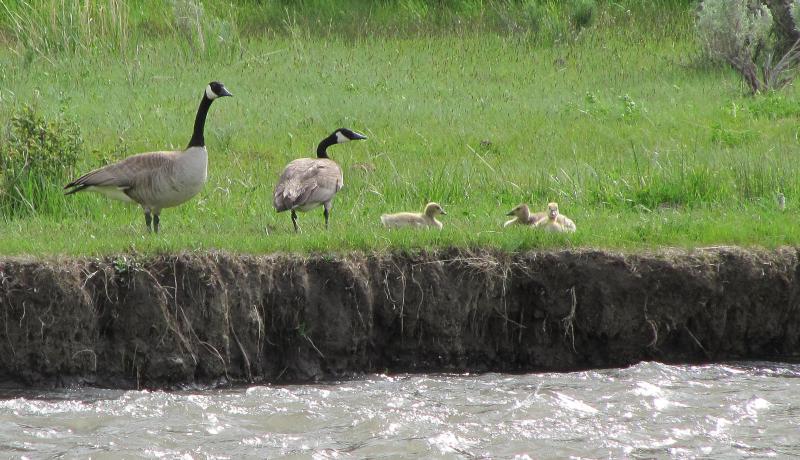
    Pioneer Species Carriers - NPS
    .. The ducks and geese of Yellowstone carry pioneer aquatic, (and terrestrial,) species on their feet from watershed to watershed, (including seeds and spores and such.)
    .. Poison grain is a good way to eliminate ducks and geese - yea team.
    .. The furry legs of bison carry pioneer aquatic and terrestrial species from watershed to watershed, (also seeds and such.) Poison hay and oats is a good way to eliminate bison - yea team.
    .. Bears and coyotes catch fish and transport pioneer aquatic and terrestrial species from watershed to watershed, (also seeds and such.) Hunting with firearms and traps is a good way to eliminate bears and coyotes - yea team.
    .. Recreational bathers carry all sorts pioneer species from watershed to watershed in the seams of their bathing attire and accoutrements of fun. Bathing in the nude will mostly eliminate this transportation, (save for extreme hirsute human specimens) - yea team
    Transport of Pioneer Species - NPS
    .. Eagles and hawks are notorious transporters of aquatic pioneer species. A federal law can be enacted to ban these birds from the park - yea team.
    .. Fisher folks transport both terrestrial and aquatic pioneer species from watershed to watershed.
    Rubber Soled Boot Laces
    .. The species are in the seams of their gear, the Velcro of their fashion statements, the laces of their shoes, the mud on their spats and cleats of their rubber soled shoes and boots, and the flies that stay tied on tippets.
    .. The wet interiors of fly boxes harbor great environments for pioneer species. Oh, and the felt soles of some waders.
    .. The most effective solution to the high mobility fisher problem is to ban fishing. Ban fishing for the introduced fish. Ban fishing in waters with new pioneer species. Ban fishers and other visitors from walking in park lands where pioneer vegetation or aquatic pioneers exist - yea team.
    -----
    Rubber Soled Wading Apparel
    .. The human population of fly fishers is predominately a group of followers: follow the neighbors, follow the fly club, follow the bar crowd, follow the latest fly trend, follow the latest gear trend, follow the lead of assertive individuals - groups - etc.
    .. They are currently being led by the nose into believing jargon without definition or scientific validity. Many better terms can be used for "Invasive Species."
    .. Try introduced. Try non indigenous. Try successful pioneer species. Try economic augmentation by species introduction. There are many good and valid terms that can be sensibly used. They can be defined with precision and used in cogent arguments.
    .. Even scientists, who should know better have begun to use the term - as if everybody agreed on the definition. Such a sad state of affairs. Writing papers and books with inflationary language. Just who reads this tripe without a challenge?
    .. Of course grant seekers, wader producers, managers, and others enjoy using the term "INVASIVE SPECIES." It can bring most fly fishers into line without a whimper. The scare tactics are blatant and transparent.  "Look Matilda - A common enemy!"
    .. Shame on the managers of Yellowstone National Park. Shame on them for not defining the terms they use. Shame on them for seeking the economic solution to the mobility of introduced species. Shame on them for their proposed ban on felt soles for wading foot gear. Shame on them for introducing the idea that somehow wading gear without felt soles is even safer for fishers.
    .. Shame on their alliance with the followers and the merchants. Shame on their idiosyncratic world view that does not rely on science. Shame on them for not seeking public input for this and so many other actions taken on a whim.
    .. Banning felt soles on waders and wading shoes, and wading sandals has not been shown to eliminate the transport of introduced species. Using wading apparel with rubber and metal cleated soles has not been proven to eliminate the transport of aquatic species.
    .. Appropriate cleaning and sterilizing of gear has, indeed, been shown to reduce or eliminate the transport of introduced species.
    .. If Yellowstone National Park Managers choose to inspect boats should they not also choose to inspect all waders and all fly boxes and all cuffed pants and all cuffed swimwear?
    .. We wonder if they are trying to legislate morality or reduce the transport of introduced species. Perhaps just enhance wader sales!
    .. We doubt that they will kill all the ducks, geese, bears, moose, elk, bison, coyotes, eagles, osprey, and wolf in the park. We wonder: have valid scientific data shown that these critters are less of a transport mechanism? Please let us know.
    .. The biology of planet earth demands pioneer species. The continued success of life on planet earth depends on the adaptability of all species to the environments that life finds itself in. Adaptability can be biological or behavioral.
    .. Evolutionary change can be adaptive or adjustive. Many adjustive responses are in fact maladaptive = leading to death and extinction.
    .. We wonder if the proposed ban on felt soles is adjustive or adaptive? Please let us know.
    .. If Yellowstone National Park, and the fishing gear industry, and fishers of all stripes are serious about the reduction in transportation of introduced species then, an educational campaign would be more effective than just the passive banning of felt soled wading footwear.
    .. However, active educational campaigns require commitment, persistence, and longevity. Probably too much of a committed effort for the managers and industry.

    -----
    Resources
    >> Felt vs. rubber: Bozeman Daily Chronicle,
    >> Economic Impacts of Aquatic Invasive Species: EPA,
    >> Fish and Aquatic Species: NPS,
    >> New Zealand Mud Snail: NPS,
    >> Essentials of Conservation Biology: Primack,
    >> Extremely High Secondary Production Of Introduced Snails In  Rivers: Hall, et al.
    >> Invasive Species Impact: Asymmetric Interactions Between Invasive And Endemic Freshwater Snails: Riley, et al.
    >> Potamopyrgus antipodarum: distribution, density, and effects on native macroinvertebrate assemblages in the Greater Yellowstone Ecosystem: Kerans, et al.
    >> Assessing the effects of climate change on Aquatic Invasive Species: Rahel & Olden.
    >>
    -----
    .. Time for a visit to the cooling waters of the Firehole River. Afternoon showers and cool nights have jiggled the psyche of the fish and the fishers.
    -------

    WALLPAPER:   BACON, EGG AND HOMINY


    Monday, March 28, 2016

    Friday, March 04, 2016

    Bombs Away

    SORRY 'BOUT THAT
    Rich People Poop
    it's aimed at bozeman
    (click on video to play)
    ..
    -------
    .. 35 million gallons, (yet to be verified,) of treated wastewater has escaped from a holding lagoon in Big Sky, Montana. This is the treated poop stream from the environmentally sensitive residents of the Yellowstone Club.
    .. The effluent, (from a broken pipe designed to water the golf course,) cascaded into Yellow Mule Creek, then into the South Fork of the West Fork of the Gallatin River, AND --> finally into the main stem of the Gallatin River.

    LAST YEAR'S IMAGE SHOWING OVERFLOW
    .. The last time this happened on the Firehole River in Yellowstone National Park, (when the turd whirlers at Old Faithful overflowed,) fishing and catching improved the following year due to the increased nutrient content. Hardly the best way to attract fisher folk.
    .. We wonder just who is concerned about this event. The lagoons and sewage treatment at the Yellowstone Club and Big Sky in general have a long history of scrutiny and controversy.
    .. You can see by the above image that overflow and runoff is conveniently captured by Yellow Mule Creek. No wonder the catching is so good on the West Fork of the Gallatin River.
    .. Interestingly this is just the latest in a long list of easy-gift compliance associated with the elitist enclave of Big Sky, Montana and the Yellowstone Club.
    RESOURCES:
    MONTANA RIVER ACTION,
    HIGH COUNTRY NEWS,
    CHI WULFF,
    HOUSER ENGINEERING,
    BOZEMAN DAILY CHRONICLE,
    FOX NEWS,
    WASHINGTON TIMES,
    GOOGLE SEARCH.
    -----
    .. A bit closer to home there is other news as well.
    .. A snowmobiler was killed in an encounter with a tree at the old ski hill near Lion's Head, (LINK 1.)
    .. Human remains were discovered just up the road in Yellowstone National Park, (LINK 2, LINK 3.)
    .. The National Park Service has finished the roll-out of the revamped website for Yellowstone National Park. It's cute, graphic, full of social media links and a nightmare to navigate, (LINK 4.)
    -----
    THE SNORTLE
    .. Finally, the bears are waking up, the streets are nearly bare of snow and ice, the Chinook winds are causing roofs to slide and gutters to puddle, and there is a bit of open water in secret and select locations on Hebgen Reservoir.
    .. Estuary fishing has started to pick up. Both the Madison Arm Estuary and the South Fork Estuary are open and the ice is disappearing rapidly.
    .. Please get a good map and stay in the waters of the reservoir. The river waters are currently closed and you could get in deep doo doo if you fish there.
    .. We're headed down to the big muddy => near abouts Big Sky. Wonder how the aroma is?
    -------
    WALLPAPER: WELCOME TO WEST YELLOWSTONE


    Friday, February 01, 2013

    Shoot On Sight ?

    LEGISLATING DEATH
    Our Legislature Is Back In Session
    not just fish stupidity this time though

    -------
    .. The Montana Legislature is well known for introducing bills that grab hot button issues and turn them into seething debates, while polarizing it's members and our citizenry. They've done it again!
    .. Quick as a sprinter off the blocks, the property rights and agribusiness interests are manipulating their legislative puppets and introducing bills to strip Montana of it's heritage and wildlife.
    .. We don't need to belabor the point here. If you are interested in the fate of wild bison, (or elk, or trout, or deer, or any other wild native species,) you can read about it
     HERE.
    .. Suffice it to say; many of us have learned to live with these huge, hairy, hoary beasts. Bless their hearts.
    .. We're headed to the ice fishing social hour but thought that this should see the light of day as soon as possible. Ice hole report to follow.
    -------

    Friday, July 27, 2012

    Published Tomorrow

    OFF THE HOT PRESS
    A Prose Tapestry
    some fly fishing stuff too

    -------
    .. It's not just another, (of the myriad,) Yellowstone Fly Fishing books. It is one in a long line of books about fishing in the park.
    .. It's not just another, (of the myriad,) "I did this and so should you!" books.
    .. If anything it's a book that highlights and celebrates Yellowstone National Park. It's a tapestry woven of history, anecdotes, personal experiences, interviews, rumors, legends, and fish stories.
    .. Offered up are fish stories from people who, have fished, and some who continue to fish in Yellowstone National Park. The stories serve to illustrate the rich diversity of any fishing experience in the park. They are the delights of their tellers and their enthusiasm, reverence, joy and pain are all there for us to read.
    .. The intriguing title touts the "50 Best Places." The book covers many more than that.
    .. Fishers who love specific river segments or lake localities are used to illuminate the lore of any single piece of water. The famous and infamous have come forth to share insights and delights: you will recognize many of the names and places - some you won't !!
    .. If this were an early 19th century work it could just as easily be titled "The Personality of Yellowstone's Fly Fishing." It's all there! Bears, Wolves, Monster Fish, Native Americans, Mountain Men, Explorers, Early Visitors, Bandits, Outlaws, Rapine, Tragedy, and Fishing.
    .. Of course there are plenty of illustrations. Certainly there are quite a few tips and tricks about the various waters and the fish inhabiting them. There is even the expected hatch sequences, recommended flies, secret tips and tactics, where to, how to, etc. - it really is all there.
    .. This is a "FAT BOOK" and we strongly recommend that you properly break-in the binding. We also suggest that you buy two. If you love the park and it's fishing you'll quickly wear out the first one.
    .. If you view fishing in Yellowstone National Park as just another catching destination you should avoid this book. If you would like your experiences in the park to be enriched and informed by it's long history and traditions then this is the book for you. It will even help you catch fish.
    .. It's an easy read and one full of everything from gossip to fact. It is readily apparent that the author, (a Montana native son,) is not quite done with the 50 best places. We're sure he'll be back. Perhaps he'll treat us to a sequel.
    OFFICIAL DETAILS
    English
    ISBN: 0811710513 EAN: 9780811710510 Category: Sports & Recreation / Fishing/Travel / Parks & Campgrounds
    Publisher: Headwater Books, Release Date: 08/01/2012
    Author: Nate Schweber
    Synopsis: The most important hatches and recommended patterns, along with key fishing techniques and the best times of year to fish there. Interviews with a stunning collection of Yellowstone Park veterans in the know, including fly shop owners Bob Jacklin, Craig Mathews, John Juracek, Richard Parks, and John Bailey.
    Writers, including; Tom McGuane, Wild Bill Schneider, and The Drake magazines' Tom Bie. The best spots for Yellowstone cutthroat, westslope cutthroat, Snake River finespotted cutthroat, grayling, rainbows, cuttbows, brown trout, brook trout, mountain whitefish, and Mackinaw lake trout
    -------

    Sunday, June 21, 2009

    Rivers Of Waste

    WHERE'S YOUR
    OLD HARD DRIVE ?

    PBS Airs SOME Facts
    preview press release here
    -------
    .. Your computer will die. It will go away. Do you know where to dispose of it? Do you know how to dispose of it? Where will it go then?
    .. The toxicity of these pieces is known and is a growing news story. There is mercury, lead and other toxic substances in these marvels of technology.
    .. However, a second story is also gaining momentum: there is information contained in the discarded components. Personal information, corporate information, etc.
    .. Can you protect your personal information? Will someone steal your picture and use it in a phony I.D.? How "clean," (in an information sense,) is your disposable treasure?
    .. Is your data really gone from your old cell phone and computer and television? Find out just how vulnerable you are on Tuesday, June 23, 2009.
    .. FRONTLINE/WORLD on PBS is airing a program detailing the dumping of electronic waste by the USA, (and others,) in third world countries. The USA has not ratified the treaty banning the export of hazardous waste. We send it and it's sensitive information around the world.
    .. Cell phones and computer consoles are being found in our waterways and fisheries suffer. Our debris is making it's way to foreign countries. The interesting thing is that our information is riding this river of waste and ending up in criminal hands.
    .. If you have any concerns you can follow the trail at THEWIP website and at the GREENPEACE website.
    .. If you are a techno-weenie and have everything under control then fish the Gallatin River and worry not.
    .. By the way, cell phones and expired dry cell batteries are now finding their way into the rivers and thermal features of Yellowstone National Park. There are no reports, yet, of computer dumping in the park. BUT - there is on the Gallatin River just north of the park.
    -------

    Tuesday, March 31, 2009

    Fishing For Geotourism

    OUR NEIGHBORHOOD
    WRIT LARGE

    National Geographic Helps
    nice map / PDF for free
    -------
    & an interesting blog or two

    {click on images for larger view}

    .. The National Geographic Society, the National Park Service, Montana, Wyoming, Idaho, the United States Forest Service, the Greater Yellowstone Coalition, and the Bureau of Land Management, to name a few, have teamed up to produce a "MapGuide" for our neighborhood.
    .. According to an article in the Billings Gazette there will be 100,000 free maps to inform visitors of the area's unique lands, wildlife and people. (We're as unique as it gets out here.) Sadly there is no mention of how to obtain one if you just happen to be one of the neighbors and want one too.
    .. It is possible to download a PDF file of surprising detail.
    -->Page one "Yellowstone Lands Map" can be downloaded HERE.
    -->Page two "Yellowstone Themes Map" can be downloaded HERE.
    .. These files are large and detailed. Even a 28" monitor can only display parts of them at 100% of image size.
    .. You won't find any secret fishing spots, but the expansive area covered truly goes to show why this corner of the world draws visitors from around the globe. Only the highlights are detailed on the map, but as any of our neighbors, or any local Chamber of Commerce will tell you: 'It takes more than one lifetime to even scratch the surface.' There are over 800 map points included in this publication.
    .. The MapGuide title is encompassing, ("Yellowstone and Beyond, an ecosystem to experience,") and the geography of the Greater Yellowstone Ecosystem is magnificently diverse. There is also supposed to be a companion website, but the URL was not mentioned in the press report. We'll continue to search.
    .. There is an 'unveiling ceremony' in Helena today, (Tuesday, March 31, 2009.) We're sending a courier to retrieve a 'free' sample.

    -------
    .. We hope this one lasts. "Old Timey Gear," is a blog about good gear, still being used today. We, however, on occasion, do pine for the 'good old days.'
    MONEY QUOTE:
    . . . "despite the somewhat campy title, this blog wasn’t started to be nostalgic, to pine for the “good old days” etc. - but instead to highlight gear still being made the way people used to make outdoor gear when it was equipment you truly had to depend on; maybe even would be gear that, with care, could be handed down to your children when the time came. An approach, and a pride in craftsmanship, that is all too rare these days . . ."
    .. We'll be following along.
    -------
    .. We periodically check out the down under scene at BISH ON FISH. His catalog of quotes - fishing and otherwise, has reached to over 750.
    .. The quotes page has a button that grabs a random quote and gives it to you - nice.
    .. He just posted one that brings tears to our eyes and joy to our heart.
    “There isn't any symbolism. The sea is the sea. The old man is an old man. The boy is a boy and the fish is a fish. The sharks are all sharks no better and no worse. All the symbolism that people say is shit. What goes beyond is what you see beyond when you know.”
    . . . Ernest Hemingway

    Monday, February 16, 2009

    Inches Up -- Water Down

    SNOW PACK
    ABOUT AVERAGE
    Or Slightly Below
    spring will tell the tale
    (photo courtesy of North Carolina Museum of Natural Sciences Winter Tour of Yellowstone)
    [[click photo for Yellowstone slide show]]
    .. As the mid-winter-warm-up wends its way toward spring we again check the snowpack figures. The numbers are not as depressing as we feared. But, they're not as good as we'd hoped.
    .. If the 90 day forecast holds and spring brings what the National Weather Service anticipates we can look forward to the following:
    ". . . estimated streamflows between April and July suggest that the Gallatin River will be running between 86 to 96 percent of a 30-year average. The Yellowstone is predicted to run at 92 to 104 percent, the Madison River between 78 and 81 percent and the Jefferson River 81 to 101." [LINK]
    .. That's not all bad for the anticipated river flows. The Billings Gazette, and The Bozeman Chronicle both have run articles in the recent past. It seems that water is important to us all.
    .. The maps below show the snow pack, and the streamflow forecast. It has been, and could be worse. We'll wait another 30 days and see how it turns out. [Click image for source.]
    -------
    .. It seems that the Sacramento River salmon are being done in by pumps and water exports. Thanks to the Trout Underground for following this catastrophe.
    .. Jeff Kennedy, of Drawing Flies fame, is busy in these down-times and we miss the daily offerings. He's posted another couple of flies, and gotten some good press from Field & Stream.
    .. The Montana State Legislature is busy wasting time with your money as it introduces another, (happily defeated,) stupid bill. Read about "Junteenth" and how our legislature spends its time HERE.
    -------

    Saturday, January 17, 2009

    Neighbors Taking Action

    GREATER YELLOWSTONE
    COORDINATING COMMITTEE
    FORMS ANS WORKING GROUP
    Our Neighbors Are Great
    .. The formal announcement of this action oriented working group can be found at Protect Your Waters. We salute the concern and selfless efforts of all involved. Here's the full text.

    . . . . The Greater Yellowstone Area (GYA) is a global asset that is treasured for its natural beauty, geological wonders, biological diversity and plethora of recreational opportunities. People from all over the world visit the GYA to enjoy its natural wonders and resources. The GYA is the headwaters for three major river systems that are of immeasurable economic importance to the United States.

    The unique ecological and economic values of the GYA are now being threatened by aquatic invaders, or aquatic nuisance species (ANS). These non-native mussels, plants, snails, and other introduced species have the potential to severely impact the region’s ecosystem, tourism, agriculture, hydropower, and businesses.

    To better combat these invaders, Federal, state, and county agencies have partnered with organizations, outfitters, and businesses to protect the GYA from ANS, by creating a working group of the Greater Yellowstone Coordinating Committee. The value of this unified approach includes the pooling of resources, knowledge, and energy as well as avoiding the duplication of efforts. This approach moves government entities to a proactive approach that empowers individuals and harnesses the power of the private sector to change behaviors. This collaborative group has prepared a strategic plan and is developing an accompanying implementation plan. Their goals are to:

    • Prevent new introductions of ANS into waters of the GYA.
    • Limit the spread of established populations of ANS into uninfested waters.
    • Abate harmful ecological, socioeconomic and public health and safety impacts resulting from infestations of ANS within the GYA.
    • Provide a cooperative environment that encourages coordinated activities among all interested parties throughout the GYA.

    Key action items include survey, research, outreach/education, and control. Surveying for ANS in and around the GYA will provide essential insight into existing conditions. This element of the implementation plan is currently under-funded and the group is seeking funds to accomplish it with a GYA-wide approach.

    ANS pose an immediate threat to the waters of the GYA. All those involved recognize that everyone who lives, works, or plays in the GYA needs to work cooperatively to prevent the spread of ANS.

    For more information on how to get involved to protect the GYA from ANS, please contact the Chair of the GYA-Wide ANS Working Group, James Capurso (Caribou-Targhee National Forest) at 208-557-5780.

    .. GYCC LINK
    .. Caribou - Targhee National Forest Link