• PARTNER: PROTECT YOUR WATERS
  • Go To: THE FLIES OF YELLOWSTONE
  • Go To: YELLOWSTONE FISHING WEATHER
  • Go To: YELLOWSTONE FLY FISHING MAPS
  • Visit: Moldy Chum
  • Visit: The Horse's Mouth
  • Visit: Chi Wulff
  • Visit: Parks' Fly Shop
  • Showing posts with label New Zealand Mud Snails. Show all posts
    Showing posts with label New Zealand Mud Snails. Show all posts

    Thursday, July 30, 2009

    Trail Work

    BETTER, SAFER ACCESS
    Easier Walk
    more fish
    -------
    .. Just a brief note to let you know that the trail realignment and improvement along Fan Creek is approaching completion.
    .. The return of the beavers, and their impoundment seems permanent.
    .. The NPS has chosen to honor this structure and it's expanding pond by adjusting the trail realignment to avoid the feeder streams and seasonal trickles that were previously crossed by the trail.
    .. Outfitters with stock will soon be able to use the new trail. Fishers with legs can use it now! We look forward to a mature beaver pond and a captive audience for some exuberant dances in the near future.
    .. The beavers were a happy coincidence that coincided with the 10 year "Trail Restoration" project funded by the Yellowstone Park Foundation. You can investigate this initiative HERE & HERE.
    .. Many of the beavers in the neighborhood are bank dwellers. We are pleased to see this innovative pond building & dwelling initiative on the part of the busy little rodents. And we also hope that they capture some hungry native trout in the process.
    .. Perhaps this will aid the preservation of some native cutthroat trout in the little valley.
    .. The Wild Fish Habitat Initiative, (#1, #2,) has had a stuttering history on Fan Creek and it's environs.
    .. Invasive species, (such as Brown Trout & Rainbow Trout,) have been, (and continue to be,) protected by the NPS to the detriment of our natives.
    .. These foreign invaders, in Yellowstone National Park are, sadly, cherished by indiscriminate fly fishers and feather merchants alike.
    .. It seems that the lesson of foreign char in Yellowstone Lake has gone unheeded by most of our park's managers when it comes to the streams in the park.
    .. Maybe the beavers can help restore some perspective about the place of Yellowstone National Park in the effort to preserve our native species.
    .. In a related note yesterday PROTECT YOUR WATERS points us to the robust program that Idaho is undertaking (PDF). Although still aimed at the little critters such as New Zealand Mud Snails and plants such as water milfoil, it's a good start.
    .. It would seem that these programs are aimed at protecting, among other things, fishing in general - rather than protection and restoration of native species.
    .. We'll continue to watch this effort and see if it holds promise for the Yellowstone region.
    -------

    Sunday, May 24, 2009

    A Great Big Thank You

    SO LONG DICK
    .. Dick Vincent, 68, retired this year after 12 years as whirling disease coordinator for the FWP, eight years as fish manager for Region Three of the FWP and 22 years as area biologist over the Madison, Gallatin, and upper Missouri rivers.
    .. In 1991 Vincent noticed some problems with young Rainbow Trout populations in the Madison River. By 1994 the population of rainbows had fallen 90% and Whirling Disease was pinpointed as the culprit.
    .. The disease was poorly known at the time. Vincent and his coworkers established an initiative to study the disease from every angle. The initiative continues today and we have learned much.
    .. Trout Unlimited and the Whirling Disease Foundation have since merged and the URL "WHIRLINGDISEASE.ORG" is now for sale.
    .. These conjoint efforts have brought Whirling Disease to the forefront of our discussion of healthy Rainbow Trout Populations in Montana.
    .. Currently Montana has 150 infected streams. The Madison River Rainbow Trout population has slowly recovered and is now at 60 - 70 percent of what it was before the discovery of Whirling Disease.
    .. The recovery is most likely the result of genes from the DeSmet Rainbows probably imported from California by way of Wyoming. The exact source of the introduced fish is not known and the detective work is still underway.
    .. An article "HAS WHIRLING DISEASE COME FULL CIRCLE?" in MSU's MOUNTAINS & MINDS recaps the story about Dick Vincent, his career, and the Whirling Disease saga.
    MONEY QUOTE
    Vincent announced four years ago that whirling disease researchers had found rainbow trout that were somewhat resistant to whirling disease. The fish live in the Willow Creek Reservoir, three miles east of Harrison in Madison County. Their ancestors came from Wyoming between 1977 and 1981. In the century before that, they came to Wyoming from somewhere along the West Coast. They made the trip by train, riding in milk cans filled with water.

    Vincent said he tried unsuccessfully to learn more details about the West Coast relatives. Despite his detective work, he knows they were wild trout, but doesn't know the state or stream where they originated. It was common back then, he added, to scoop wild fish out of streams during spawning and dump them elsewhere.

    "In the late 1800s, fish were hauled everywhere, whether they needed it or didn't," Vincent said. "It was willy-nilly."
    -------
    .. A related article published this week explores the work of the research laboratory at Pony, Montana. It's at this lab that Billie Kerans, MSU ecologist, and long time collaborator of Vincent's holds forth.
    .. If you want to know about caddis flies, New Zealand Mud Snails, Whirling Disease or the ecology of invasive species - just ask Billi.
    .. We take this opportunity to thank both of these tireless researchers. Go get 'em Billi, and enjoy your retirement Dick!
    -------
    Resources:
    -> Montana University System Water Center
    -> Researchers Optimistic about Montana's Trout
    -> Has Whirling Disease Come Full Circle?

    -> Eye Of The Guide
    -> Billi Kerans Home Page

    -------

    Monday, April 27, 2009

    Snails Attacking California

    THEY'RE MOVING NORTH
    they are spreading
    like wildfire in montana
    the infestation has begun to take it's toll
    YES, MABLE, THE ANNUAL MUD SNAIL POST
    .. The Golden State, named after a beautiful black queen, and filled with Audi fish-cars is experiencing a resurgence of the New Zealand Mud Snail.
    .. The little mollusks are marching, (with just one foot each,) up the coast at a rapid rate and have infiltrated the rivers beyond the Oregon border. They eat the food that the bugs your fish need eat. How cruel is that?
    .. The Malibu Creek Watershed Council posted a Public Service Announcement on YouTube in 2007 (Spanish version HERE,) for all to see..
    ..
    .. The friendly NPS Ranger in the English version seems almost delighted at the prospects of more snails stealing more food from the streams and rivers of Califia's Realm. The Spanish version seems a bit more urgent.
    .. Mud snails have spread rapidly since their discovery near Hagerman, Idaho in 1995. They are in Yellowstone National Park and are a growing threat to our fisheries throughout the west.
    .. There are now two morphs in the western United States and fisher folk should be able to identify both forms. They should also be able to distinguish them from other resident and native snails. It's far easier than mayfly identification and better for your rivers as well.
    .. Montana State University has a research program and maintains a website for information about the crusty critter. It is the best online source for information about the mollusk.
    .. The maps are most interesting and suggest that this threat will continue despite our best efforts. There are now over 1500 recorded locations - and the data base hasn't been updated since January.
    .. The Greater Montana "dot map" is interesting: the watershed map is frightening - but only if you fish in the indicated areas.
    .. The areal spread of snails in Calfia's Queendom is a bit more sobering. How long before there's no food for the queen's fishes?
    .. If you are planning a trout fishing trip in the western United States, chances are you will be in mud snail territory. It might be useful to ask your guide or outfitter about the precautions they take to avoid the spread of these little gobblers.
    .. A kind gesture might be to help clean the gear: boat, oars, nets, boots, waders, trailer, etc. Consider it a part of the tip you give them. Will they accept your offer? What is the guide's schedule like? What is your schedule? How much time do you spend each day inspecting? How much time do you spend fishing in infected waters? Food for thought - food for snails!
    .. In the time honored flurry of finding the hatch and then fishing it do you change foot gear when you change streams? Do you have gear for each stream? Do you dash to the pub and hope the mud dries overnight? Are you too busy to take the precautions? What will your grandchildren say? Have none - don't care!.. Why talk about Califia's Queendom on a Yellowstone Blog? Because the California Department of Fish & Game still has the best research and guidelines for controlling the spread of mud snails on fishing and wading gear. Read about it HERE (PDF). And, Martha, because the file is hosted on the MSU computers. And, of course, because the 'mudsnail' pages on the California sites refer us to the MSU site, [ #1, #2.]
    .. Mud snails are crafty critters and hide very well. Just because you've given up felt soles is no reason to believe that you are "clean." There are several methods of cleaning mentioned in the California PDF - some will destroy your gear along with the snails. Choose your cleaning method carefully.
    .. Ask your guide, before you book your trip, what cleaning method is preferred for snail abatement. Ask about why the chosen method was chosen. Ask about the other methods not used.
    .. Ask the local fly shops how they store their cleaning solutions and if they are fresh. Ask them where the cleaning stations are on the rivers in the area. Ask them where you can procure the ingredients for making your own cleaning solutions locally.
    .. If you give a damn read the PDF from California and see if the methods you are using are successful or just for show. If you need additional information check out the California Mud Snail Warning Site.
    -------
    .. Time for a late breakfast and journey into wonderland. A little snow is present but so are the very moderate spring temperatures.
    .. Digestion of S.O.S. is aided by a gentle drive along some of our glory waters - and vistas without snail spreading fisher folk.
    .. We use wheat bread because the neighbors say it's healthy. We use butter and buttermilk because the flavor is better. We use two jars of dried beef because then you can see it. We add just a bit of nutmeg and Worcestershire sauce for the papillae on the sides of our tongue. We made it yesterday and heated it up today because that's the way they served it to us in the old days. Maybe there will be some left for tomorrow.

    Monday, July 28, 2008

    Will Yellowstone Be Next ??

    (GOOD) NEWS FLASH
    Phase Out Felt Soles
    check timely posts
    .. New Zealand has banned felt-soled wading boots. This is an effort to help stop the spread of invasive species. This is important. We wonder when Wader Makers and governments in the United States will follow suit?
    .. Read it HERE, from Protect Your Waters.
    -------
    .. For alternative choices check the recent timely posts at Best Fly Fishing Yellowstone: (#1, #2, #3, #4, #5.)

    Sunday, March 23, 2008

    It's Getting Worse

    CUTTHROAT TROUT
    ARE WHIRLING AWAY

    Malady Spreading Like, - well - Whirling Disease
    watch them go
    .. The Denver Post is just the latest in a long line of newspapers to run a story about the disappearing Cutthroat Trout of Yellowstone. Both the Yellowstone Cutthroat and the West Slope Cutthroat are in trouble.
    .. Whirling disease is the culprit, in the "Troubled Waters" of Yellowstone, cited by Charlie Meyers in his note about the declining numbers of the trout.
    .. In 1995 the New York Times and Peter Kaminsky brought the situation to national attention in their article "Trouble In Paradise." Mike Stark of the Billings Gazette has been diligently writing the same information in articles since 2004, (1, 2.) The Greater Yellowstone Coalition has been involved in the effort to save the species since 2005. The Montana Department of Fish Wildlife And Parks has been acutely aware of the problem since 2001.
    .. These natives are disappearing from the regions waters for a variety of reasons, and Whirling disease is not the least of them. Studies have shown the importance of these fish to the ecosystem, and their reduced numbers are alarming.
    .. The growing concern stems from the fact that the spawning streams are now infected and the trout are being wiped out in increasing numbers at an increasingly early age. The spawning streams of the Yellowstone River in Paradise Valley and those of the South Fork of the Snake River are now breeding fewer Yellowstone Cutthroats and more parasites.
    .. This two year old map shows the known distribution of New Zealand Mud Snails in and around Yellowstone National Park. This is almost exactly the same as the known distribution of whirling disease. As you can see the dots follow the Yellowstone River into the Paradise Valley. Here, about 2/3 of the spawning tributaries have shown infected populations.
    .. The documentation shows that both are rapidly spreading and reducing the fish population to dangerously low levels.
    .. There are a couple of strains of Rainbow Trout, resistant to the disease, that have been developed by fisheries scientists that may be useful in stemming the tide of the disease in this species of trout. However, there are no known Cutthroat Trout that are resistant to whirling disease.
    .. In addition to whirling disease the native Yellowstone Cutthroats are being hybridized out of existence in most waters in the Yellowstone ecosystem. (See: Keeley for the work in Idaho, 1, 2, 3, 4.)
    .. The National Park Service advises each fisher on Slough Creek to kill up to five (5) Rainbow Trout that they catch there: provided they can tell the difference.
    -------
    Money Quotes: NPS

    To reduce competition, predation, and hybridization stress on native fishes, Yellowstone has increased harvest limits of rainbow and brown trout in waters where they co-exist with cutthroat trout and fluvial arctic grayling.

    In cutthroat trout waters where rainbow trout have been introduced, either by intentional, historic stocking or by invasion from a downstream source, the result has been a serious degradation of the cutthroat trout population through interbreeding of the two species.

    Harvest of nonnative trout is allowed, and in some cases required, in many park waters.
    .. Of course the unthinking fly fisher believes that catch-and-release is a panacea for all situations, in all places, and at all times. and has refused to do this in any meaningful way on Slough Creek.
    .. You should hear the patter in the local fly shops. "Hell one trout's as good as the next, and those cutts are lazy fish, anyway." "I'd rather kill a Cuttthroat than a Brown any day." "There's no difference between a Cutbow, a Rainbow, and a Cutthroat." and so it goes.
    .. In addition to New Zealand Mud Snails, Lake Trout, Whirling Disease, and Hybridization it might be that the most dangerous invasive species, for the native Yellowstone Cutthroat, is Homo Sapiens. Hardly sapient in this instance.
    .. The long history of our manipulation of the fisheries around us, gives pause to the thought that we can or should do anything now. Yet the fish of the Thorofare may be the next to go the way of the downstream populations.
    .. These gems are wild, wily, and cagey. They are prey for bears, coyotes, pelicans, eagles, hawks, wolves, and man, for starters. It would be a shame to see them disappear as both a sport fish and a member of the food chain.
    .. As the hint of Spring brings to mind fishing in Yellowstone, it also reminds us that it is the informed fisher that enjoys the pastime the most. The history of fish species in Yellowstone has informed the park's managers in their drafting of regulations. It behooves the fisher to be at least as well informed as the managers.
    -------
    .. There are much better resources on-line about Yellowstone Fishing than you get in the little pamphlet that comes with your fishing permit. The following are exceptionally well written and should be read and understood before fishing in Yellowstone.
    .. And, again, this year there are changes. We post this now, AND, let you know that we will post it again as fishing-time draws near.
    .. Yellowstone Fishing Regulations (PDF)
    .. Yellowstone Fishing Season Dates And Regulations
    .. Yellowstone Fishing And Fisheries Science
    .. Yellowstone Park Advice To Anglers
    .. Troubled Waters, Yellowstone Video About Invasive Species
    .. What's On Your Line? Yellowstone Video
    .. Fish Identification Tools - Poster Downloads (PDF)
    .. Yellowstone Fish Distribution Maps
    -------
    NPS RECOMMENDED LINKS

    Fishing in Yellowstone - YNP Site
    Invasive Threats to Yellowstone Fisheries - YNP Site
    Whirling Disease Initiative - Montana State University Site
    Stop Aquatic Hitchhikers - A public awareness campaign, and a program of the U.S. Fish and Wildlife Service and the U.S. Coast Guard.
    National Invasive Species Information Center - US Department of Agriculture Site
    Aquatic Nuisance Species - US Environmental Protection Agency Site, Region 8
    Montana University System Water Center - Montana State University Site
    Aquatic Nuisance Species Task Force - Unites States Federal Aquatic Nuisance Species Task Force Site
    Whirling Disease Information - Whirling Disease Foundation Site
    New Zealand Mudsnail Information - Montana State University Site
    Aquatic Invasive Species - Wisconsin State Environmental Resource Center Site
    National Aquatic Nuisance Species Clearinghouse - New York Sea Grant Site
    ---------
    .. The weekend was busy and we had barely time to fish or to visit THE HORSE'S MOUTH. But we did both. One of the cutest wahines ever was posted on Good Friday. And, just in case you missed the week before we reproduce below one of the most daring of all Friday wahines.

    Monday, June 11, 2007

    Yellowstone Addresses ANS

    INVADERS SHINE IN VIDEO
    Considering Our Role In Degrading The Water


    .. The official web site of Yellowstone National Park is catching up with the rest of the park on the invasive species issue. There is now an integrated page about invasive species. The site features the Protect Your Waters logo and has links to important resources, including fishing regulations.
    ________
    .. The page lists an official WARNING about "Hotzones" of ANS. They include:
  • Firehole River, Gardner River, Gibbon River, Madison River, Yellowstone River
    ________

  • .. A significant link is to the Yellowstone In Depth page. This page includes episode 2, a video about the troubled waters of Yellowstone. The page also includes links to the significant ANS resources.
    .. Lethargy and apathy seem to be widespread in the recreational fishing community and this is not limited to just the Yellowstone Visitor. Shane the "Cuddly Curmudgeon" at The Quiet Pool has noted the same in Washington and Oregon.
    .. We urge you to check with your guide and your host fly shop about the actions that you can take to help prevent the further spread of invasive species. (Summary, Clean your gear.)


    June Gloom In Full Swing

    BUGS ON TIME
    pmd's abound
    elbows plentiful

    .. After the snows, the weather has settled down into an unsettled gray pattern - just perfect for the fly fisher. Gray skies dotted with an occasional puffy cloud and many widely scattered rain showers, along with rainbows, abound. The emerging flies come and go with their perception of the weather and there is always action to be had.
    .. The bugs and the trout on the west side of Yellowstone National Park have returned to a "gentleman's schedule." Things begin to 'pop' about mid morning and persist until about 2:00, then a pause until just after dinner. This is right out of the textbooks. Evening brings caddis and a spinner fall.
    .. Hebgen Lake has shown a few early Tricos on those days that have a calm sunny spell. Fish the protected inlets and near the ephemeral runoff. Midges are getting smaller and less frequent. Streamer action near the shore has become iffy.
    .. The campground at Campfire Lodge is filling up, but there are still places at Cabin Creek and Beaver Creek camp grounds.Both creeks are still producing fish but the evening is best. Caddis of both the surface and submerged variety are the flies of choice, and they're getting down to normal size, (12 - 14.) The upper end of Quake Lake is producing some cruising giants in the 18" - 20" range. Fish a small Yellowstone Badger, (14 - 16,) below a bushy Elk hair Caddis, (size 8 - 10,) to cruisers. The areas around the boat launch and Beaver Creek are hot right now - busy too.
    .. There are still a few fish in the lower stretch of the South Fork of the Madison River. There have been reports, (trusted,) of 20" dark fish taken on Yellowstone Spruce Flies, and Micky Finn's.
    .. Word has spread rapidly, and the early fisher folks have arrived to take advantage of this year's Spring fishing in Yellowstone.
    .. The Madison River continues to fish very well in it's early, clear phase. PMD's in the morning will rise along with some Baetis. You can fish to both hatches with a Yellowstone Cinch, or try to corner the PMD risers with a Yellowstone Morning Glory, Sizes are about 14 - 18.
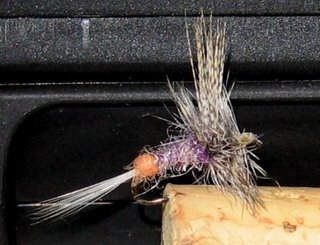
    .. There is still some streamer action for the "walker/ stalker" fishers. Fish the slow water and undercut banks around Riverside Drive and the Barns Holes for leftover lunkers to 20" (dead drift a black or dark purple Woolly Bugger right into their nose: sizes 6 - 12 should do.) Evening has been good to the caddis fisher folks. Start with a Bead Head Prince around 4:30 or 5:00 and when the bugs start to fly switch to an Elk Hair Caddis and fish until dark - or 10:00, whichever comes first.
    .. The Firehole River is drawing crowds of fishers. It's also producing multiple hatches. The fish are less confused than the fishers. From mid-morning through early afternoon you can expect PMD's, Baetis, and Caddis to hatch, (particularly in the area around Biscuit Basin and below.) Sometimes the fish are very active and very selective; other times anything the right size will do.
    .. There are still many of the neighbors that can get up early enough to fish the still waters of early morning. Large fish will be gently taking spinners and are easy to spot in the spume lines. They are tough to catch and require stealth. We posted a note about this last season, and it's rewarding if you are an early riser.
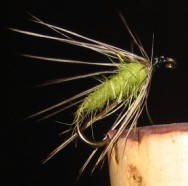
    .. The Soft Hackle and the Stiff Hackle fishers are having a sweet time of it right now. Pick a size and body configuration that matches the pre-emergent bugs and have at it. These flies are the "fake de jour" at this time.
    .. The upper Gibbon River is full of eager Brook Trout that are enjoying the gentility of the Spring runoff. They are constantly "on the feed" and it's just a matter of presentation. There are some awfully small mature fish this year, and the recent gentle winters must have had their role in this.
    .. The thin water and riffles are a mid-day nymphing proposition. Hatches are sparse but present. Your favorite Caddis, PMD, and Baetis in a size 12 - 16 will do if a hatch is on. The Yellowstone Coachman is a good attractor around the Norris Campground and Solfaterra Creek. The fish in the vicinity of Virginia Cascade are awake and hungry. This is prime Grayling water, but we've yet to catch one.
    .. Obsidian Creek is flowing below the seasonal expectation, cold and very clear. The Brookies in this little creek are always a satisfying proposition and they don't get visited by many fly fishers. May people view this stretch of water as a kids fishery. The Park suggests it, and it works for that purpose. There are, however some deep pools that will provide fish in 12" - 14" range. These are places where you can sometimes see the large fish. A bit of patience and a single perfect cast will inflate your ego to gigantic proportions in this "Kids Creek."
    .. The New Zealand Mud Snail is busy munching it's way through the waters of western Yellowstone Park. This critter eats the vegital material that many of the flies need. It also takes up living space on the rocks. It is eaten by trout and provides no nourishment.
    .. It is spreading rapidly along the major fly fishing corridors and waters through the simple method of hitching a ride on or in your wading boots. DON'T LET IT.
    .. There are some of the neighbors that doubt that fly fishers have had anything to do with the spread of this snail.
    ..It is certainly not a much heard stream-side conversational topic. We're saddened to report that the necessary precautions for curtailing the spread of this invasive species are viewed as a joke and a nuisance by many of our neighbors and guides.
    .. The map at the bottom of this post shows the distribution of the snail in and around Yellowstone National Park. We don't doubt for a second that fishers are spreading this trout killing snail.
    .. There are many things that fishers can do and don't do. For an excellent overview about the measures that can be employed, go to the West Denver TU site. Seldom do we see the neighbors or the visitors taking the necessary precautions. We suggest that you ask your guide if they carry a brush and some undiluted Formula 409, or a copper sulfate solution with them. Ask your host fly shop if they provide free sanitizing of your waders and boots - (Golden River Sports in Colorado is a pioneer in offering this service free.)
    .. SNAIL LINKS:
    FFF Mud Snails
    TU Mud Snails
    Yellowstone Invasive Species Page - New Guidelines
    Stop Hitchhikers Mud Snail Page