WE LOVE OUR GIFTS
Tuesday, December 16, 2008
Sunday, December 14, 2008


Thursday, December 11, 2008


Monday, December 08, 2008
Of Stoats, Rock Snot, & Blue Ducks
NEW ZEALAND WHIO
TWO-TIMED
TWO-TIMED
Invasive Species x 2

 .. From Protect Your Waters comes a note about Didymo and it's spread in New Zealand. The diatom has been discovered in the world fly fishing destination-river Karamea, in Kahurangi National Park.
.. The saga of threats to the Blue Duck is an example of "unintended consequences."
.. Rabbits, introduced to New Zealand became a pest. The stoat, (ermine,) was introduced to control the rabbits. The ermines found native ducks easier
 to catch and eat.
.. The native Whio, (Blue Duck,) is endangered and now being threatened by Rock Snot, (Didymosphenia geminata,) in addition to the stoats.
.. This double threat from invasive species is a classic example of the exponential threats facing native species around the world.
.. The Scottish Author knew it well:
Oh what tangled webs we weave
When first we practice to deceive.
 .. It's not good to fool with Mother Nature.
.. The same kind of threats face many species in Yellowstone National Park: fish and others. Our "deception" is improving all the time.
.. Early on, Victorians, Sportsmen, and Yellowstone Park Managers introduced exotic fish into the rivers of the park. The fish brought fishers. Fishers brought other invasive species.
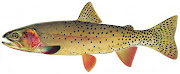
.. Now Yellowstone's native Cutthroat Trout are disappearing through predation and interbreeding. Rainbow Trout, Brown Trout, and Lake Trout are the primary culprits at present. The New Zealand mud snails, Didymo, and other world travelers are threats looming on the near horizon.
 .. Fishing has grown, (though not recently,) to invade all fishable waters. It is a pastime that unthinkingly - or innocently - believes that it is about the fish.
.. Rivers, lakes, ponds, oceans, and the other waters that contain the fish are usually secondary in the thinking process of fishers. The ecology of the fish and its environs are way down the list of concerns and conversation. This has got to change if fishing is to continue in our national parks.
.. Rock Snot is at the south entrance to Yellowstone National Park. The threat is real and the diatom will probably be in the rivers within the park in the next year or two. It may be there now - unnoticed by fishers and managers alike.
.. For information about the hybrids in Montana's fishery visit: Trout Conservancy Of Montana. For information about Rock Snot just use your search engine.


Tuesday, December 02, 2008
ERRATA
FOR SHAME AND FORLORN
Mistaken Identity Confusion
wrong writer fingered

 .. Between too much coffee and an unaccustomed rush to post on an aged laptop in an enchanting hotel lobby we published an image that cast scurrilous aspersions on not only a famous dead writer, but two living personages as well.
.. To those involved we humbly apologize. After all the striking similarities
 of the images involved are indeed remarkable.
.. The photographers cannot be held to blame - they believed the waitress. Our editors cannot be blamed - they never read the copy, let alone scan the images. The personages cannot be blamed as they are both strikingly handsome.
.. Sympathetic critics have pointed out the error and tried to blame it on the errata inherent in the silly old computer that we haul along on our single foray to fish the lessor known chrome-streams of norcal.
.. We thank them for their concern and acknowledge the problem, (see below.) However, the error was ours, and we accept it. Sorry guys.


Monday, December 01, 2008
Worth A Second Look
ZEAL TEMPERED BY SCIENCE
It Pays To Think

 .. Thanks to a post in Protect Your Waters, (the "Stop Hitchhikers" folks,) we learn that six species of plants that were to be exterminated on the Galapagos Islands are in fact long term residents. Fossil pollen shows that they have been on the islands for several thousand years and were not introduced by visitors 500 years ago. You can hear the sixty second podcast HERE.
.. Of course the finding is one that begs the question: "How long does it take an invasive species to become indigenous?" At the time of their formation there were no species of any kind on the islands. They were 'invaded' by many species and colonized over time.
.. It's wise to remember that 'invasion' is part of natural
 selection: whether aided by man or not.
.. There were no fish in the Firehole River above the falls until invaders were planted. The same holds true for the Gibbon River above its barrier falls. Many waters in Yellowstone were devoid of fish before park managers and other well meaning individuals planted them.
.. The acceptance of these non-native species has taken less than 100 years. An industry based on their presence is thriving. Feather merchants and guide services reap the rewards of protected invasive species. Indigenous species are being wiped out by acceptable invaders. It's a problem that the "green" fly fisher, park manager, and the general public is loath to address. We sacrifice restoration for recreation, and ecological correctness for economic gain. Such is the state of our mindset and science.
 .. The simple fact of the matter is that "invasive species" are tolerated - nay - welcomed if they prove to be of economic or recreational benefit to a few.
.. We see at least a double standard at work here. We introduced wolves because they were part of the "natural" environment. We continue to protect Brown Trout because they are invasive and provide an economic component to the park. We value and protect Rainbow Trout because they are invasive and can be caught and released. We admire and protect Brook Trout because they are invasive and provide easy catching for recreational endeavors. We spend millions trying to eradicate the Lake Trout because it's busy exterminating the indigenous Cutthroat in Yellowstone Lake. But we encourage the Rainbow Trout that are doing the same in Slough Creek.
.. On the other hand -- We were all invaders once!

Subscribe to:
Posts (Atom)


.jpg)