• PARTNER: PROTECT YOUR WATERS
  • Go To: THE FLIES OF YELLOWSTONE
  • Go To: YELLOWSTONE FISHING WEATHER
  • Go To: YELLOWSTONE FLY FISHING MAPS
  • Visit: Moldy Chum
  • Visit: The Horse's Mouth
  • Visit: Chi Wulff
  • Visit: Parks' Fly Shop
  • Showing posts with label Mouse Fly. Show all posts
    Showing posts with label Mouse Fly. Show all posts

    Thursday, August 21, 2014

    Head Hunting

    ONLY FOR SERIOUS FISHERS
    Grab Your Best Game
    the mouse rules the night
    WALLPAPER: IS A MOUSE A FLY ?
    -------
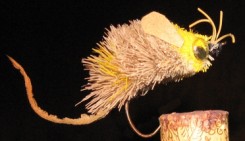
    .. The mouse is running wild in the neighborhood. The mouse is secretly being fished, as well, by those fisher folk with the dinky fly affliction.
    .. Many of the neighbors are trading sleep for giant fish. It's not just a local phenomenon either. Fishers across our nation have been bitten by the mouse. Nothing, it seems, breeds success like success.
    .. We've long advocated using a deer hair mouse for catching large trout. We've not been fooled by the hype that paints a top predator in our streams as a soft-sucking, fly-eating,  pansy. We know better and so should you.
    .. Mice are excellent swimmers. They often take to the water to travel along the shoreline of lakes and rivers and swamps. They are very efficient foragers and  will go to extreme lengths to stay fat and healthy. They scurry around their territories with a zeal matched by few foragers. Often this leads to their demise. Birds, snakes, weasels, coyotes, wolves and other predators consume scurrying mice regularly. So do trout and bass and pike, and other killer fish.
    ,, At some point past adolescence the trout becomes a genuine killer fish. The meanest killers lurk in the shadows and kill with swift, strong, and brutal force. Only occasionally do the biggest killers sip the smallest of prey. They are after groceries,
    .. Let them eat mice!
    -------
    ..

    Saturday, August 09, 2014

    Preview

    THE COMING SUPER MOON
    Where Will You Be ??
    where will the fish be ??
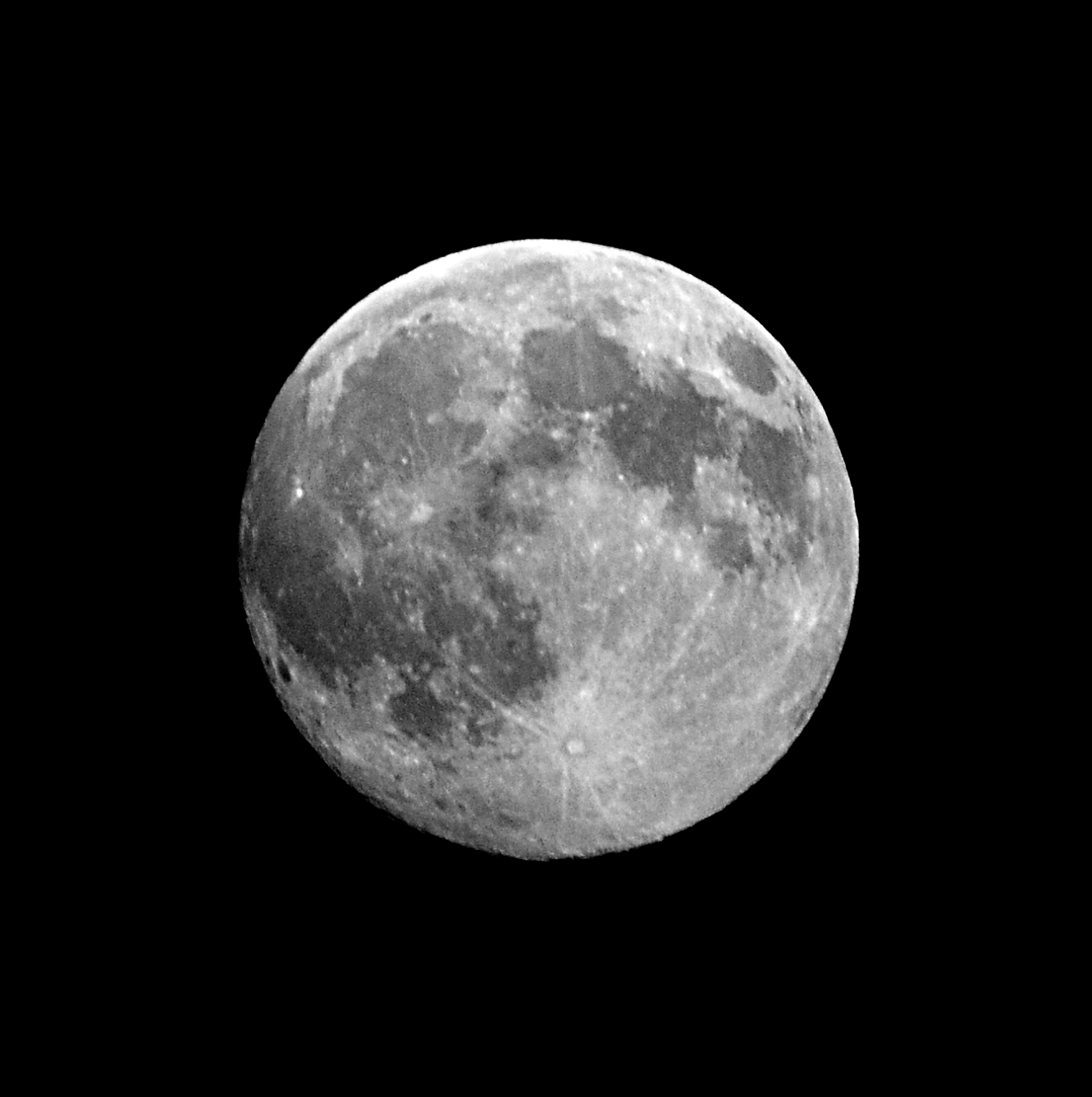
    Near Full: August 9, 2014 - 21:08:19 - West Yellowstone
    -------
    .. Depending upon where you are tomorrow night and the way that you set your clock, and depending on the cloud cover and local horizon, the moon should rise around seven or eight of the clock.
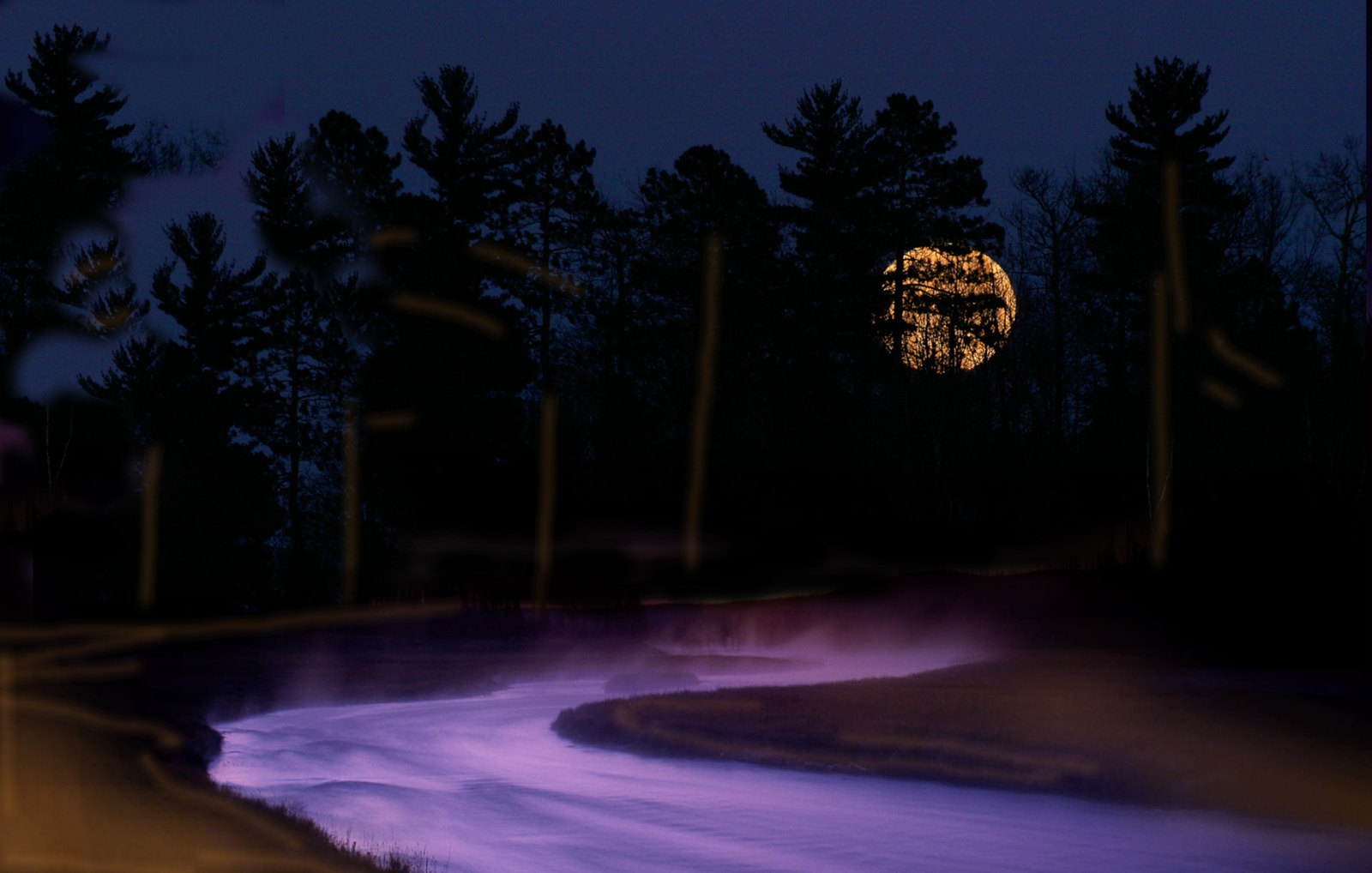
    .. Here in West Yellowstone it's liable to be cloudy at the time of moon rise which is 8:23 PM, (7:23 PM for Luddites.) so we grabbed a quick snap of tonight's view.
    .. Of all the super moons this year the one tomorrow night is rare in that it will be overhead coincident with it's absolute perigee.
    TROUT MUNCHIES
    .. It will look biggest when near the horizon and probably should best be photographed with a few trees or a building or two for accent. The twilight of dusk should provide some exceptional views for those shutter bugs who occasionally fly fish and take hero shots.
    .. Native Americans of the upper Midwest and Northeast called this moon the "Sturgeon Moon." A good sign for catching that great fish. Closer to home the Lakota, Dakota, and Nakota named this the "Moon When All Things Ripen."
    .. The neighbors that fish at night call it all manner of names depending on whether it helps or hurts the catching. Right now it is the blessed hopper moon or the great big beetle moon or the 'gonna' get 'em with a mouse moon.
    .. Fishing in Yellowstone National Park is forbidden after sundown, (we certainly do miss the 10:00 PM closure.) There are nearby, happily, bits and pieces of good water that are in the State of Montana - with no closures for light or dark.
    -- That's where we'll be tomorrow night.
    -------
    WALLPAPER: MOUSE FLY WITH RUSTY HOOK (OOPS)

    Monday, July 07, 2014

    Looking Ahead

    FIVE DAYS TO GO
    Pick Your Moon Name
    fish where catching works
    THE GALLEON GALLATIN MOON
    -------
    .. Yes the catching on the Firehole River is getting harder and, yet, the stabbing of lethargic heat-doped fish continues.
    .. Yes the caddis are prolific on the Madison River and the migration of flailing elbows toward that river has begun in earnest.
    .. Sure the Gibbon River is yielding scrappy fish in the canyons and even some brutes in the meadows when the drakes appear, (the clouds have helped.)
    .. On Saturday we visited Nez Perce Creek and tickled a fish or three.We stayed later than normal and enjoyed a late refreshing breeze and a moon-lit stroll down the trail to the bridge.
    .. The moon called forth the thought that it's time to fish late and fish mice. The full moon in July has been given different names by tribes, cultures, fishers, and neighbors alike. We're looking forward to the July full moon. It happens on July 12, this year.
    .. The full moon in July has been called: the Summer Moon for the heat of the season, the Buck Moon for the time that deer show their rapidly growing antlers in velvet, the Thunder Moon for the storms that brew, the Ripe Corn Moon for the maturing ears, the Claiming Moon by the Celts, and the Gallatin Moon by some of the neighbors for the time the Gallatin River is best fished late in the day.
    .. Some of our more poetically inclined neighbors call it the Galleon Moon because it often is shrouded in thin wisps of clouds left over from the passing evening thunder storms, (additional fishing, catching, and moon information HERE.)
    .. The caddis are making their late afternoon presence known on the river. The mice have had a litter or two. The shoreline grasses are tall and thick. The trout are fully awake and eagerly feeding.
    .. By the time the mice have had their second or third litter they become fair game for trout. Mouse breeding continues all year, (depending on age and season,) and populations peak between July and September.
    .. Of course the mice scurry about in search of food, shelter, other mice, and sexual encounters. Sometimes they encounter the river's waters by accident - especially in the late afternoon frenzy of activity.
    .. This is also the time that other terrestrial beasties and critters experience a population explosion. Grasshoppers are finishing their final molt. Ants are hiving and swarming. Black and green beetles are roaming. Shrews are eating beetles and ants. Ground squirrels are being squirrely and so it goes!
    .. All these critters utilize the interface between the water and the land. There is food and shelter in abundance.
    .. The edges of biomes are always wonderfully diverse and full of many species, (plants and animals.) These ecotones are magnificently convergent in the Upper Gallatin River Valley.
    .. Forest, meadow, steppe, marsh, and stream biomes can converge in small areas. Both the land dwelling critters and the aquatic dwelling species love the diversity.
    .. Add the diversity of the river: rapids, riffles, holes, micro beaches, boulders, cobbles, sand, etc. and the possibilities are extensive. The other river valley's of the West side of Yellowstone National Park offer some of these convergences - but none so nicely arrayed as in the upper Gallatin River.
    .. Most fly fishers fish the hatch. Most of the the neighbors fish the landscape. It's worth a thought. Bring your mouse.
    -------
    WALLPAPER (Loaf 17): RUSTIC ITALIAN LOAF (CALABRESE)

    Wednesday, February 12, 2014

    Last Night = Perfect

    ONLY A FEW CLOUDS
    It's Snowing Now
    the moon is right on time
    THE MOON, THE PINES, THE RIVER, AND NO CLOUDS - HUZZAH!
    -------
    .. A half dozen of the neighbors scored big time with big fish last night. The moon is not quite full but it was up at twilight time and the work day was cut short in favor of a bit of catching.
    THE OUTRIGGER
    .. The clouds come and go. The snow dribbles in and dribbles out. Last night was absolutely perfect. There was a bright moon, (not quite full,) and the clouds held off until well after midnight. There is still some time for nailing the predatory denizens of the deep, (Between The Lakes.) The clouds pick their own time for appearance and disappearance. Real fishers keep an eye on the sky. Temperatures have been mild and fishing has been good - catching even better.
    .. This is the time of year reserved for the neighbors. Famous fishers and feather merchants have bailed out of town for warmer places. Guides have no visitors to guide and are either in the warm world or scraping along with their other part-time jobs. The authentic fishers of our town are out in the elements, rod in hand, stabbing fish in the lip. It's sort of like a family affair.
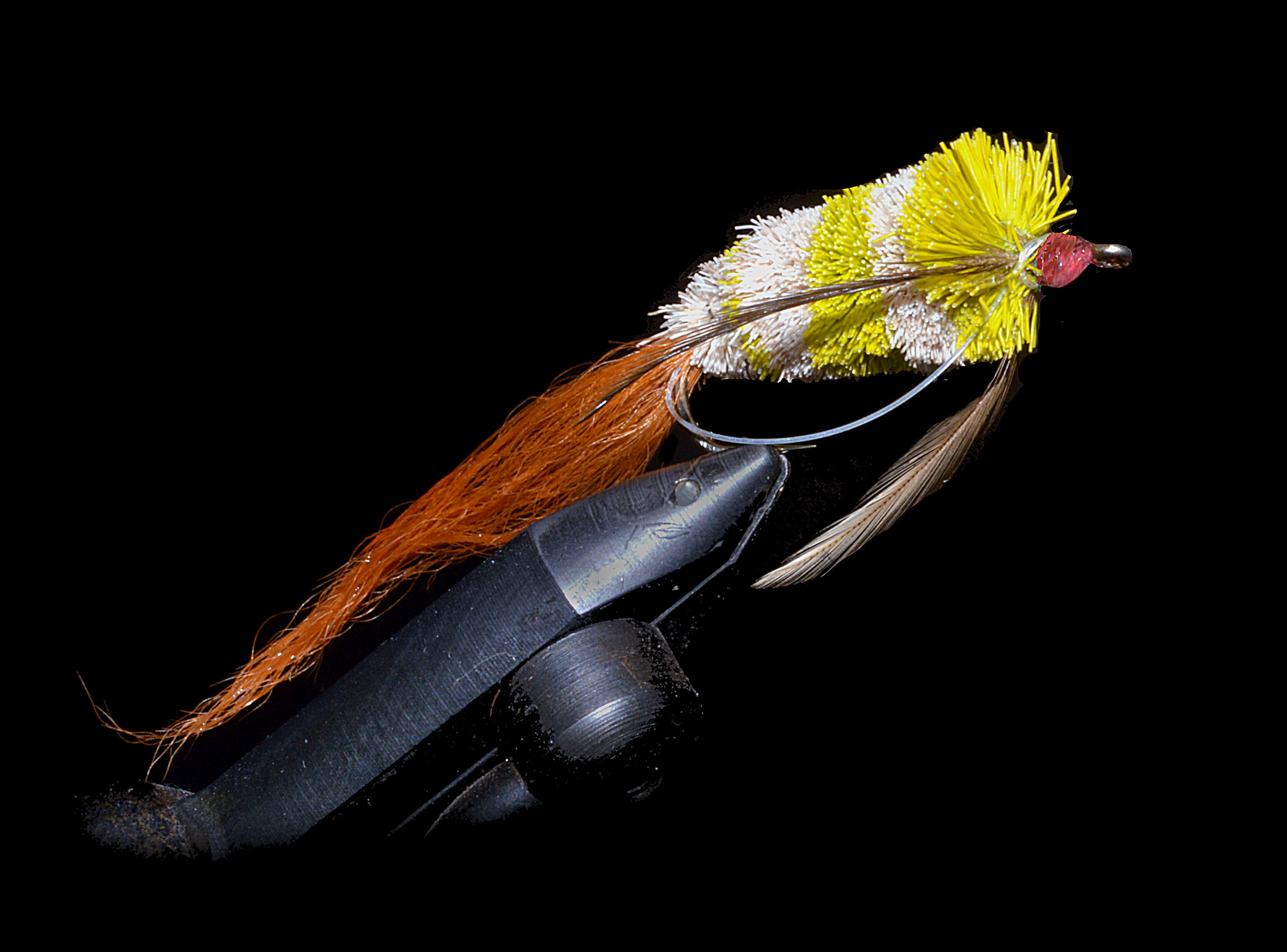
    .. Of course they are using their "mice." The mouse is a generic term in our neighborhood. It refers to a myriad of deer hair flies that create the requisite commotion in the water. Some are cute and tied to look like a real mouse. Most are tied to produce a splash and a long trailing wake combined with a substantial silhouette.
    .. We've mentioned this before, we'll continue to mention it. There are more ways to catch a trout than with miniscule hooks and scraps of fluff. Groceries is what big fish want. Groceries is what the neighbors have been flinging.
    .. There is a not so secret fly that was developed last fall and has caught the imagination of the younger set. They call it the outrigger. It's a fairly standard deer hair fly with a couple of interesting modifications. It has a very long calf tail trailing element and a pair of stiff feathers jutting out from the sides.
    .. Of course there is mythology, hype, stories, theory, and speculation about the modifications. It seems that the wake and silhouette created is ideal, (from the speculated trout's eye view as imagined by fisher folk.)
    .. Right now, however, it's all about the clouds and the moon. Whither, whether, and when are questions that the neighbors are asking. Tonight will be problematic. Tomorrow should be better. Valentine's day might be perfect.
    .. Should you choose to abandon the conventional, poetically tweedy mindset and seek big fish and easy catching we suggest that you plan some time during this year's full moons. The Old Farmer's Almanac has the dates listed HERE. They make no mention of the timing for clouds, snow, rain, hail, sleet or thunder.
    .. As for the neighbors; they have the advantage. They look to the clock. They look to the sky. They look to the river and box of chocolates be damned.
    -------
    WALLPAPER:  "THE OUTRIGGER" - POISED FOR ACTION

    Saturday, August 10, 2013

    Nocturnal Brown

    IT'S TIME FOR MICE
    Quiet On Shore,
    Splash In Water
    wallpaper if you choose

    THE GOBBLER
    -------
    .. The mice have made babies. The ground squirrels have made babies. The voles have made babies. The hoppers are big and cranky. The nocturnal bugs are still around.
    .. The days have been hot. The days have been bright. The streams are warm.  The nights are cool. Some mornings are even more cool.
    .. Both the fish and the mammals forage in the cool. The mice scurry. The hoppers are sluggish. The bugs are active. The ground squirrels are darting. The voles are scampering.
    .. At the interface between darting, scurrying, scampering, and cool is the gobbler.
    .. The gobbler has avoided activity through the warm and bright day.
    .. The gobbler has ignored the miniscule tidbits of a spinner fall. The gobbler has been indifferent to the rising nymphs of the morning mayflies and the evening caddisflies.
    .. The gobbler had a snack when a wayward hopper plopped in front of its panting maw as it worked to get oxygen-poor water through it's gills. It was not enough.
    .. Very, very cold and very, very warm induce torpor in the gobbler. Cool and cold are where the action is. The nights are cool or occasionally cold.
    .. This is action time and after a light and early dinner the fisher should be on the water fishing the shadows in the diminishing daylight.
    .. Ignore the remaining caddisflies, prolific though they may be.
     Fish a mouse or fish a bomber or rapidly strip a giant streamer on the surface. Bass poppers are great if they are large enough.
    .. The gobbler has senses that we are oblivious to. They are large fish. They have well developed lateral lines. They use them to find prey and avoid danger.
    .. If the fisher goes galumphing along the shore the gobbler will not rise to the commotion in the water.
    .. The fisher must be quiet. The fisher must be sneaky. The fisher need not cast too far. The fisher need not see the fly. The gobbler need not see the fly. Make sure that the hook is sharp and the leader is strong.
    .. Green grass is fading to yellow. It's time for mice.
    -------
    MOUSE COUNTRY

    Monday, September 17, 2012

    Autumn Intermezzo

    THE BUSTLING HIATUS
    Waxing Poetic ?
    just do it all
    SMOKE FILLED SKIES - CROWDED PARKING - HEROIC FISH
    -------
    .. Trapped between blistering Summer Days and pipe-bursting Winter Nights is the season of celebration here in the high country. You will hear it time and again "IT'S MY FAVORITE SEASON!"
    BIG FISH BEND
    .. Could be. This is the time for the media to sink into praise of the natural world. Beauty seems to be the theme of most poesy.
    .. We're not good at spinning the glories of the season. We do, however, participate in the offerings of the moment.
    .. There's grouse to pluck, (and eat.) There's deer and elk to gut, and dress, and freeze, and eat. There's fish to torture with a relish and abandon not seen in the previous few months. There's gawking, walking, hiking, birding, and hunting.
    .. Honking from the sky is a sure signal. Quacking over the marshes and willow flats is a signal. Diminished traffic and fewer school-aged hooligans in the village is a sign. Crusty farts in rubber pants in the dim pubs is a sign. Fall is upon us and the colors will fade as quickly as they have come.
    LITTLE FISH BEND
    .. We are drawn to the rivers, (but not to the exclusion of other bits of the neighborhood.)
    .. We clog the air filter of our trusty horse along the dusty forest roads, (those that are still open.)
    .. We ascend to the berry patches for a quart or two of blue gold, (sparse as they are in this dry year.) We sing to the bears and hope that they move on.
    .. This is the season to cram it all in. Football looms large, (homecoming in another week.) BBQ's become focal as the chilly air threatens to limit the opportunity in the near future.
    .. Smokers are cleaned and the slime of the Mountain Whitefish becomes a sought after treasure. There are, indeed, Whitefish hoarders.
    TIE IT SMALL
    .. Coolant, battery blankets, block heaters, and tires become a bit of concern as the sky lowers and darkens it's clouds. Calking, heat tape, and snow blowers vie for our attention, along with shovels, shoes, coats, and skates. Where did we put the ski boots?
    .. The autumnal equinox is on September 22, this year. That will leave just 100 days until 2013 and we will have escaped the end of the world one more time. Don't hold your breath.
    .. Feather merchants are in the final push for sales, and guides are already leaving the scene for more salubrious climes. Fishing is winding down and up. The Fall Fishing Frenzy will hit hard in the next three weeks. The summer fishers will seek solace elsewhere. And, so it goes.
    WANT BIG FISH AT DUSK ??
    .. We need to post this now. Resident fish are eating small nymphs, size 22 Tricos, and chasing stripped Matuka flies.
    .. Migrating runners are eating anything big and ugly as they move into the sex rooms of proper gravel and flow.
    .. There's a lot to do and, as usual, not enough time to do it in!
    .. And, yes, it's mouse time again.
    -------
    JUST THE WAY THE SKY SHOULD LOOK!  IT LEAKS A LITTLE TOO.

    Thursday, September 17, 2009

    Preparedness

    IT'S COMING SOON
    A Week And A Half
    perfect timing
    -------
    .. After a day on the water it's just plain common sense to relax at the neighborhood watering hole. The neighbors are there. The pros are there. The visitors are there. The women are there. A cold one is mandatory.
    .. Or, dullards take note, go to the vise in anticipation of the bright moon. Given the weather forecast, and the slowly cooling waters, and the increasing exuberance of the fish; a mouse or three might be in order.
    .. The big fish from Hebgen Reservoir ought to hit the popular aquatic parking lots in numbers just about the time the bright moonlight revisits our skies. The timing for the Madison River this year is neigh unto perfect!
    .. There is some discussion among us crazies that use this monster fly - "is it the silhouette or is it the wake?" Our cousins across the pond have settled on the wake solution and have a most un-mousy mouse. Their fly is reminiscent of the Bomber so familiar to steelhead aficionados. Can you say riffling hitch?
    .. The fisher folks in New Zealand are already calling this the year of the mouse because of the population explosion of invasive mice, and the mouse eating trout down there. And they have the necropsy's to prove it.
    .. There is a good crop of mice here too this year. The coyote numbers are down. The perfect spring provided both warmth and wet that yielded good forage, (the wet was hard on the baby grouse though.) And, too, the lingering salubrious weather has allowed frisky behavior among the rodent population as they expand their feeding territories, (along the river banks where grass stays greener longer and seeds mature later.).
    .. In New Zealand it's the Beech Tree Seeds: here it's the grass seeds. The rodents of our meadows are feeding voraciously - so will the trout!
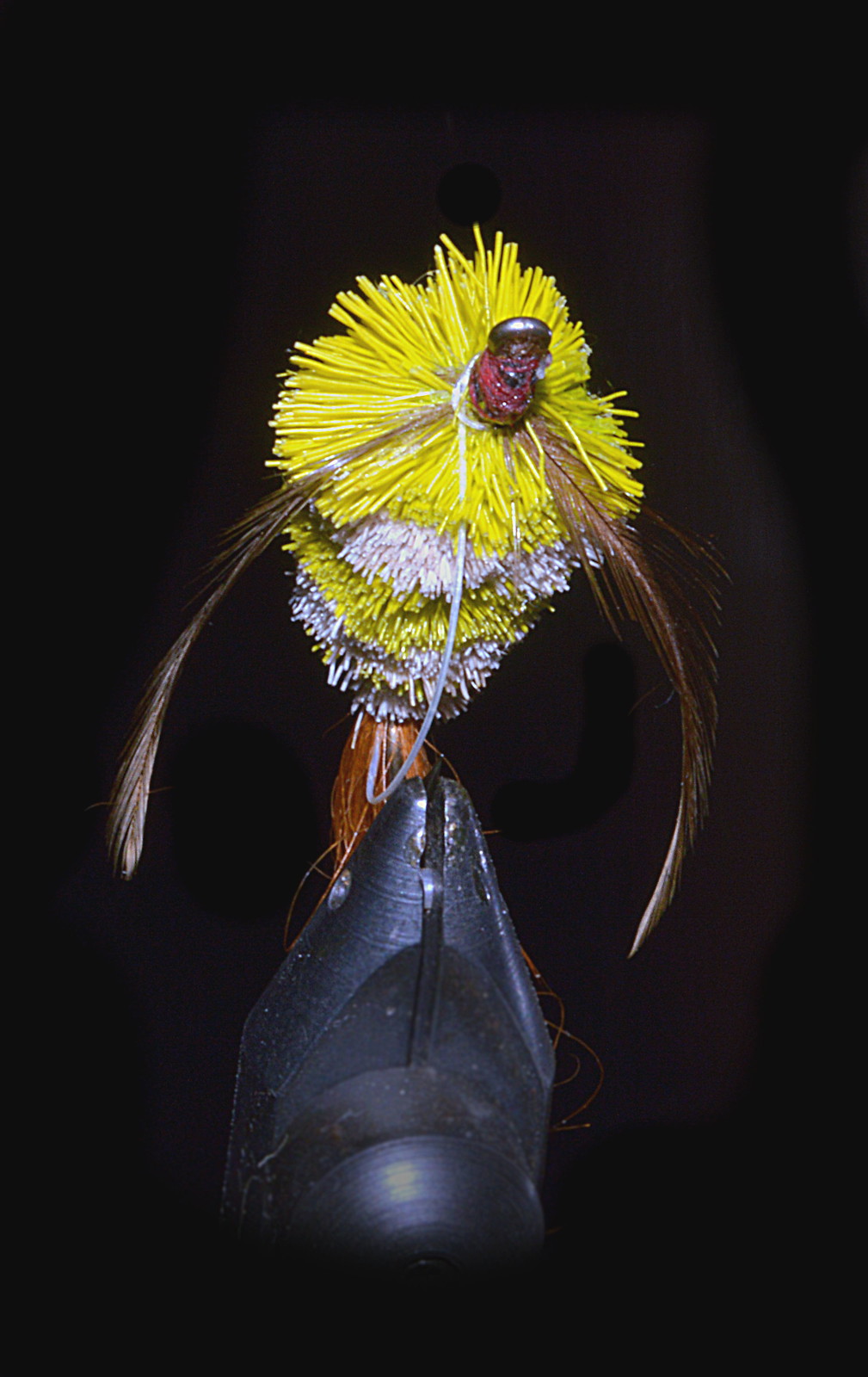
    .. We've always used a mousy silhouette. This year we're going with all three. An English Torpedo Mouse, a Black Bomber, and a Yellow Headed Mouse. Just one at a time, mind you.
    .. Now then, can fly fishers in the neighborhood forgo a night or two at the pub? We'll see.
    -------

    Tuesday, September 08, 2009

    Slightly Off Center

    FALL FLIES FOR
    THE MADISON RIVER

    The Big-N-Ugly Box
    they work wonders
    -------

    .. Fall is when the trout in the Madison River are at their intellectual peak. They have seen flies from the four corners of the earth and rejected most of them. They have refused the offerings from both sage fishers and first-timers. They have figured out just what real food looks like.
    .. The fish are experimenting less and gobbling more. They've seen it all - almost. The flies below all work well for galling a trout on the Madison River. They work best in the Fall when a sack of groceries is on the mind of sex crazed trout. The combination of impending winter, (less food,) and the urgency of procreation, (more energy used,) join forces to make the following flies worthwhile - starting now.
    -------
    (All images are huge - just click on them.)
    .. Thunder Creek. When was the last time you heard someone recommend that old fossil? Who do you know that fishes it? They are either very good liars or just plain secretive. The trout in the Madison River haven't seen many of these. They usually eat the ones that they see. Fish it on the swing. Let it straighten out. Wait a little while then strip it in real fast. Old ways. This specimen, (rust, dead head cement and all took a nice fish at 7-mile bridge last October.)
    .. Original Olive Matuka. These are tied commercially but their sales are way off. Although infrequently used these days, there is probably one in your fly box. There may be several. They most probably are unused and forgotten. Drag one out and give it an honest try. The early morning is a good time for the darker ones. Dead drifted or stripped downstream in the undercuts may just surprise you.
    .. Chenille Matuka. Bright and boisterous, this variant is also tied commercially. It looks too gaudy for most "serious" fishers. It is a visual disaster in just about any fly box. It's not on the lips of the romantic poets of Yellowstone lore. Yet this variety is as good as or better than the original. The tail is splayed and provides nice action in the depths of dark pools. Sizes up to #4 and 4XL are not uncommonly found stuck in the noses of eager trout in the willows below the Highway 191 bridge.
    .. Bead Head Rubber Legs. There are a bazillion rubber legs flies. They have secret names as well as commercial names.
    .. They can be "Silli" - "Spooky" - "Madisoned" - "Fireholed" - and "Henry's Forked."
    .. We use several of them this time of year and all are just grand. This one may be the grandest of all. It gets down quick and is good for 'snap-casting' right above the big roll that ended with a baby splash just over your left shoulder. The combination of long hackle, wiggly legs, copper wire. and a prickly body are often irresistible when slow-drifted across the bottom of a dark pool at sunset.
    .. Guide's Secret Rubber Legs. Not a secret any more. Seven or eight years ago this pattern was hidden in dark places and fondled frequently in anticipation of Fall fishing. There are many variations of this fly: the chenille, the number of legs, the head and tail treatment, the size and hook. All seem to work just fine. There are now many commercial versions. Some of the local, (Cameron, Ennis, West Yellowstone,) versions are still proprietary. So be it.
    .. Hackle & Legs. Here's another rubber legs pattern that has been embellished with long widely spaced palmered hackle. This one can be made to float with enough goo, or what ever is your favorite flotant. On still, or slick, water in the light of a Gallatin Moon, (July, August, September,) The many dimples create little lenses that allow the light to be seen. Strikes can be explosive - especially after a slight twitch.
    .. The fly can also be drowned or fished on the swing in the film or down deep. It reminds us of an augmented Wooly Worm. It's good for a change of pace and is an excellent conversation piece.
    .. Woolly Worm. The poor thing: fallen into disuse and disgrace. Often mentioned in the same sentence as the San Juan Worm. The Fall sizes and variations are not within the traditional range for this old sweetheart, (how many do you have?) Sizes in the 2 - 6 range are not uncommon. Long hooks are used by the neighbors. Red buck-tail is used for an afterburner. Very long, (for hook size,) hackle is the norm for this time of year. Traditional yellow and black are frequently the choice for the area around the Barns Holes and the Local Hole. More often, the last couple of years has seen hot orange or bright rust being chosen for the big water just above the estuary on the Madison River.
    .. Pheasant & Blue. This streamer is a staple along the Washougal River in Washington and on the upper Clearwater River in Idaho. The pheasant rump feathers are popular in both steelhead and salmon fly patterns. Fishers on the South Fork of the Snake River in both Idaho and Wyoming have used this pattern for a couple of decades to take large migratory cutthroat trout. This pattern is now finding it's way into secret stashes of some of our neighbors. We've not used it but they swear by it - and at it.
    .. Brindle & Hen. This popular fly from Northern California locations around Hoopa, Eureka, and Salyer has been modernized by the recent explosion of color in chenille. Similar in form and function to the classic Brindle Bug this fly is not just another pretty face. Tied with a heavy wire under-body it bounces through deep riffles with undulating sex appeal and is hard to resist by submarines parked in the dark spots during mid-day. This is a useful probing fly when tied with no underwire support and the action is leech or eel like. Just the groceries a fresh-run fish is looking for.
    .. Bead Head Glitter Nymph. This monstrous cousin to the standard pheasant tail nymph is persistent in the repertory of the big-fish catchers in the neighborhood. It's easy to tie in sizes 4 - 8 and makes an excellent fly for the low clouds and bright overcast days of late September and October. It has nearly replaced the Casual Dress in our box and we don't regret it. Bleached goose biots are becoming rare these days. White will work just fine - or do some yourself.
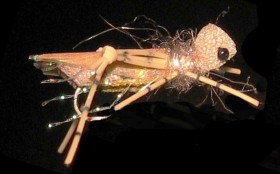
    .. Sinking Hopper. It's just about time for the sheep to call it quits on their hopper box. The feather merchants have run low on their stash and will soon begin touting the flies of fall. Grasshoppers in the high country continue to grow and molt through the first couple of weeks in October. A hard frost will "knock 'em down." A couple of warm days, (even after snow,) will kick some life into them. Drowned, this fly is a nearly irresistible morsel for the big resident trout and a rare treat for the lake run fish of the Madison River.
    .. Many of our strangest neighbors use this as a dropper behind a big streamer such as a Woolly Bugger, Egg-sucking Leech, Chamois Leech, or a Brindle & Hen. Common practice is to soak the little dickens in water for a day or two and let the river do your shopping for you. Foam patterns are just too hard to sink - they can be retired now.
    .. Dark Spruce Fly. This classic has persisted despite the hawking of "more modern" flies. There are many variants and they seem to be quietly proliferating. We prefer ours tied a bit on the sparse side and choose to use a barred furnace hackle tip of a mahogany color rather than the traditional golden badger hackle.
    .. This pattern is old, (1918 - 1919,) and was originally called the Godfrey Special. It was a premier sea-run cutthroat pattern for over half a century. It is still seen along the Madison River, and steelhead streams most everywhere. This is just the tonic for jaded trout around Baker's Hole and the Barns Holes.
    .. Furnace & Red. This fly has been a staple for our Fall and Winter fishing since sometime in the late 60's. A couple of dozen were a gift from a fly fisher in Pocatello, Idaho. He may have "invented" it.
    .. The name was roughly translated as "BOB'S FLY" - Google shows nothing quite like it by that name. It's a dark fly that is sometimes stripped cross-current at night or in the twilight. It's caught a few big fish. A few of the ancient neighbors here and in I.F. use a similar fly - with different names. (The eyes are Herter's NOS. We have zillions of them and used to think they were important - works just as good without them.)
    .. The Little Brown Trout. Dear to the hearts of Montanan's that love our cutthroats. There is a satisfying surge of glee, (it arises somewhere between the epitome and id,) when one of these little flies gets eaten. This old pattern is seen in most fly boxes and is only occasionally used. It is special only in the hearts and minds of ancient neighbors that remember what a glorious bit of water the Snake River was without the scourge of the invasive Brown's. Fish it like the little streamer that it is. Shallow riffles, deep undercut banks, and deep slicks are it's prime hunting ground. Even the Browns will eat it.
    .. Stonefly Nymph. They live here. They get dislodged. They float around in the water column and get eaten all year long. Of course they are a Springtime religion, but the trout will eat one that's floating by. Often the older neighbors tell us to "hit 'em in the nose." That's good advice if you know where the noses are.
    .. The mundane task of systematically covering a run in the Fall is a bit tedious. It is also rewarding when using any of the many stonefly imitations. Like a dog with a bone, the fish grab it, shake it, and hold onto it with a fierceness like unto a virgin prom queen in the back of an S.U.V.
    -------
    .. Baker's Hole Bugger. Straight from Blue Ribbon Flies & Whiskey Creek Fishing comes a fly designed specifically for the water around Baker's Hole. It's a fly that has been "making the rounds" for a few years and shows some staying power. Although supposedly designed "for Brown Trout" the fly is just fine for pricking hungry trout of any stripe.
    .. A couple of the neighbors are aficionados of this fly and have already shortened it's name to "Baker's Bugger." They fish it all year long. The fly uses standard Brindle Bug chenille and a two toned tail similar to the Brindle and Hen. These long-tailed buggers have been getting more attention during the last decade. Probably a good reason for that.
    -------
    .. P.S. Don't forget your Mouse. Fishing in the park is open until 10:00 PM.