BLACKFOOT GETS SOME RELIEF
Rock Snot At It Again
vigilance quashes quaggas
vigilance quashes quaggas
NPS Partners To Fight Invasive Species
whirling away in colorado
whirling away in colorado

 .. This week the Nature Conservancy added 4,682 acres to an easement adjacent to a 2,888 acre easement already protected in the Blackfoot River Drainage. The nearly 7,000 acre chunk of land is prime trout and wildlife habitat.
.. According to Matthew Frank in the recent
New West Article:
"The land is in the foothills southwest of Lincoln abutting the Helena National Forest, and the easement, held by Missoula-based Five Valleys Land Trust, will limit development on three and a half miles of Blackfoot River frontage and more than fourteen miles of its tributaries. It's Five Valleys Land Trust's largest easement to date."
 .. This is a welcome bit of relief for one of the fastest growing areas in Montana. The effort to protect the resource is a combination of personal, private, organizational, and charitable concerns. This acquisition is part of an ongoing 89,000 acre effort in the area.
------
 .. Protect Your Waters notes that Rock Snot is becoming an ever-present concern for fishers, boaters, and the general public. They cite several news articles that have called attention to the
  problems created by this slimy organism.
.. We've posted several blurbs about about the diatom Didymosphenia geminata -DIDYMO, for short, (Rock Snot, for the rest of us.)
.. The Star Ledger, a New Jersey newspaper, has taken up the cry to inform anglers of the threat and the ways to combat Didymo.
.. Branded a "stream killer," the diatom covers river and stream bottoms with its oozing mass and deprives plants and animals of the surfaces that they need to live.
.. The Express Times, another New Jersey newspaper, has an interesting, (and somewhat gloomy,) article about the life cycle of Rock Snot. The rapid spread of the organism from the northern hemisphere to the southern hemisphere, and its adaptation to a wide range of water conditions and temperatures suggest that its natural history may be changing. Check it out HERE.
.. In the Baltimore Sun is another note about Rock Snot threatening the Gunpowder River. Just last December we noted that the river was under assault by a local canoe club. Now the killer snot is a clear and present danger.
.. The algae bloom was noted by concerned anglers and reported to the state DNR last week. The Baltimore Sun article carries a note about the DNR providing washing stations and posting the river.
.. A second news brief by the CBS affiliate WJZ in Baltimore notes that the DNR is asking boaters to was their boats in a saline solution. Didymo can survive on a damp surface for two or more days.
.. A bill passed by congress removes a legal obstacle that had prevented the federal agency from entering cooperative agreements with states, local governments, landowners and American Indian tribes to battle invaders that steal water and crowd native vegetation.
.. This could open the way for additional resources in the fight against invasive species.
 .. The Parvin Lake Research Station in Colorado, (home of the Hofer strain of Rainbow Trout, brought back to the USA
 from Germany a few years ago,) is inviting anglers to become research assistants in their efforts to develop trout hybrids that are resistant to Whirling Disease.
.. Many of the hybrids are larger than the native trout and can rapidly reach five pounds, (this includes the HO-HA hybrid being tested in Utah.)
.. Various hybrid strains have been tagged with small coded wires placed in the fishes' noses. Anglers are asked to visit the research station, report their experience, and if they keep fish -- have them scanned for identification. You can read more about the project in the North Forty News & Fossil Creek Current.
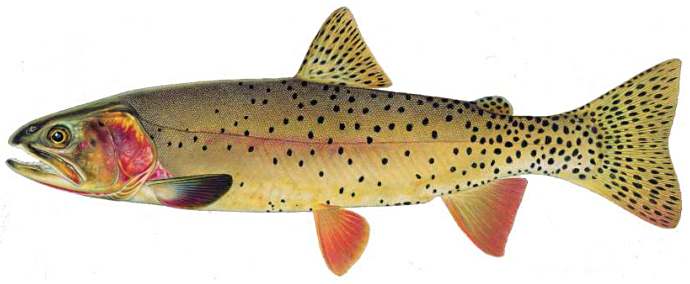
 photo courtesy Whirling Disease Foundation
.. In the Baltimore Sun is another note about Rock Snot threatening the Gunpowder River. Just last December we noted that the river was
under assault by a local canoe club. Now the killer snot is a clear and present danger.
.. The algae bloom was noted by concerned anglers and reported to the state DNR last week. The Baltimore Sun article carries a note about the DNR providing washing stations and posting the river.
.. A second news brief by the CBS affiliate WJZ in Baltimore notes that the DNR is asking boaters to was their boats in a saline solution. Didymo can survive on a damp surface for two or more days.
.. Big Bear Lake in California came within inches of having a Quagga Mussel invasion. Via Protect You Waters, comes news that the Quagga Mussel is on the move. Quick action and insight save a near infestation at the boat ramp according to an article on the Big Bear Grizzly.com web site. The Metropolitan Water District is launching an all out public information campaign and has attendants at the boat launch facilities on the lake.
-------
.. In Nevada, National Park Service officials have been given the go ahead to join with local organizations to do battle with the Quagga Mussel and other invasive species according to an article in the Las Vegas ReviewJournal.com.
.. A bill passed by congress removes a legal obstacle that had prevented the federal agency from entering cooperative agreements with states, local governments, landowners and American Indian tribes to battle invaders that steal water and crowd native vegetation.
.. This could open the way for additional resources in the fight against invasive species.
-------
.. The Parvin Lake Research Station in Colorado, (home of the Hofer strain of Rainbow Trout, brought back to the USA from Germany a few years ago,) is inviting anglers to become research assistants in their efforts to develop trout hybrids that are resistant to Whirling Disease.
.. Many of the hybrids are larger than the native trout and can rapidly reach five pounds, (this includes the HO-HA hybrid being tested in Utah.)
.. Various hybrid strains have been tagged with small coded wires placed in the fishes' noses. Anglers are asked to visit the research station, report their experience, and if they keep fish -- have them scanned for identification. You can read more about the project in the North Forty News & Fossil Creek Current.
.. This research is is detailed in a pair of notes on the Whirling Disease Foundation web site ( #1 #2 .) The cooperation between Colorado, Montana, California, and Germany has produced some success by using fish that were originally exported from the Gunnison River to Germany in the 1800's.
.. The best news is that there may be an immune, (not just resistant strain,) present in the current research populations. Via Protect Your Waters, we've just read a note in FlyFishingDish that suggest -- nay -- says so. The sad news is that many native trout species and subspecies will be lost in the rush to sprinkle these hybrids around for the joys of angling.
.. The disappearance of any species is a blow to the ecosystem. The solution to the problem of whirling disease has the seeds of another problem that is just in its infancy.
.. We don't know how to do it, but it's time we considered a legacy fish bank. Be it sperm, or eggs, both or neither we should be thinking about it. Tissue samples, live fish repositories, and other solutions to the infant problem have been proposed.
.. Just as the Gunnison River trout went to Germany and came back with a resistance to whirling disease, so too to many of our native species may have hidden genetic talents and predispositions that are yet to be discovered. We need to think about preserving them for the next plague. What ever it may be.
.. The best news is that there may be an immune, (not just resistant strain,) present in the current research populations. Via Protect Your Waters, we've just read a note in FlyFishingDish that suggest -- nay -- says so. The sad news is that many native trout species and subspecies will be lost in the rush to sprinkle these hybrids around for the joys of angling.
.. The disappearance of any species is a blow to the ecosystem. The solution to the problem of whirling disease has the seeds of another problem that is just in its infancy.
.. We don't know how to do it, but it's time we considered a legacy fish bank. Be it sperm, or eggs, both or neither we should be thinking about it. Tissue samples, live fish repositories, and other solutions to the infant problem have been proposed.
.. Just as the Gunnison River trout went to Germany and came back with a resistance to whirling disease, so too to many of our native species may have hidden genetic talents and predispositions that are yet to be discovered. We need to think about preserving them for the next plague. What ever it may be.
photo courtesy Whirling Disease Foundation------



.jpg)