• PARTNER: PROTECT YOUR WATERS
  • Go To: THE FLIES OF YELLOWSTONE
  • Go To: YELLOWSTONE FISHING WEATHER
  • Go To: YELLOWSTONE FLY FISHING MAPS
  • Visit: Moldy Chum
  • Visit: The Horse's Mouth
  • Visit: Chi Wulff
  • Visit: Parks' Fly Shop
  • Thursday, February 08, 2007

    WORMS TO THE RESCUE

    IS THERE HOPE AHEAD?
    Can We Obliterate Whirling Disease?

    In Praise Of Whitefish!


    .. STOP HITCHHIKERS reports that there may be hope for combating whirling disease by using resistant tubifex worms. Could this be the answer we've been waiting for? The original article is in the Rocky Mountain News.

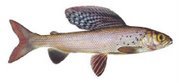
    .. Thanks to the lowly Rocky Mountain Whitefish, we may be on the right track. The fish has for decades been reviled as poor fare - unless smoked - (if you can keep them lit.)
    .. Now the disappearance of this native fish has proven to be one key to understanding the vector in the whirling disease story. The fish has become an unsung hero in this battle. It's time we learned to love it too!

    .. For more information about Rocky Mountain Whitefish visit Montana Fish Wildlife & Parks.
    .. For More information about Whitefish Montana see Big Sky Fishing.

    _____________

    Friday, February 02, 2007

    Where Do Flies Come From?


    .. Well the cold has returned and we note that 18 degrees seems chilly to the folks in salubrious and sunny Northern California. It's a mere 40 degrees colder than that here, and the flies are dancing all over the bench.
    .. One of our neighbors stumbled through the door and after a brief bit of resuscitation, exclaimed that there were probably many better ways to spend the winter than shredding the pelts of long dead critters and plucking the feathers from fowl with unpronounceable names. We strongly disagree, and ultimately the discussion turned to both fine malt and fine feathers.
    .. The gist of it was that the real professionals can always do it better than just the casual fly tier. We than wondered just where it was that all those flies come from.
    ..So, with Swarovski tumblers in hand we began to shred commercial tiers instead of pelts. We spent far more time than is justifiable looking at feather pages and fly shops online, and talking about "BLOGGING." We even compared the merits of single malt to blended libations.
    .. He wanted to know how blogging was done, and just what is was. We demonstrated. There are tons of electrons out there - we exercised many of them. This is the result.
    .. We talked, cruised, surfed, clicked, compared, and conversed. And, we finally decided that the folks that gather up gobs and gobs of dead critters and turn them into fish catching art were doing a pretty good job of enhancing everyone's fishing pleasure, and - - - contributing mightily to the world's economy.
    .. A pleasant way to avoid both the cold and tying flies. Our only clear conclusion - "The reason that there are so many flies is that they all work!"
    ..The Internet provides some very interesting resources - if you can keep the Scotch off of the keyboard. Here's a few of them.
    ________________
    .. Have $13,000 +/- in inventory? Weigh them!
    .. Five story tall fly factory? You better believe it!
    .. Advocate for independent fly tiers? Of course!
    .. Custom ordered flies? Easy enough!
    .. All USA suppliers? You got it!
    .. Interview with Jim Watson? Why Certainly! Well worth a rereading at High Country Flies. This is an excellent review of Umpqua Feather Merchants and the quality in their flies.
    .. What does the USA Fly Fishing Team think of Umpqua? Read it here!
    .. Want to get into the importing of foreign feathers and other gear? Try this!
    .. The House Of Harrop? Just click!
    .. Craig's place? For sure!
    .. English-tied flies? Right here!
    .. Materials on sale? Save here!
    .. Bargains on used equipment? You won't believe it!
    .. Exceptional Salmon Flies? Visit Wolfgang!

    Monday, January 29, 2007

    Surface or Sunken


    NOT TOO DOWN AND NOT TOO DIRTY
    .. We've slid out from beneath the down comforter, turned off the test pattern, rolled off the couch, turned the furnace down, and crawled to the the pile of debris that was once a tying bench. Yes, it's above zero in West Yellowstone.
    .. Next on the agenda is 20 dozen of "Rosenbauer's Snowshoe Rabbit Emerger." What a wonderful fly! Nothing fancy, nothing strange, nothing hard: just pure fish-catching guile. This tough little fly is versatile, attractive, (to fish and their dancing partners,) and you can fish it just about however you like.
    .. The origin of this fly lies deep in the secret techniques of master fishers on the Delaware River. Cross Current Guide Service & Outfitters has an excellent web site if you're ever inclined to fish what is perhaps the best wild trout water in the ""EAST"" (horror of horrors!)
    .. We stick to the original pattern and always have a few of these little darlings in the box. This is just another kind of insurance against 'Chandleritis.'
    .. The recipe is reprinted here for those of you without a left mouse button:
    Fly Pattern Recipe
    Name: Rosenbauer's BWO Snowshoe Rabbit Emerger
    Sizes: 14, 16, 18, 20 (We're doing 14's and 16's)
    Hook Type: Curved nymph/shrimp
    Thread: Light orange
    Tail: Shuck of brown Antron yarn equal to gape, tied halfway down bend. Shuck must be scored first with flat side of scissors or dubbing needle to give it a ragged look.
    Body: ½ Dark olive, ½ Dark brown rabbit fur
    Throat: Short CDC fibers equal to hook gape
    Wing: Bunch of snowshoe rabbit's foot guard hairs from the middle of the foot. Equal to hook gape in length (We vary this from very long to very short)
    Head: Dubbed from dark hares mask dubbing
    .. This is a great emerger. It's also a great searching nymph. Grease it or sink it, it's just plain good. Since we're beginning to think about our spring trip to the Smith River, (Montana, not California,) we are keeping a few dozen just for us. Orvis sells it if you need one for a pattern, or if you need a couple of dozen in a hurry.

    .. That's about it. Time to destroy some snowshoe pelts and feet.

    IT'S NOT ALL ABOUT FISHING

    Sunday, January 28, 2007

    Tuesday, January 23, 2007

    Snow Flies

    COLD WEATHER MIDGES
    Invaders In California
    more rock snot
    ho-ha trout news

    .. They are small. They are flies. Trout eat them. Start with size 20 and then 22 and then move on to the small sizes. In this part of the world they are called snow flies. The problem is that different people call different species and families "snow flies." (See: Snow Fly #1, Snow Fly #2.)
    .. These cold-temperature critters are midges that hatch all winter. They are not famous. They are not the inspiration for many fly patterns. They are seldom recognized for what they are: mostly because fly-fisher-folk don't do much fishing in the snow.
    .. Just about 15 miles from beautiful downtown West Yellowstone is a bit of water that is open to fishing all year. And . . . you can find trout rising at temperatures that are not associated with fly fishing.
    .. The most common fly that the fish are eating is a "midge" which is a cold-tolerant fly - a real fly! They are small and appear on very sunny days that somehow don't feel quite as cold as they really are. The midges appear in swarms about mid day. They don't fly far and can be seen dotting the snow -- if you look closely. The trout love them.
    .. However, not all cold tolerant flies are midges. There are some mayflies, and some caddis flies, and even some stone flies. These are the flies that fly fishers need to know about if they are going to fish in the cold water, and the cold weather of the greater Yellowstone area. Some of these are even mosquitoes.
    .. An excellent guide to the cold weather flies is found at the University Of Minnesota's "Chironomidae Research Group" web page. These folks are busy studying primarily cold-adapted midges.
    .. As noted on the site's mission statement page:
    Climate change is predicted to have a greater impact in colder regions and therefore will have a large influence on the organisms that inhabit or thrive in these cold environments. Anthropogenically induced climate change will likely result in range shifts and extinctions leading to alterations in the composition and structure of insect communities. Research to reveal adaptations for survival at low temperatures in cold-adapted aquatic insects will be used to determine the influence of temperature on their large-scale geographic distributions and to model and predict the effects of climate change on these organisms.

    .. The site has extensive pictures, and identification keys for many of the aquatic forms and should prove fruitful for creative fly tiers. Especially during cold evenings at the bench - and by the fire. There also is a literature review section, and the identification keys are well illustrated.
    .. It's hard to tell if this is an ongoing project or just the report of a short-term research study. What every the case may be; the site is worth a visit for the "bug-inclined."
    _____________

    .. From Protect Your Waters comes news about invaders in California. Zebra mussels and Quagga mussels have been found in several waters in California. The San Francisco Chronicle has a full report.
    .. Rock Snot is continuing to make news in New Zealand. The New Zealand Herald reports the story in graphic fashion.
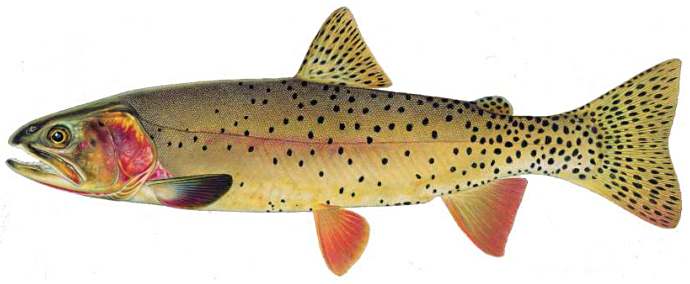
    .. The promising news about the Ho-Ha trout is also reported, and gives hope for combating Whirling Disease. The cross breeding of the Hofer & Harrison Trout has proven to be one solution to the stocking program in Utah. The new trout is 10 times more resistant to whirling disease than previous strains. The Deseret News carries a story about the continuing breeding and stocking program.
    Ho-Ha Photo by Kevin Rogers