JUST A LITTLE CHANGE
The Scene's The Same
just two months later
---------
BREAKING NEWS
Fantastic Scientific Research Results

.. Below is last years post about the spring fly box. We've added just one fly this year. The Shop Vac. With snow currently on the ground and it snowing on and off all week it seems that the bug activity will be mostly underwater.
-------

.. This is as close as we come to recommending flies for fishing. We have used some of these patterns for 40 years or more - really - and they continue to work. They do not satisfy the need for experimentation, nor do they tickle the fancy of feather merchants, nor are they the latest and greatest; they just suit us.
.. Other flies work fine, and other flies may even work better. One old local fly fisher was fond of asking and answering a question in the same breath: "Why are there so many flies? - Because they all work!" We agree.
.. Spring fishing in and around Yellowstone National Park is weather and runoff dependent - no surprise there. The weather can be brutal well into June, and the runoff can keep you off of the water for days, (or weeks,) at a time. The flies shown here are designed to work well in a variety of conditions and in that sense are "generalized flies." There are some that could be considered 'imitative,' however most will fall into the 'attractor' class - that's O.K. with us.
Got'ta attract a fish to catch it.
-------------------------
THE FLIES
..
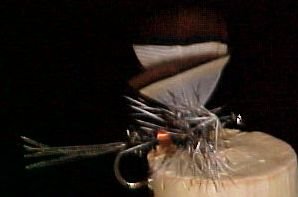
Montana Duster: We use piles of these all season long and start the Spring
nymphing with it. This pattern, and the
original Feather Duster are staples in our Spring assortment. The yellow color is most popular. However, about this time each year the pink makes an appearance - probably taken for an egg - who knows? Sizes: 6 - 18.
..
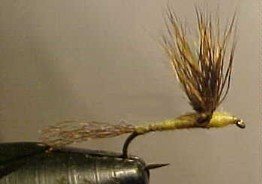
Yellowstone Coachman: The occasional day in early Spring that allows a good hatch is an unanticipated joy. The fish are seldom very selective, (well -
sort'a,) and this fly works wonders. Sizes: 10 - 18.
..
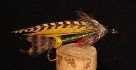
The Yellowstone Cinch: This is our other choice for early Spring dry fly days. It is a local adaptation that floats like a cork, and can be quickly tied at home or on the water. Size is the key to this and other early season flies in Yellowstone. Later the fish become much more selective. Sizes: 10 - 18.
..
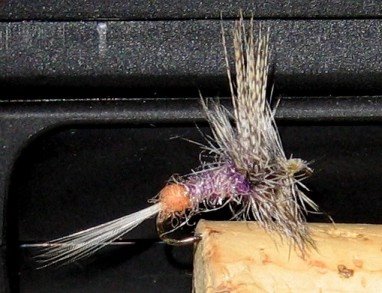
Yellowstone Spruce Fly: This fly was developed by some neighbors that use a bubble on a spinning or casting rig for Fall fishing. It is an exceptional fly when casted with a fly rod in the spring. It's a bit gaudy for many of our purists, but with a nice slow presentation in the cold waters of the early Spring it looks like a big sack of groceries to hungry trout. Sizes: 4 - 12.
..
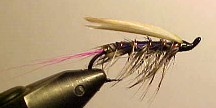
Yellowstone Morning Glory: This is an all season fly that we like to keep handy for fishing in the film, or slightly submerged in the Spring. It is a traditional 'early morning' fly for those that find the right foggy morning after the rare early Spring hatch. In the Summer it's a useful attractor. There are many flies similar to this local variant and most will do - we use this one. Sizes: 10 - 16.
..
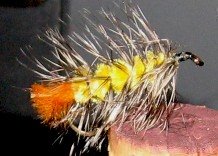
Yellowstone Winter Grub: This looks like nothing other than something to sample - or some such. We fish this all Winter and carry it into the Spring. It's a heavy fly, though it casts well, and is useful for 'dredging' those big fish that you know are there. It's apparently an old fly from the Salmon & Challis area in Idaho. We usually have this in a variety of sizes for the desperation moments. Sizes: 4 - 10.
..
Woolly Worm: Spit the words out of your mouth if you must - it's a great Spring fly in Yellowstone country. Sometimes we use small ones on the surface when the snow flies are out. Black or yellow seem to be the colors of choice, we've got more yellow ones. Sizes: 10 - 18.

..
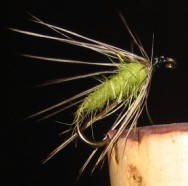
Yellowstone Badger: This prickly little devil is one that serves a multitude of purposes. Float it, sink it, splash it, strip it, or just
dap it - it is a winner. This fly is similar to the other nymphs that are popular around here - the Pheasant Tail, and the Hare's Ear. We use them all, but keep coming back to this one. Sizes: 12 - 18.
..
Stiff Hackle Nymph: This variant of the soft hackle variety is not a favorite among many folks in the fly fishing community. It does work well and it is used by some of our 'more mature' neighbors. We've used it since the 80's and found it to be a useful resource - but we tend to forget it too. This is an all season fly that we just put in the fly box because we have them. Sizes 12 -18.

..
Deer Hair Caddis: This little fly we borrowed from Jason
Neuswanger over at
The Trout Nut. We fished it all last year along with the local versions and it was a standout performer. It's a dark fly that is consistent with some of our early
Caddis hatches and we like it very much. Sizes: 10 - 18.
.. The
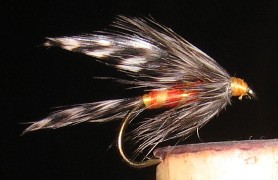
Quick -N-Easy is one of those flies that makes many a fly fisher cringe. It is gaudy, flashy, big, and effective. It is famous for its spectacular refusals, and that's it's purpose. Tie it on early and then fish the fly that the fish are taking. This will show you that there are really fish in the water, and it may even catch one or two. Sizes: 8 - 14.
..
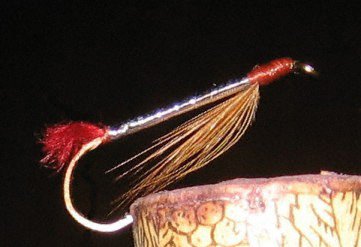
Hellifiknow: This pattern is reminiscent of the
Black Nose Dace and
Micky Finn patterns. It is useful when the water is murky and you need to get a bit of twinkle down deep. It's a Spring staple and often a 'what if ?' kind of fly for prospecting. Sizes 4 - 12.
..
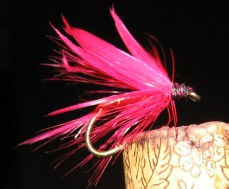
Scarlet Ibis: We've carried this fly since the early 60's. Back then they came on a card and you got four for a dollar. They were imported from Japan and attracted the novice and expert alike. Bit of color never hurts the old fly boxes. This traditional wet fly is one that we fish for fun. It may be taken for an egg, a flying saucer, a cowboy's bandanna, or "who knows ?" - but it takes a few fish every year. Sizes: 8 - 14.
---------------
.. Here's the post on the
Shop Vac. It's proven its worth in subsurface fishing over the last few seasons. Tied a bit larger than the traditional sizes it is a fine upper fly in a
tandem rig and can be seen on a slow shallow swing.

.. We have an irrational fondness for the local Feather Dusters, (Original, Montana, Egg,) yet we always have a few Shop Vacs as well. For year-round success these nymphs rank very high. Most people use the bead head variety.
Contrarians that we are, we stick with the fluff sans bead.
.. The recipe lets you know why we're fond of these by the dozen.
Recipe.
Hook: size 12 - 18, Thread: black, Body: pheasant tail fiber, Rib: medium, (or fine,) copper wire, Wing: gold or white Zelon, (cul de canard works fine.)Instructions.
Move thread to the rear of the hook, attach pheasant tail fibers and the wire, return thread and fibers to head, counter wrap the wire rib to the eye, tie off, attach zelon, (or cul de canard,) on top of the hook shank, whip finish a large clunky head... These can be greased up real heavy and floated if you choose. The smaller sizes float very well.
-------

.. New

research results have been released from the
Montana State Piscatorial Institute, (
MSPI) detailing the findings of fish vision. The results had been delayed for about three years due to the problems of replicating the results from the implantation of sensors in the visual centers of the living trout brain.
.. The results are scientifically astounding.
.. Trout have as their main brain component the optic lobes. These highly developed brain tissues are capable of a higher resolution than previously thought, and are capable of providing the necessary stimulus/reaction response to a wide variety of external phenomena.
.. The single most astonishing finding is that the trout uses this highly developed cerebral mass for a process of transliteration.
.. The transliteration of visualized objects into desirable objects takes place at the interface of the cerebrum and the optic lobes. This is facilitated by
neuro-synaptic activity that was also traced to both the hypothalamus and the olfactory interface.

The resulting interplay of these electrochemical processes produce a cognitive impression of an object with attributes of both food and sex.
.. In simple terms: the trout sees food items as desirable objects in a way exactly similar to the way fisher folks see desireable objects. And the trout sees subsurface objects as the most desirable of all food objects.
.. Of all the subsurface food items, nymphs are seen as the most desirable of food items and they produce responses that are similar in intensity to the desire for sexual objects . . . in both fish and humans.
.. The transliteration phenomena was successfully captured by the researchers and reproduced as an image comprehensible to humans.
.. The image is the product of newly developed technology that not only implants sensors in the trout's brain, but produces output in visual terms. Although some transliteration algorhythms are informed by food of the fish, others are informed by research in humans and adolescent canines as well.
.. We are fortunate to be chosen as the first place to release this image to the public.
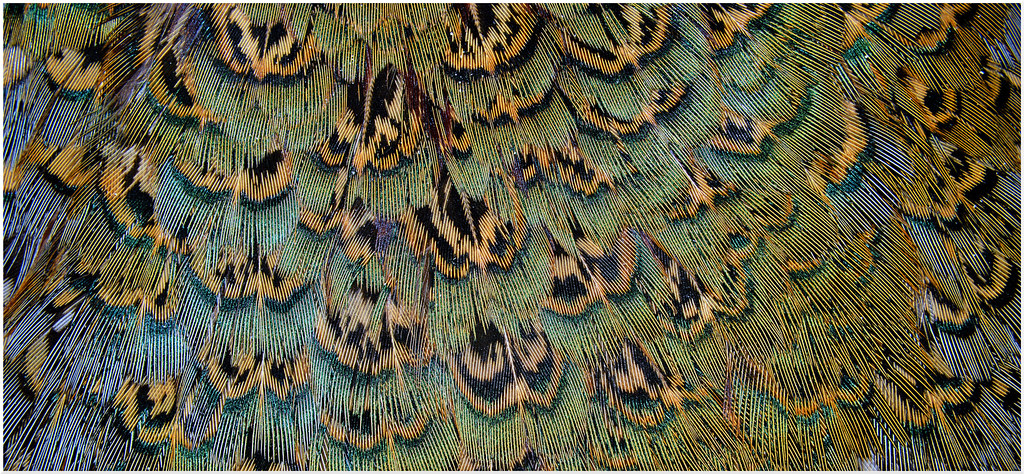
.. Below is what a
Feather Duster nymph, (we provided the research props,) looks like to a trout. We have to admit that the trout has good taste!








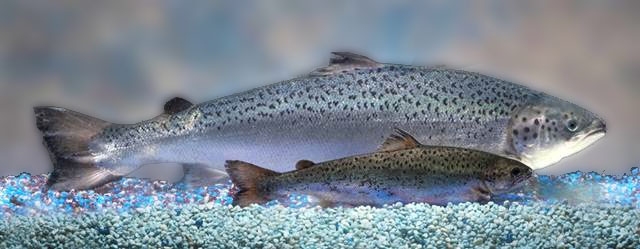


 .. The conscientious efforts of Jill Richardson are laudable and we thank her for a concise statement of the "The Creepy Science Behind Genetically Engineered "Frankenfish" About to Enter Our Food Supply Unlabeled."

 The fossil was from an iniopterygian, an ancient extinct fish that is a relative of sharks, rays and ratfish.
 -------
 _________________
 .. Should you happen to be in Helena, Montana next Friday, January 16, 2009; and should you care to hear about how resource assessment in Montana is being carried out; and should you care how decisions about fish and their waters are made: THEN you should attend the Montana State Digital Library Seminar. Here's the press release.
 200 sample maps from the collections of the Montana Base Map Service Center, the Montana State Library, Montana Fish Wildlife and Parks, and Flathead County. During the next year, library staff will vigorously pursue other GIS data providers and help them add their data and maps to the Portal.
 over, Orthoimagery, Soils, Transportation, Wetlands. Users can create accounts and publish data conforming to the metadata standards of the site.

 .. Below is last years post about the spring fly box. We've added just one fly this year. The Shop Vac. With snow currently on the ground and it snowing on and off all week it seems that the bug activity will be mostly underwater.
 .. This is as close as we come to recommending flies for fishing. We have used some of these patterns for 40 years or more - really - and they continue to work. They do not satisfy the need for experimentation, nor do they tickle the fancy of feather merchants, nor are they the latest and greatest; they just suit us.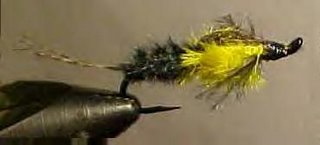
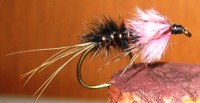

 .. Yellowstone Coachman: The occasional day in early Spring that allows a good hatch is an unanticipated joy. The fish are seldom very selective, (well - sort'a,) and this fly works wonders. Sizes: 10 - 18.
 .. The Yellowstone Cinch: This is our other choice for early Spring dry fly days. It is a local adaptation that floats like a cork, and can be quickly tied at home or on the water. Size is the key to this and other early season flies in Yellowstone. Later the fish become much more selective. Sizes: 10 - 18.
 .. Yellowstone Spruce Fly: This fly was developed by some neighbors that use a bubble on a spinning or casting rig for Fall fishing. It is an exceptional fly when casted with a fly rod in the spring. It's a bit gaudy for many of our purists, but with a nice slow presentation in the cold waters of the early Spring it looks like a big sack of groceries to hungry trout. Sizes: 4 - 12.
 .. Yellowstone Morning Glory: This is an all season fly that we like to keep handy for fishing in the film, or slightly submerged in the Spring. It is a traditional 'early morning' fly for those that find the right foggy morning after the rare early Spring hatch. In the Summer it's a useful attractor. There are many flies similar to this local variant and most will do - we use this one. Sizes: 10 - 16.
 .. Yellowstone Winter Grub: This looks like nothing other than something to sample - or some such. We fish this all Winter and carry it into the Spring. It's a heavy fly, though it casts well, and is useful for 'dredging' those big fish that you know are there. It's apparently an old fly from the Salmon & Challis area in Idaho. We usually have this in a variety of sizes for the desperation moments. Sizes: 4 - 10.
 .. Woolly Worm: Spit the words out of your mouth if you must - it's a great Spring fly in Yellowstone country. Sometimes we use small ones on the surface when the snow flies are out. Black or yellow seem to be the colors of choice, we've got more yellow ones. Sizes: 10 - 18.
 .. Yellowstone Badger: This prickly little devil is one that serves a multitude of purposes. Float it, sink it, splash it, strip it, or just dap it - it is a winner. This fly is similar to the other nymphs that are popular around here - the Pheasant Tail, and the Hare's Ear. We use them all, but keep coming back to this one. Sizes: 12 - 18.
 .. Stiff Hackle Nymph: This variant of the soft hackle variety is not a favorite among many folks in the fly fishing community. It does work well and it is used by some of our 'more mature' neighbors. We've used it since the 80's and found it to be a useful resource - but we tend to forget it too. This is an all season fly that we just put in the fly box because we have them. Sizes 12 -18.
 .. Deer Hair Caddis: This little fly we borrowed from Jason Neuswanger over at The Trout Nut. We fished it all last year along with the local versions and it was a standout performer. It's a dark fly that is consistent with some of our early Caddis hatches and we like it very much. Sizes: 10 - 18.
 .. The Quick -N-Easy is one of those flies that makes many a fly fisher cringe. It is gaudy, flashy, big, and effective. It is famous for its spectacular refusals, and that's it's purpose. Tie it on early and then fish the fly that the fish are taking. This will show you that there are really fish in the water, and it may even catch one or two. Sizes: 8 - 14.
 .. Hellifiknow: This pattern is reminiscent of the Black Nose Dace and Micky Finn patterns. It is useful when the water is murky and you need to get a bit of twinkle down deep. It's a Spring staple and often a 'what if ?' kind of fly for prospecting. Sizes 4 - 12.
 .. Scarlet Ibis: We've carried this fly since the early 60's. Back then they came on a card and you got four for a dollar. They were imported from Japan and attracted the novice and expert alike. Bit of color never hurts the old fly boxes. This traditional wet fly is one that we fish for fun. It may be taken for an egg, a flying saucer, a cowboy's bandanna, or "who knows ?" - but it takes a few fish every year. Sizes: 8 - 14.
 .. We have an irrational fondness for the local Feather Dusters, (Original, Montana, Egg,) yet we always have a few Shop Vacs as well. For year-round success these nymphs rank very high. Most people use the bead head variety. Contrarians that we are, we stick with the fluff sans bead.
 .. New
  research results have been released from the Montana State Piscatorial Institute, (MSPI) detailing the findings of fish vision. The results had been delayed for about three years due to the problems of replicating the results from the implantation of sensors in the visual centers of the living trout brain.
 The resulting interplay of these electrochemical processes produce a cognitive impression of an object with attributes of both food and sex.


.jpg)