• PARTNER: PROTECT YOUR WATERS
  • Go To: THE FLIES OF YELLOWSTONE
  • Go To: YELLOWSTONE FISHING WEATHER
  • Go To: YELLOWSTONE FLY FISHING MAPS
  • Visit: Moldy Chum
  • Visit: The Horse's Mouth
  • Visit: Chi Wulff
  • Visit: Parks' Fly Shop
  • Thursday, June 22, 2006

    FISHING YELLOWSTONE'S SUMMER

    A TALE OF FIVE RIVERS
    fish hard the days are getting shorter
    Some Small Secrets Revealed
    less people -- more fish
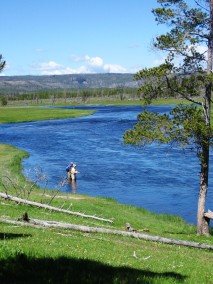


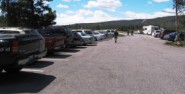
    <- Firehole River @ Ojo Caliente parking area.

    -- With our summer in full swing, it's time to expand the offerings in the fly box. Any given day on the Yellowstone Plateau can bring forth weather of any given sort. The aquatic insects are sensitive to this, and sometimes inclement weather is your best chance for catching a hatch. THE FIRE HOLE RIVER is still fishing like a storybook river. It's just that, now, the stories have developed some plot twists.
    -- The early morning hatches of Mayflies are combined with a spinner fall. Catching the "spinner float" requires an early breakfast and dedication to the proposition that someone has to catch all those fish that nobody ever sees. Use a generic Mayfly pattern, (we like the Yellowstone Morning Glory,) with a bit of the pattern that represents a trailing shuck, or downed wings. Sizes for the current hatch seem to be in the
    16 - 20 range, so take a fist full of each.
    -- Start fishing early enough to beat the crowds, (just after sunrise,) and fish until around 10:30 AM. The very soft currents and slower foam lines contain a lot of trout food, and the parking lot at Ojo Caliente is
    a good place to begin. We like to fish down on these early mornings, other early birds fish up. By the time you've worn out a stretch of water folks will be filling up the parking lot, and as you leave for a leisurely brunch you can tell them -- " . . . you should'a . . . . . "
    -- The PMD's are still around, and on those blustery mornings you can look forward to finishing your morning with a flurry of Baetis. You might even bump into the mid-day Caddis. Should you choose to fish through lunch time a few well selected nymphs and small soft hackles will serve you well.
    -- Evenings on the Firehole right now are showing good Caddis hatches - some are small. For the smallest dark gray or black Caddis, we like a Deer Hair Caddis pattern with a dark body originated by Jason Neuswanger at The Trout Nut. Right now sizes 18 - 20 seem about right.


    <- Find This Place For Fish


    -- We've been spending quite some time on the Gibbon River in our annual, (still unsuccessful,) Grayling quest, and have taken many good fish and just piles of Brook Trout. The mornings are filled with wet fly and soft hackle work. Occasionally we throw some Stiff Hackle Nymphs if the clouds are low.
    -- The hot spring shown above is across the Gibbon River from a nice big parking lot in the canyon section. The walls of the canyon are mostly too steep for mature fisherfolk, but there is a trail that will get you down to the river. There are always good fish in this steep riffle section, an
    d it is seldom fished. We took a nice Brown Trout of 14" here and recommend this place for the more fit fisherfolks.
    -- The National Park Meadow section of the Gibbon River has slowed to seasonal levels and inspection of the clear water shows that the scoured sandy bottom is almost devoid of vegetation. This varies from year to year, and when it is in this condition fishing becomes too challenging for most folks. The fish are of generous proportions but hold in plain sight in undercuts. This requires getting some grass stains on your waders. Caddis in the late evening is your best bet.


    <-- Campground Pool on the Gibbon River


    -- At Norris, Dusty took a Grayling in the "Campground Pool" on a size 14 soft hackle with an olive body. He was elated, we were dejected. The open dirt bank in the left center mid-ground is above the pool where the Grayling was fooled. He crawled across all that grass on his knees. That's him at the point. He had to release a dozen Brook Trout before his triumph.
    -- The thin water of this upper section is very clear now, and pending rains will stay that way for the summer. Hatches are also thin and localized. Be prepared to scare a lot of fish unless you are gentle in your approach. The Elk Meadow, and Gibbon Meadow sections are still guarded by bison. Evening Caddis hatches are producing good numbers of both Brown and Rainbow Trout. There are some good sized Whitefish in this section too. We saw a 15" whitefish that was as thick as a Foster's Oil Can.
    -- Nez Perce Creek above the story board is still fishing good, and there are some PMD's coming off as late as 1:30 PM. Be careful as you work the second or third meadow. The ground is still soft and the bison are filling up the lush green landscape. Most fish taken in this section will be fooled with a small Wooly Bugger with an olive or dark gray body. In the evening you can float a size 16 Wolly Bugger, or an Elk Hair Caddis to the fish.
    -- This piece of water is often overlooked by both visitors and locals alike. We're sorry for them and pleased to enjoy the solitude. Soon the day hikers and backpackers will fill the trails but the fisherfolks are not often seen. Catching is steady along this bit of Nez Perce Creek but not as furious as it can be on the glory waters.
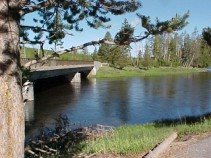

    <-- Seven Mile Bridge at Gneiss Creek Trailhead.


    -- On the Madison River there are several hatches that can be fished if you find them. The local trout shops can give you a location on a daily - or hourly basis. One bit of water that is neglected is the 1/2 mile below seven mile bridge. Most people fish this section from the rest stop, or the pullouts adjacent to the road.
    -- The parking lot at the Gneiss Creek Trailhead allows access to an excellent bit of water. Start with some long roll casts to the bridge footings. A good sized Bead Head Hare's Ear, (6 - 10,) with proper placement will start you off on the right foot. If you fish the river from the road side you will meet many local folks and may get a truthful tip or two.
    -- There are some small yellow stoneflies in this section and herds of caddis in the late evening. Depending on the day the Gray Drakes may appear here first. If bison are encountered on the trail above your head as you fish downstream, be sure not to hook one with your backcast: most tippets just will not hold.
    -- We have some reports that both the Lewis River and Lewis Lake, in the southern part of the park, are beginning to attract fisherfolk. For current information about these locations visit Jack Dennis or his web site. There is also a stirring on the Gallatin River. We braved the willows a couple of weeks ago and took a small fish. The water is still cold, and bug activity is just starting.
    -- A tip for the more adventurous. Ask a local fly shop about Slate Creek. Right now the Brook Trout are going nuts. They are starved. Some are 11" long but most are 5" - 10". There are days on this little stream when you can get tired of catching fish. There are days when you are driven out of the water by the fry eating your waders. It's worth the walk; so too is Greebe Lake, if you have a Grayling fixation -- no names mentioned.

    JENNY, Call your mom.

    Wednesday, June 21, 2006

    JUST ANOTHER DAY AT THE OFFICE

    get up early
    Go To The Office Before The Help
    FINISH THE DAY WITH A BIG FISH


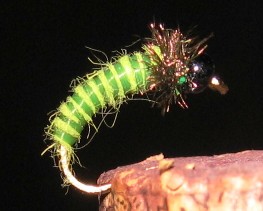
    <- Bob's Caddis "Jacklin's Green Rock Worm"


    -- So; you're a bit more lucky than most folks. You have a job that lets you fish. You have a job that you would do even if you didn't get paid to do it.
    -- You put in the long hours; just like any boss. Your rewards are modest in terms of "THE WORLD" - but you wouldn't have it any other way!
    -- It's the 16th of June, 2006 and you have a full day ahead of you. The new guides need some direction, the office needs some attention, the staff at the shop has some new employees that need a bit of training, and - - oh yeah, you have to do some filming for instructional videos and other projects.
    -- It's 5:30 AM, you open the front door and go to the office in the rear of the shop. You have had a small breakfast, the staff hasn't arrived, and you get some work done. About 6:30 AM the guides show up and get their gear, check the river reports, arrange the boats, order some box lunches and get going to fish the big water outside of Yellowstone National Park.
    -- At 7:15 AM the shop staff arrives and makes sure that there are plenty of flies, the shop is in order, the cash registers have tape, the lights all work, and the coffee is on for the first customers. They open the doors at 8:00 AM, (officially: in actuality the neighbors and a few early visitors have been in the shop since the clerks got there.)
    -- A mob appears at your office door . . . . the film crew is early . . . . "Just wanted to go over some things before we got started." And, there it is, the beginning of another day at the office. Today you are going to demonstrate some techniques that you have developed over the last 30 years or so for fishing a small nymph, with an indicator, in rapid water.
    -- By the time the film crew is satisfied, it's time for lunch. You all go to a local eatery, discuss the shoot some more and have lunch. The schedule, and shooting location have been discussed too much. It sounds like so much gobbly-de-gook. You just want to get to the water and get it done!
    -- The whole circus arrives at a local fishing spot and debauches from the vans and SUV's. You are "BETWEEN THE LAKES" and going to fish the tailwater fishery below Hebgan Dam. There are fish here and the location is accessible.
    -- There are already a couple of fishermen in the water so you select a place for the demonstration. Camera angles, (two cameras,) lighting, casting room, fill lights, and on and on and on. "ALL RIGHT BOB, LET'S DO IT."
    -- So you address camera #1; explain fly fishing a nymph with an indicator. You show a simple little creation of your own, - size 10, black glass bead head, peacock herl, and some green stuff. Nothing fancy here but a pretty good imitation. You turn to the river and Camera #2 follows the casts. They watch the indicator. Camera #1 is on the fisherman. You feel good that the line is finally wet.
    -- A couple of short controlled casts to the nice bit of holding water. A long seam between some rocks and the main current. You forget the cameras and begin to fish. You watch the drift. You strip to keep up with the swirling currents. You mend a little. And the indicator pauses -- then disappears. Fish on.
    -- The tug is light and you tighten just a bit, then pull a bit, then the fly line is ripped from your off hand. Holy Cow! You hope that the 4# green Maxima will hold this fish. The cameras are eating it up. The director is shouting, " . . did you really catch a fish?" He has no idea.
    -- The battle was a bit testy in the rapid flow in the narrow part of the stream. Details are unimportant. Finally the fish is subdued. It's dragged to the shallows and emerges like a submarine from the depths. The film crews are going nuts. You are pleased to have gathered in a fairly decent fish. Well, just a bit better than fairly decent; 30", healthy, strong, Brown Trout. And you caught it on camera.
    -- This is a true story. Our neighbor, Bob Jacklin, Fly Fishing Hall Of Fame member, Buz Buszek award winner, etc., did a fine job of demonstrating the technique. He caught a nice fish on demand, and - - the best part of the story is that it's just another day at the office.


    -- Not a bad day's work!

    Visit Bob's Shop.

    Read more about it.

    News Paper Report #1

    News Paper Report #2


    Tuesday, June 20, 2006

    YELLOWSTONE RIVERS DRAW CROWDS

    EASYCHAIR FISHING
    Parking Lots Full
    rivers & weather cooperating


    <-- Firehole River @ Midway Geyser Basin


    -- The gentleman at left, with his wife in the lawn chair, and the little "Yorkie" yapping all the time, fished 100 feet of the Firehole River for about one hour. The wife and the dog never moved. The fisherman caught more than a dozen fish. We finally made friends with the yapper!
    -- Fishing is very good. Word has spread that the rivers are in great shape, and the hatches are doing fine, and textbook regular. They are not as heavy as you dream of, (yet,) but there is no lack of bugs - all day - and no lack of willing takers, either.
    -- This is the stuff of stories. Beautiful surroundings, clear skies, afternoon thunderstorms, ravenous fish, easy wading, green grass, wildflowers, yapping "Yorkies," and full parking lots -- ah wilderness.
    -- The FIREHOLE RIVER is fishing very good. The flows are clear and seasonal. PMD's are getting thin in the morning but a Caddis hatch about 11:00 AM is filling in. The Baetis are also slowing; however a few Gray Drakes have been noticed. The slow mid-day period can be filled with nymphs and soft hackles. Once the sun is low a second Caddis hatch start and peaks about 8:00 PM. This is good since fishing is open until 10:00 PM when the light is gone.
    -- NEZ PERCE CREEK is fishing pretty good as well. It's not as hot and heavy as the Firehole, but then again, it's not as crowded. The stretch by the picnic area is about the same as the Firehole. The quicksand at the confluence is yielding big Rainbows, (to 14",) on streamers and soft hackle flies. Upstream from the Chief Joseph story board standard nymphs, (size 12 - 16, prince, hare's ear, and dusters of any stripe,) are working well. The evening Caddis hatch is a little earlier in this section.
    -- The MADISON RIVER in National Park Meadow is full of fish that are still dreaming of Salmonflies. The undercut banks have good fish that can be taken on large nymphs. The rising fish in the morning appear to be taking spinners. There is a Caddis hatch late in the afternoon, (about 4:30 - 500 PM,) that is just heavy enough to produce lively fishing. Use Elk Hair Caddis in sizes 10 - 18, as there are two types of bugs hatching during this period. The fish are becoming a bit selective, so choose your size with care.
    -- Our quest for our annual Grayling was thwarted again. We fished the GIBBON RIVER hard for three days and came up empty - well, sort'a. The "riffle - run - pocket water" sections in the canyon yielded the standard assortment of 8" - 12" Rainbows and Browns on Elk Hair Caddis and Prince nymphs. (ASIDE: about two miles of this section along the road will be hard to access when the new road and bridge is finished. Fish it now for good action on small fish.) Gibbon Meadows is still a little "squishy" in spots but the fish in the big bends can still be approached on your knees. The water is almost as clear as it gets and there is a good Caddis hatch in the afternoon. Elk Meadows is a little more firm and the same hatch can be found there.
    -- The Gibbon's thin water at the campground and above is full of the nursery fish. There are gobs, (technical term,) of Brook Trout in this section; still eager but becoming just a bit shy. Now that the weather has softened there are plenty of folks to bump into on this section. Most of them are busy putting down the fish.
    -- Reports from GREEBE LAKE are glowing. The Grayling there are still in the "ice-out" feeding frenzy, and are cruising the shore looking for groceries. Fish the detritus along the windward banks. Some fish have been taken in 8 - 10 inches of water. The meadows are a bit soft and walking is the hardest part of this fishing. It's about 2-1/2 miles to the lake, and a charlie horse in in the offing if you're out of shape and tramp around the soft meadows too much. It's probably worth it if you want a Grayling. At our age, this is a last resort.
    -- Down south LEWIS LAKE is getting hot, (figuratively,) and producing good fish on Wooly Buggers and leeches. Soon the Dragon Flies and Damsel Flies will be evident. Fish are also being taken on floating Hare's Ear nymphs.
    -- We're taking a mental health day, (yet another,) and going back for more. There has got to be a very stupid Grayling out there somewhere.
    .
    JENNY, Call your mom.

    Friday, June 16, 2006

    BEAUTIFUL DAYS INN THE NEIGHBORHOOD

    YELLOWSTONE FISHING HITS STRIDE;
    Madison, Firehole, Gibbon, Swift & Clear,
    some bugs sparse - all on schedule,
    still no grayling.


    -- Early morning on the Madison River, at Barn's #1 produced a couple of nice Brown Trout on a size 4, dark gray 'Casual Dress' nymph. We started with this fly as a prospecting situation to see if the fish were still dreaming of Salmonflies - they are.
    -- Mid-morning on the
    Firehole River, east of Goose Lake had a modest Gray Drake spinner fall, and a scattered hatch of PMD's. The fish were taking both - we think. We floated some small, size 14 -16 elk hair caddis to them and they ate brunch.
    -- Still on the pilgrimage for our annual Grayling; we went to the Big Riffle Bend, just upstream from Tuff Cliffs on the
    Gibbon River. The water is high and clear, full of oxygen, and some small stoneflies. This section requires a walk across the meadow of about 3/8 mile, and there are only a couple of places to park.
    -- The day was perfect. Low broken clouds scudded across the sky and the breeze kept most of the mosquitoes down. On this section of the Gibbon, there are Mountain Whitefish, Brook Trout, Rainbow Trout, Brown Trout and Grayling. We caught a few of each, (except Grayling,) on the same elk hair caddis during our mid-day break. Brook Trout are rare in this section and the one we caught was about 11" - still competing.
    -- We sank a 'Yellowstone Sally'** and took a nice brown trout of about 15" in the tail-out of the last pool before the valley widens into the meadow section. Then back to the car.
    -- Lunch was consumed amid the gaggle of visitors at the Gibbon Falls overlook. The falls still have some color and are running fast. Some neighbors stopped and reported that the Gibbon was fishing good up near Virginia Cascades, and in the big pull-out near chocolate spring.
    -- We drove to the parking area at the Norris Campground Meadow. The Upper Gibbon River is in perfect early season form. The one-cast water south of the Canyon Village Road is high, swift, and clear. We fished up to the waist of the meadow, and then, back down. Today, only the Brook Trout were taking. They were taking everything! We used elk hair caddis, prince nymphs, bead head hare's ear nymphs, and some small, (18 - 20,) mosquitoes - sweet revenge. The meadow had dried to the perfect mosquito breeding stage, and they are taking advantage of it.
    -- The big meadow section, across the road, and west of Norris campground is beginning to move toward seasonal flow, and several fish were rising in the bend that turns the river south, (about 1/4 mile from the road.) Dirk took a couple of small Browns and a sea monster of some sort. We never saw it, but it torpedoed upstream like a Smith River Steelhead headed for the interstate in northern California. Excitement and failure to re-tie a 6x tippet caused Dirk to exercise a long forgotten stream of explicatives.
    -- A dark cloud sent us back to the car and the ride home. We arrived to a gentle shower and a rainbow. The metropolis of West Yellowstone is filling up with visitors and both parking and traffic is a problem.


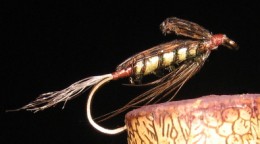
    <-- Casual Dress


    -- The weather forcast, reports from neighbors, and observations made today suggest that we are in for a good fishing week ahead. We are still looking for a Grayling, maybe the hike to Greebe Lake will have to save this quest. Now is the time, and the trail is dry enough, (second-hand report,) to make the hike in fairly easy. These old bones could probably make the 2 -3 mile jaunt with a companion and several 'vista' breaks.


    <-- ** Yellowstone Sally


    -- The Yellowstone Sally is a local fly that works well in both the lakes and streams of Yellowstone. It combines elements of both nymph and streamer forms. It is easy to tie with common materials, can range in size from 4 to 14, can be tied weighted or not, and catches fish.
    .
    Recipe for Yellowstone Sally:
    Tail; 6 - 8 muskrat or hare's mask fibers, Shell Back; turkey tail (fold to make wing stubbs too), Body; yellow floss or waxed yellow thread, Rib; peacock herl, Wing case; folded section of turkey tail shell back, Beard; small pheasant tail fibres, Thread; we use red, others use yellow. In the larger sizes this is a good searching nymph in spring and early summer. In the smaller sizes it can be floated on lakes for gulpers, and sunk in the tails of pools where you need to get down quick.
    .
    Jenny, call your mom.

    Thursday, June 15, 2006

    YELLOWSTONE RAINS RAISE RIVERS

    HEAVY JUNE RAIN IS NORMAL:
    Combat The Weather With Nostalgia,
    can you say scarlet ibis?

    (P.S. YELLOWSTONE LAKE OPENS FOR FISHING TODAY!) **


    <-- Scarlet Ibis, ca.1964


    -- The gray days of the last week, and the evening showers are typical June weather. The soaking rain of yesterday and last night is not an unusual thing this time of year.
    -- Folks that have been here for only 5 or 6 years seem astounded that it should rain so much in June. The phraseology is interesting if you listen to a conversation between folks who have lived here all their lives, and those neighbors who have recently arrived.
    -- "JEEZ, it's still cold and rainy, and it's already June."
    -- "YUP, it's June."
    -- June is, historically, our wettest month, and consistently provides us with our greatest water content in precipitation. This includes all but the deepest snow years. Maybe the drought is over. We hope so.
    -- The west side rivers have responded to the persistent precipitation of the last two days with a noticeable rise in discharge.
    -- The Firehole River has gone from a seasonal 400 cfs to a sprightly 600 cfs. The color is still good and I'm sure the remaining Baetis are just happy as bugs in . . . . .
    -- The Madison River has gone from a pleasantly slow 650 cfs to a bubblingly seasonal flow of about 850 cfs. It's color is a bit off, but still fishable. These overnight swings are normal for this time of year, and do present some day-to-day challenges, but they can be overcome. Change your flies and change your techniques. Change where you fish; after all the damn rivers are changing.
    -- Apropos of all this is the happy coincidence of the mention of a couple of recent articles that will just grind at the guts of the technical brethren who have boxes full of 'realistics.' The alert fishermen at MidCurrent, and The Trout Underground reminded us of a timely solution to the current conditions.
    -- At MidCurrent two perfectly pertinent notes should be read immediately. "Beyond The Swing," by John Likakis, and "The Mystery Of The Ratty Fly" by our neighbor, Paul Schullery.
    -- These works provide us with nostalgic views of techniques that are still viable and pertinent solutions to today's challenges.
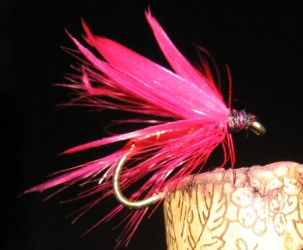
    -- The photo above is of an imported Scarlet Ibis from about 1964. (We admit to never throwing anything out.) And, it is also an example of a 'Ratty Fly.' The hook is a bit rusty, there are no Ibis feathers in it - never were; and it has seen it's share of use. We would buy these things by the handsfull - they were very pretty, they were very cheap, sometimes they came in assortments of six, (yellow, white, dun, red, black, brown,) and some even came with a leader attached - ah, but we digress again. This fly, and the techniques mentioned in the Likakis article will probably catch plenty of fish on the Madison and Firehole Rivers in their current conditions.
    -- We've not been to the Gibbon yet today; but, we're going tomorrow on our continuing annual Grayling pilgrimage. We're going to take the old ratty scarlet ibis. More to come.
    _____________
    ** The lake is high for the opener, and fishing should be good right at the Lake Hotel - depending on the direction of the wind. Stick a "Laker" for us.
    --
    The Yellowstone River, at the outlet, is running at about 5,300 cfs; that's about 2,000 cfs above the 76 year median daily average.

    Wednesday, June 14, 2006

    Just Outside Yellowstone National Park

    BIG WATER FISHING?
    Need A Boat?
    try these!


    <<- photo courtesy of Jason Cajune

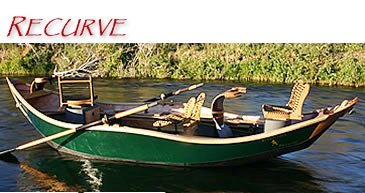
    -- Although we prefer the Wade vs. Row approach to fly fishing; there are times . . . . . . . . . .There are some real advantages to fishing big water from a boat. You enjoy a nice ride with a competent guide, (what? . . row at my age?) You see a lot of the river. You see a lot of nice scenery from a different perspective. You get to cherry-pick the best holes and runs. And, .. if the boat is well designed; you get to have a stable platform. When you visit Yellowstone Country, try fishing just outside the park if you have the time.
    -- That’s where this brief post comes in. Lighter, stronger, less ‘corky,’ and beautiful; what’s not to like? Montana Boatbuilders in Livingston, Montana has the premier drift boat on the big waters of Montana, and many other states as well. They produce a full line of drift boats and duck boats.
    -- Steam-bent oak, rope seats, knee locks, dry storage and kevlar — What? . . . KEVLAR? Yes-siree-Martha the best of all known worlds is incorporated into these boats. They are pure beauty and function, combined. Even Cadillac wishes they could do as well.
    -- Starting in a Whitefish, Montana garage 10 years ago, Jason Cajune and his wife Vedra have built a business based on innovation, craftsmanship, and customer satisfaction. The company was recently featured in an article in the Redding News.
    -- If you are handy with common hand tools you can build a boat from a kit. If you are skilled you can buy the plans and a complete materials list along with tips and tricks. The “Freestone Classic” is a boat that makes both guides and fisher folk drool. We, however, like the design of the “Recurve” model, shown above. It solves many problems that are inherent in the classic design. Visit their web site and take a gander at the future of drift boats. — Or was it Roe vs. Wade?

    YELLOWSTONE RIVERS IN GREAT SHAPE

    BLUEBIRD DAYS & THUNDER NIGHTS
    Bring The Whole Box
    everything's working
    still no grayling


    <<-- Firehole River: running clear.


    -- The good news is that the rivers are in great shape and look to stay that way until a mega deluge. The bad news, (of sorts,) is that we have not caught our annual Grayling and it's week three of the season.
    -- Reports and news are in abundance; they are all good for a change as the weather has settled down, and it's beginning to look a lot like summer.
    -- First off: Yellowstone Lake opens for fishing tomorrow -- get in the boat, drag out the tube, or walk along the shore and stick some Lake Trout. There has been some progress made in the Lake Trout eradication program and the Cutthroat recruitment seems to be on the rise. Good News! The lake is high due to the rapid warm-up of a few weeks ago, and looks to stay that way for some time as we are experiencing some warmer than normal days, (87 F is just a tad too much in June.) The Yellowstone River at the outlet is running at just over 5,000 cfs. This is at least 1,500 cfs above the 76 year median daily average.
    -- The Firehole River is flowing at seasonal levels (about 400 cfs,) and is clear and highly productive. There is both an evening and morning Caddis hatch, PMD's are really popping, and "afternoon" is starting about 10:30 for the Mayflies. Baetis are available until dark, and there are lots of bugs on the water. During the overlap between the morning Caddis and the Baetis the fish are leaping into your waders - bring a small net to get them out. The river sections along the old freight road and those just below the iron bridge are fishing very well in the evening to the prolific Caddis hatch.
    -- The Madison River is just a bit below seasonal levels, (at about 700 - 750 cfs,) but is still bank to bank and surprisingly clear for this time of the year. The overnight thundershowers are keeping the flows in line with the running average and there are plenty of groceries. The Salmonflies are still emerging in places, and there are two kinds of smaller stoneflies as well. The mornings are still showing PMD's in good numbers, and the evening Caddis are showing up at about 5:00 PM. Depending on where you fish the afternoon may show some Baetis or the beginning of the Gray Drake hatch. The heavy Salmonfly concentration should be at the Barns Holes by today or tomorrow. The evening Caddis are especially thick in the mile below 7-mile bridge. Between National Park Meadows and the Talus pull-out the PMD's and Baetis are providing all day fishing if you can stand it.
    -- Nez Perce Creek, above the bridge at the Chief Joseph story board has provided excellent mid-day fishing with nymphs. Sizes 6 - 12; pick your flavor. We stick with Montana Dusters. You can do as well with Hare's Ear, Pheasant Tail, or Prince sorts as well. There have been some bear sightings above the wolf release pen area so be on the look out in the first open meadow. Sing a loud and stupid song - it'll keep both the bears and other fisherfolk away. The river section by the picnic area and down to the confluence with the Firehole has slowed down some. There are still piles of small Brook Trout, (down to 4",) and we saw one 13" Brown Trout taken in this section - both on the same fly - a size 12 Royal Humpy . . . . . go figure.
    -- The Gibbon River is beginning to show it's summer character. The canyon sections are still a little high for consistent good fishing, but large nymphs above tanker curve in the riffle and run sections are beginning to show where the fish are. Pick the biggest rocks in the stream that are visible. Fish the pillow and the seams. The meadow sections have cleared nicely and are beginning to fish in their typical tough fashion. As the water clears in the meadows the big fish will be harder and harder to fool. Some nice Rainbow Trout, (to 16" or a bit more,) sulk in this section and it's very satisfying to stick one - they leap like a salmon and fight hard. The campground meadows and the one-cast water above the Canyon Village Road have the usual assortment of eager Brook trout. There are Grayling here too. Several Grayling were taken on small dry flies during the last three days - just not by us. The action is continuous, and some of the Brookies are 10" long. We're going to pound it for another week in search of our annual Grayling. It'll happen.
    -- The Gallatin River is clearing at it's typical capricious pace. The meadows at the confluence of Fan Creek and The Gallatin River have some nice Brown Trout and they are still taking streamers. Fish the deep undercut banks and keep the flies down in the water column. Be careful of your back cast, there is a lot to get hung-up on in this section. The Mountain Whitefish seem to be thick this year, but that may be a function of temperature as well.
    -- How Do You Know The Fishing Is Good? - - - - - All of the feather merchants and their famous guests are fishing daily in the park. This spring has been fishing just the way we dream Yellowstone should fish. Those who hear about it, and have the means have flocked to the west side of the park for the opening weeks - and have not been disappointed. We hope it continues.
    -- Second Hand Reports: upper Firehole River, (above the closure by Old Faithful,) producing Brook Trout to 10" on Elk Hair Caddis and bead head Prince nymphs. Grayling Creek along the road producing many precocious Brown Trout and Brook Trout on Hare's Ear nymphs and small Wooly Worms. Lewis River clear but cold and high.
    -- JUST A REMINDER; 100% barbless. This is for gear, flies, and the kids and their worms in the Gardiner. Click HERE for regulations. And HERE for the fishing map.